CSR Projects

CSR Projects involve the execution of initiatives aimed at contributing to social, environmental, or community development. These projects focus on creating positive change, such as improving education, healthcare, sustainability, or livelihoods in targeted communities.

Showing 5

24 Aug 2026

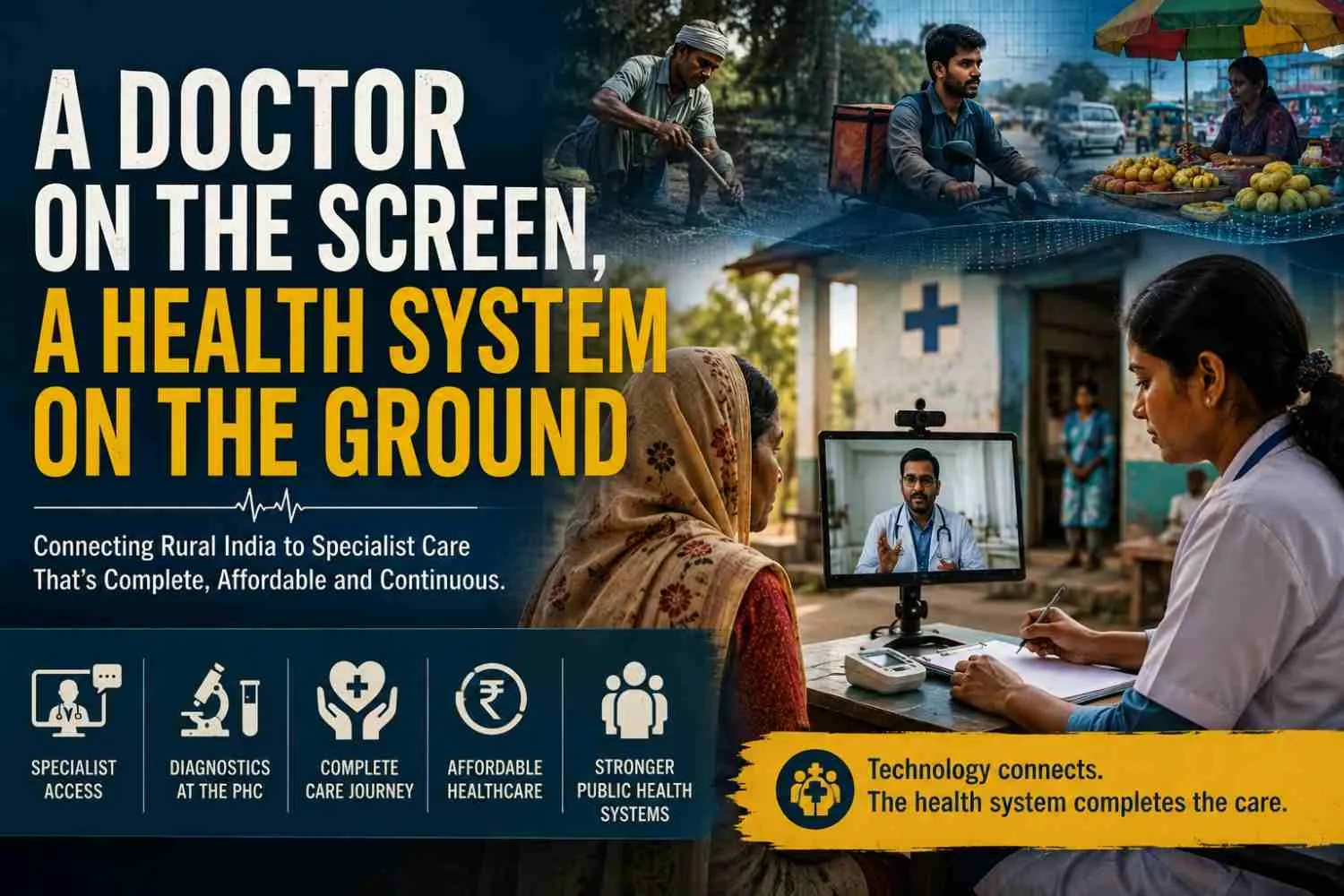
Kolkata |24 August, 2026  India’s telemedicine network is bringing specialist care closer to rural patients, but the real challenge is ensuring that a consultation leads to care that is complete, affordable and continuous. SummaryFor rural patients, seeing a specialist can mean a long journey, lost wages and repeated visits to a distant hospital. India’s telemedicine network is changing that equation by bringing specialist expertise closer to rural communities, while corporate partnerships are adding diagnostics, technology, mobile healthcare and specialist access to the mix. But a teleconsultation is only one part of the care journey. The real test is whether patients are diagnosed, treated and followed up without having to bear the same travel and financial burden. For CSR programmes, success also depends on whether public health facilities are strengthened, outcomes are measured against a clear baseline, money is actually spent as reported and systems continue functioning after corporate funding ends. KeywordsPhygital Healthcare, Rural Telemedicine, Digital Health India, eSanjeevani, Healthcare Access, Rural Healthcare, Primary Health Centres, Ayushman Arogya Mandirs, Digital Health Infrastructure, Teleconsultation, Diagnostics, Continuity of Care   Can a PHC become the gateway to a specialist hundreds of kilometres away? For many rural patients, the challenge is not simply finding healthcare. But is reaching the right doctor without travelling hundreds of kilometres, losing a day’s wages or making repeated trips to a distant hospital. India continues to face shortages and an uneven distribution of health professionals, particularly in rural and underserved areas, making specialist access a bigger challenge than simply counting the number of doctors available. Telemedicine can help change this equation by bringing specialist expertise closer to patients instead of requiring them to travel long distances for every consultation. India’s eSanjeevani platform has demonstrated the scale of this approach by connecting patients and health workers with doctors and specialists, including in rural and remote communities.But phygital healthcare cannot depend on a screen alone.The physical Primary Health Centre remains an important part of the care journey. A nurse or community health worker can examine the patient, record vital signs, conduct basic diagnostic tests, explain the specialist’s advice and help ensure that medicines, referrals and follow-up care are available. The technology can bring the specialist closer. But it is the local health system that turns a remote consultation into actual care. PHYGITAL CARE JOURNEY Village patient → Local PHC → Physical examination → Point-of-care diagnostics → Remote specialist → Treatment → Follow-up The screen connects the specialist. The PHC completes the care journey. What happens when telemedicine meets diagnostics? A specialist cannot always make a reliable diagnosis through a conversation alone. Basic diagnostic tests can provide the information needed to understand a patient’s condition and decide what treatment or referral is required. A blood-sugar or blood-pressure reading, pregnancy test, haemoglobin level or another point-of-care test can significantly change what happens after a teleconsultation. This makes diagnostics an important part of the phygital healthcare model, where digital specialist access is combined with physical healthcare services at the local level. NITI Aayog’s work across Aspirational Districts and Blocks includes healthcare interventions that bring together community outreach, frontline health workers, diagnostics and digital monitoring. The broader lesson is clear: technology works best when it is connected to the basic healthcare infrastructure patients can access locally. That means a teleconsultation should not end with a video call. It should connect to examination, diagnosis, medicines, referrals and follow-up care.Otherwise, a programme may be able to report thousands of consultations while leaving the more important question unanswered: Did those consultations actually lead to better care for patients? THE SCREEN IS ONLY ONE PART REMOTE SPECIALIST↓DIGITAL PLATFORM↓PHC / HEALTH WORKER↓DIAGNOSTICS + PHYSICAL EXAMINATION↓MEDICINES + REFERRAL↓FOLLOW-UP Technology connects the patient to expertise. Infrastructure turns that expertise into care. Can corporate partnerships strengthen the public health system? This is where corporate participation can become more than a funding exercise. Companies can bring technology, specialist networks, diagnostics, equipment, training and logistics that may help extend healthcare to communities that public facilities struggle to reach on their own.There are already examples of different approaches. Tata Trusts has worked with state governments on telehealth and mobile healthcare initiatives aimed at connecting underserved communities with doctors and specialist services. Apollo’s remote healthcare network offers another hybrid model. Its 2024–25 ESG report states that the network has delivered more than 16.5 million teleconsultations across 95 specialties, combining digital consultations with physical healthcare services. Meanwhile, Smile Foundation’s Smile on Wheels takes doctors, nurses, laboratory services and medicines directly to villages and other hard-to-reach communities through mobile medical units.These models also raise a bigger question for CSR: Should companies create separate healthcare systems of their own, or use their resources to strengthen the government facilities already serving these communities? The second approach could offer greater long-term value. Instead of creating parallel systems that may struggle to continue once funding ends, corporate partners can support existing PHCs with digital infrastructure, diagnostic equipment, specialist access, staff training and logistics, while keeping the public health system at the centre of care. The goal should not simply be to bring corporate healthcare to rural India. It should be to leave the rural healthcare system stronger than it was before the partnership began.WHO DOES WHAT? GOVERNMENT• PHCs• Health workers• Public health infrastructure• Referrals CORPORATES• Technology• Equipment• Diagnostics• Funding• Specialist networks NGOs / COMMUNITY GROUPS• Outreach• Awareness• Inclusion• Local access PATIENTS / COMMUNITIES• Care-seeking• Treatment• Follow-up• Feedback Can preventive healthcare produce a measurable social return? For CSR programmes, the focus needs to move beyond how many services were delivered to what actually changed for patients. Screening 10,000 people is an activity. Identifying patients with hypertension or diabetes, ensuring they begin treatment and helping them complete follow-up is an outcome. This distinction is particularly important when companies use technology to expand preventive healthcare. J-PAL South Asia has evaluated preventive-health interventions in India, including research on demand for hypertension screening and the impact of health camps on preventive-care investment. Its research also highlights an important limitation: technology and better monitoring systems do not automatically lead to better healthcare delivery. In Karnataka, for example, a biometric system successfully tracked the attendance of doctors at Primary Health Centres, but it did not improve attendance because the government struggled to enforce the incentives and penalties linked to the system.The lesson is relevant for corporate healthcare programmes too.A better dashboard does not automatically mean better healthcare.What matters is whether patients are being diagnosed earlier, starting treatment, completing follow-up and ultimately experiencing better health outcomes. The real measure of CSR is not the number of beneficiaries on a report, but the difference the programme makes to their lives. ACTIVITY VS OUTCOME 10,000 people reached↓7,500 screened↓2,100 diagnosed / referred↓1,600 started treatment↓1,200 completed follow-up Measure the care journey, not just the first contact. What do rural workers and migrant families need from these systems? Rural healthcare cannot be separated from the realities of work and income. For many people, accessing specialist care can mean more than a long journey. It can mean lost wages, travel costs, childcare difficulties and time away from work. A worker who has to travel to another town for a specialist consultation may lose a day’s earnings. Migrant workers may face additional barriers when their workplace and place of residence keep changing. Women may delay seeking medical care when travel, childcare responsibilities or the cost of treatment become difficult to manage. The Aajeevika Bureau’s work with migrant workers highlights how informal workers can face gaps in healthcare and social-security access, particularly when migration, low incomes and hazardous working conditions overlap. SEWA Bharat has similarly worked to improve women’s access to healthcare and social-security entitlements through community-based approaches. These experiences point to a simple principle:Healthcare technology should fit into people’s lives, rather than expect people to reorganise their lives around technology.That means rural healthcare systems also need to consider accessibility, language, affordability, mobility and physical access. These are particularly important for persons with disabilities, older people and workers who cannot easily travel. What should companies actually measure? This is where the evidence test becomes critical.Companies should report the full number of people covered, rather than using a single “beneficiaries reached” figure.If 10,000 people were enrolled, how many completed screening? How many were diagnosed? How many started treatments? And how many completed follow-ups? The baseline should be equally clear. If a programme claims that it reduced patients’ travel costs, companies should show what patients were spending before the intervention. If it claims to have improved access to specialist care, it should show how far patients previously had to travel and how that changed.The same applies to consultations. Reporting one lakh consultations does not show how many patients actually received the treatment, medicines or referrals they needed. Money also needs to be accounted for.How much was budgeted? How much was actually spent? How much went towards equipment, technology, staffing, diagnostics, training and maintenance? Companies should also report cost per outcome, rather than stopping at cost per consultation. For example, they could track the cost per completed treatment, cost per successfully screened patient or number of patients served per 1,000 people in the target population. Both absolute and intensity measures can provide a clearer picture. Absolute numbers show the scale of a programme, while intensity measures help show how efficiently resources are being used. Most importantly, the reporting boundary must remain clear.A consultation is not automatically a treated patient. A screening is not automatically a diagnosis. And a person reached by a programme cannot automatically be counted as someone whose health improved. The real evidence lies in what happened after the healthcare service was delivered. THE CORPORATE HEALTHCARE EVIDENCE SCORECARD MeasureWhat to askBeneficiary denominatorHow many people were actually covered?CompletionHow many completed screening, treatment or follow-up?OutcomeWhat changed for patients?BaselineWhat was the situation before the programme?CostHow much was actually spent?Cost per outcomeWhat did each successful outcome cost?IntensityWhat was achieved per 1,000 people or per ₹1 lakh?ContinuityWhat continued after CSR funding ended? Measure outcomes, not just activities. What happens when the CSR funding ends? This may be the most important test of any corporate healthcare partnership. A company can install telemedicine equipment, bring specialists into the system and fund diagnostics for three years. But rural healthcare needs to function long after a CSR funding cycle ends. If a programme cannot continue without corporate support, its long-term impact remains limited. So, who maintains the equipment once the funding ends? Who pays for internet connectivity? Who trains new health workers when trained staff leave? Who ensures medicines and diagnostic supplies remain available? Who manages patient referrals and follow-up? And who is responsible for the infrastructure and patient data? ESIC’s teleconsultation model offers a useful public-sector example. Its hub-and-spoke approach connects dispensaries with hospitals that act as specialist hubs, helping reduce patient travel while keeping local doctors involved in treatment and follow-up.The broader lesson is clear:Telemedicine creates lasting value when it becomes part of the regular healthcare system - not when it remains a temporary CSR project. For companies, that means the success of a partnership should be judged not only by what it delivers during the funding period, but also by what the health system is still able to deliver after the funding ends. WHAT SURVIVES AFTER CSR? DURING CSR FUNDING• Equipment purchased• Specialists connected• Staff trained• Patients reached ↓ FUNDING ENDS WHAT REMAINS?• Equipment maintained?• PHC staff still trained?• Specialist network still available?• Diagnostics still functioning?• Connectivity still paid for?• Patient follow-up still happening? CONTINUITY = REAL SYSTEM STRENGTH So, can corporate partnerships really bridge India’s rural specialist-care gap? Yes - but only if corporate healthcare moves beyond delivering services and starts strengthening the system that delivers them. India already has a network of Primary Health Centres, frontline health workers, digital platforms and an expanding telemedicine system. Corporate partnerships can add what many rural facilities struggle to access: specialists, diagnostics, technology, training, logistics and investment. But the real value of these partnerships will not be measured by how many teleconsultations were delivered or how many devices were installed. Nor should success be defined by the size of a CSR announcement.The stronger model is one in which corporate support makes the existing public health system more capable, more accessible and more sustainable. That means the evidence test has to go much further:Who was actually reached? Who completed care? How many patients received the treatment or referral they needed? What changed compared with the baseline? How much did patients save in travel, time or lost wages? What did the PHC gain? What did each successful outcome cost? And, most importantly, what continued after the corporate funding ended? These questions determine whether phygital healthcare is creating a lasting healthcare solution or simply another successful CSR activity on paper. For rural patients, however, the measure of success is much simpler.It means not having to travel hundreds of kilometres just to see the right specialist. It means being able to get basic diagnostics close to home, receive treatment without unnecessary delays and know that follow-up care will still be available.That is the real promise of phygital healthcare: bringing specialist expertise closer without leaving rural patients dependent on a screen - or on a company’s funding. The real CSR test is not whether a company can bring a doctor to a village once. It is whether its partnership can help build a rural healthcare system that continues to deliver care long after the company steps away. THE REAL TEST ACCESSCan patients reach specialist care?→ OUTCOMEDid their health actually improve?→ VALUEWas the intervention worth the cost?→ CONTINUITYDid the system survive after CSR funding? A consultation is an activity.Completed, affordable and continuous care is the outcome. The promise of phygital healthcare is not to replace the rural doctor with a screen. It is to bring specialist expertise, diagnostics and continuity of care closer to patients through the health system already in place. And ultimately, the strongest corporate partnership will not be the one that creates the biggest programme. It will be the one that leaves the rural health system more accessible, more capable and more sustainable - and less dependent on the corporate partner than it was before. Sources: Ministry of Health & Family Welfare — eSanjeevani National Telemedicine Service SourceMinistry of Health & Family Welfare — Telemedicine Services Guidelines SourceNational Health Authority — Ayushman Bharat Digital Mission (ABDM) SourceNational Health Authority — ABDM and Telemedicine FAQs SourceMinistry of Health & Family Welfare — Ayushman Arogya Mandirs, diagnostics and teleconsultation SourceMinistry of Health & Family Welfare — Annual Report 2024–25: eSanjeevani and digital health SourceMinistry of Health & Family Welfare / ABDM — eSanjeevani’s scale and assisted teleconsultation model Source Press Information Bureau — eSanjeevani integration with ABDM and continuity of care Source ...Read more
21 Aug 2026

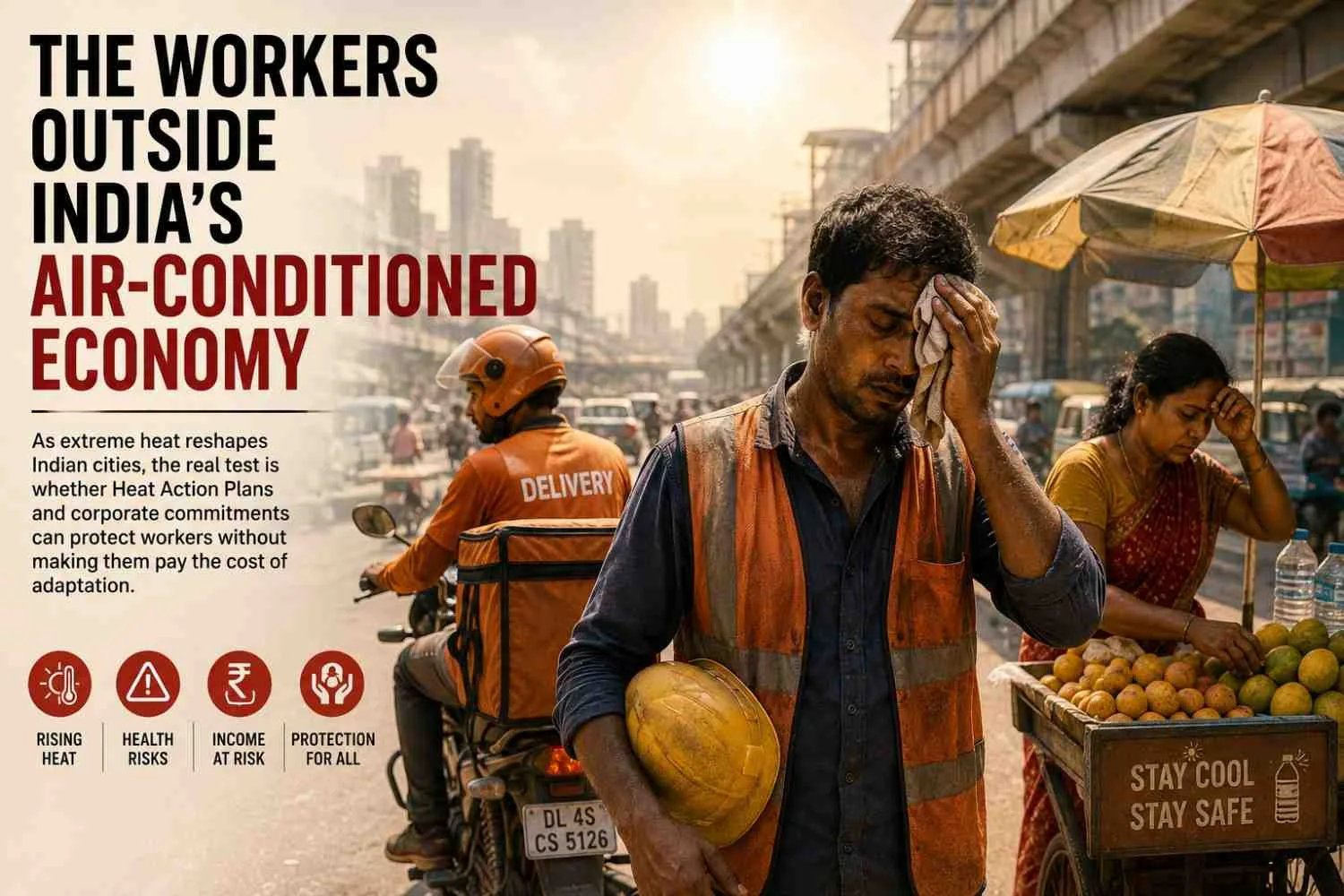
Kolkata | 21 August, 2026  As extreme heat reshapes Indian cities, delivery riders, construction workers and street vendors are being asked to keep working through conditions that can threaten both health and income. The real test is whether Heat Action Plans and corporate commitments can protect workers without making them pay the cost of adaptation. SummaryExtreme heat is becoming a workplace issue as much as a weather emergency. India now has Heat Action Plans across 23 states, 195 districts and 64 cities, while the National Disaster Management Authority has specifically advised cities to include street vendors and other informal workers through shaded vending areas, hydration facilities, cooling centres and flexible working hours. Yet the people most exposed to heat are often those who cannot simply stop working. Delivery riders lose income when they take breaks, construction workers spend hours outdoors, and street vendors depend on remaining at their locations through the hottest parts of the day. A 2026 nationwide advisory from the Ministry of Labour and Employment has urged employers and construction companies to provide drinking water, rest areas and cooling measures. Meanwhile, a proposed parametric-insurance pilot for delivery workers in Delhi-NCR is testing whether heat-triggered payouts can protect income when workers reduce labour during extreme temperatures. The larger question is whether India's heat-response system can move from warnings and advisories to enforceable protection for the workforce that keeps cities moving. Keywordsextreme heat in India, outdoor workers India, heat stress workers, heatwave workers India, workers and extreme heat, Heat Action Plans India, heat safety at workplace, worker protection from heat, heatwave labour protection, delivery riders heat, construction workers heat, street vendors heat, informal workers India, heat and labour rights, heat stress at workplace, worker income protection, climate adaptation workers, heat insurance India, parametric insurance workers, heatwave income protection, cooling centres India, workplace cooling, CSR and climate adaptation, CSR worker protection, corporate heat safety, climate resilience India, urban heat India, extreme heat and livelihoods, heat action plans and workers, labour protection climate change   Who Bears the Cost of Extreme Heat? For many city residents, extreme heat may mean discomfort or changes in their daily routine. For outdoor workers, however, cutting back on work because of the heat can directly affect their earnings. A delivery rider who delays an order may lose part of the day’s income. A street vendor who closes their stall may lose an entire day’s earnings. A construction worker may take longer breaks to cope with the heat, yet still be expected to meet daily targets.The choice is rarely simple. For many outdoor workers, protecting themselves from extreme heat can also mean risking their livelihood. India’s Heat Action Plans gradually recognise this vulnerability. The National Disaster Management Authority (NDMA) framework calls for early warnings, health preparedness and targeted protection for vulnerable groups. Recent government guidance has also identified informal workers and recommended measures such as shaded vending areas, drinking-water facilities, cooling centres and flexible working hours. The framework is in place. But the real question is whether these protections reach workers on the ground, where they face the greatest heat exposure.  Is a Heat Action Plan Enough to Protect Workers?  India’s heat-response system has expanded significantly. As of 2026, Heat Action Plans have been prepared across 23 states, 195 districts and 64 cities. These plans are intended to establish when authorities should act, identify vulnerable populations and assign responsibilities across government departments.But a plan on paper does not necessarily translate into action on the ground. CEEW’s 2026 analysis has highlighted that many urban local bodies still lack Heat Action Plans tailored to local conditions. It recommends city-specific heat thresholds, ward-level risk assessments, clearly assigned responsibilities and stronger monitoring. Heat warnings may cover an entire city, but the risks are not the same everywhere. A construction site, delivery depot and street market can expose workers to different levels of heat. The real test, therefore, is not simply whether a city has a Heat Action Plan. But it is whether that plan changes working conditions when temperatures cross dangerous levels.  What Does Extreme Heat Mean for the People Who Keep Cities Running? Heat exposure is not distributed equally across a city. An office worker may be able to respond to a heat warning by staying indoors. A delivery rider still has to travel through traffic. A construction worker cannot move a building site into the shade. A street vendor cannot simply walk away from the heat when leaving the market or roadside stall could mean losing the day’s income. The danger is not determined by temperature alone. Long hours of exposure, combined with humidity, direct sunlight, physical exertion and inadequate rest, can increase the risk of heat-related illness. Warmer nights add another layer of problem. When temperatures remain high after sunset, workers get less time to recover before another physically demanding day begins. CEEW’s recent analysis has also highlighted the growing role of humidity and warmer nights in India’s heat risk. Protecting workers from extreme heat requires more than monitoring the temperature at midday. It also means considering how long they work, how physically demanding the work is, whether they get enough breaks and water, and whether they have enough time to recover between shifts. Can Employers Be Held Accountable for Heat Safety?  Government measures are placing greater responsibility on employers to protect workers from extreme heat. In April 2026, the Ministry of Labour and Employment issued a nationwide advisory asking states to direct employers, industries and construction companies to take measures to protect workers during heatwaves. These included drinking water, rest areas and workplace cooling, with particular attention to construction workers, brick-kiln workers, daily-wage earners and casual labourers.The advisory also called on ESIC facilities and labour-welfare authorities to establish support mechanisms for heatstroke cases and maintain supplies such as ORS and ice packs. But an advisory alone does not answer a crucial workplace question:What happens when heat protection comes into conflict with productivity targets? A delivery platform may expect riders to complete a certain number of orders. A construction contractor may have a fixed daily target. In such situations, simply recommending more breaks may not protect workers if taking those breaks means losing wages, incentives or facing penalties. That makes employer responsibility closely linked to income protection. A heat-safety measure works only when workers can actually use it without being financially punished for doing so. Could Changing Work Hours Make Outdoor Work Safer? One of the simplest ways to reduce heat exposure is also one of the hardest to implement: changing when people work. NDMA guidance has recommended flexible working hours and other measures for outdoor workers during heatwaves. Earlier heatwave guidelines have also supported rescheduling working hours and providing drinking-water points and shaded areas. For construction workers, this could mean moving physically demanding tasks away from the hottest part of the day. For delivery workers, it could mean reducing pressure during peak-heat hours. For street vendors, it could involve shaded vending spaces and easy access to water and cooling facilities rather than simply advising workers to stay indoors.But changing working hours can also reduce earnings. If a worker is paid according to hours worked or deliveries completed, reducing heat exposure without compensating for lost income can simply shift the financial cost of climate adaptation from the employer to the worker.That is why heat adaptation is not only a public-health issue. It is also a labour and income-protection issue. Can Cooling Centres Reach the Workers Who Need Them? Cooling centres are becoming part of heat-response planning, but their usefulness depends on whether workers can actually access them during the working day. A delivery rider may not be able to leave a delivery route for 30 minutes. A street vendor may not be able to leave a stall unattended. A construction worker may be working far from any public cooling facility.This means cooling infrastructure should be planned around where workers live, work and move, rather than simply measured by the number of centres established. In some locations, shaded bus stops, drinking-water points, rest areas, shaded markets, construction-site cooling zones and accessible public facilities may provide more practical protection than a small number of centralised cooling centres. The more useful measure, therefore, is not simply how many cooling facilities exist, but how many vulnerable workers can actually access them when they need them. Can Heat Insurance Protect Workers’ Income? Another emerging approach is parametric insurance, which can provide a predetermined payout when specific temperature thresholds are reached.J-PAL South Asia is studying a proposed pilot for outdoor delivery workers in Delhi-NCR. Under the model, payouts would be triggered when temperatures cross defined thresholds, helping workers reduce their exposure to extreme heat without losing as much income. The research also proposes examining the effects on worker health, labour supply and platform businesses. The idea is important because it addresses a basic problem: workers should not have to choose between protecting their health and earning their income during extreme heat.But any such model needs to be tested carefully. How many workers are covered? How often are payouts triggered? How much does each worker receive? Does the payment actually compensate for lost income? And does it help reduce heat exposure?The timing of the support matters too. A payout that arrives only after a worker has already suffered serious health consequences cannot be considered an adequate heat-protection system. What should companies actually measure? THE HEAT-PROTECTION EVIDENCE TEST  Workers Exposed↓Heat Threshold Crossed↓Protection Activated↓Break / Shift Adjustment↓Income Protected↓Health & Grievance Outcome↓Protection Continues Beyond the Heatwave  Companies need to look beyond the number of worksites covered and report how many workers are actually protected.They should track whether heat-related measures affect workers’ wages, job retention, access to benefits and ability to raise complaints. Worker feedback should also be collected independently, without management present, so employees can speak honestly about whether they were allowed to take breaks, whether supervisors followed heat-safety measures and whether taking precautions affected their earnings. Transparency also matters in reporting. If a company protects its permanent employees but leaves contract workers outside its heat-safety measures, that gap should be clearly reported. The same scrutiny should apply to CSR spending. How much was promised? How much was actually spent? Where did the money go? And did it fund cooling infrastructure, worker support, insurance, training or other forms of protection?Most importantly, did these interventions actually reduce workers’ exposure to extreme heat, or did they simply add more activities and numbers to a CSR report?The responsibility for protecting workers cannot rest with one department alone. Municipal corporations manage much of the response in public spaces. Disaster-management authorities coordinate heat preparedness. Health departments respond to heat-related illness. Labour authorities oversee workplace protections. Employers determine working conditions, while delivery platforms can influence schedules, workloads and incentives. Workers experience the combined impact of all these decisions.That is why Heat Action Plans need clear responsibilities that extend beyond issuing warnings. A city can issue a heat alert, but that warning must lead to action at construction sites, markets, delivery depots and on the streets.An employer can provide drinking water, but workers must also be able to take necessary breaks without putting their income at risk. A city can build cooling centres, but the workers most exposed to heat must be able to reach and use them. And a company can fund a heat-adaptation programme, but the money should result in measurable protection - not just a list of activities completed.  Who Protects the People Who Keep Our Cities Running?  India’s urban economy relies heavily on people who work outside offices, malls and air-conditioned buildings. They deliver food and medicines, build homes and roads, sell goods, transport materials and keep neighbourhoods running.As extreme heat becomes a more persistent threat, protecting this workforce cannot remain limited to seasonal warnings and awareness campaigns. The response needs to connect heat alerts with workplace protections, income security, accessible cooling spaces and clear employer accountability.For CSR programmes, success should not be measured by how many water bottles were distributed or how many awareness sessions were conducted. The more important question is whether workers were safer, able to protect their income, able to access essential benefits and able to raise concerns when protections failed. The workers most exposed to India’s rising heat are also among those keeping its cities running.The real test is whether India can turn heat warnings into meaningful protection for the workers who keep its cities moving.WHAT TO CHECK BEFORE CALLING A HEAT CSR PROGRAMME A SUCCESS  MeasureWhat to askDenominatorHow many workers were actually covered?ExposureHow many workers face outdoor/heat-intensive work?IncomeDid workers lose wages when taking heat breaks?ProtectionWere water, shade, cooling and adjusted shifts actually available?BenefitsCould workers access medical/social-security support?GrievancesHow many complaints were raised and resolved?BaselineWhat was the situation before the intervention?OutcomeDid heat exposure or illness actually decline?SpendingWhat was budgeted versus actually spent?ContinuityDoes protection continue after CSR funding ends? Primary sources: NDMA — Guidelines for Preparation of Action Plan: Prevention and Management of Heat Wave (2019)Official national framework for Heat Action Plans, heat preparedness and response. NDMA Heat Wave GuidelinesNDMA — Heat Wave portalOfficial government guidance and heat-wave information. NDMA Heat WaveMinistry of Labour & Employment / PIB — Nationwide Heatwave Advisory (28 April 2026)This is the key primary source for your claims about employers, rescheduling working hours, drinking water, rest areas, workplace cooling, construction workers, daily-wage workers, ORS/ice packs and compliance monitoring. Ministry of Labour & Employment Heatwave Advisory, 2026CEEW — How We Build Scientific Heat Action Plans with Indian Cities (23 June 2026)Supports your points about locally calibrated HAPs, ward-level risk assessments, heat thresholds, outdoor workers, revised work schedules, rest-water-shade measures and monitoring/evaluation. CEEW: Scientific Heat Action PlansCEEW — How Extreme Heat is Impacting India: Assessing District-level Heat Risk (2025)Useful for the claims about humidity, warmer nights, heat risk and the limitations of existing HAPs. CEEW: Extreme Heat Risk in IndiaNDMA — National Guidelines for Cooling Centers (November 2025)This is the strongest primary source for the cooling-centre/infrastructure section. NDMA lists the guideline officially. NDMA: National Guidelines for Cooling CentersJ-PAL South Asia — Take-up and Impacts of Parametric Insurance for Labor Supply under Climate ChangeThis is the primary research source for your section on parametric heat insurance for outdoor delivery workers in Delhi-NCR, including predetermined temperature triggers and income protection. J-PAL: Parametric Insurance for Outdoor Delivery Workers ...Read more

14 Aug 2026

Kolkata | 14 August, 2026 As corporate investment in sports grows, the real CSR impact lies beyond medals - in better education, nutrition, safety and opportunities for young athletes. Summary: Sports is taking on a bigger role in India’s CSR landscape, with spending on “training to promote sports” rising from ₹311.71 crore in FY2021-22 to ₹542.53 crore in FY2022-23 and ₹692.09 crore in FY2023-24.  But higher spending does not automatically translate into greater social impact. The real measure is whether these programmes help young people stay in education, access proper nutrition and healthcare, train and compete safely, and build opportunities both within and beyond sport.  For girls and children from underserved communities, meaningful impact also requires equal access, strong safeguarding and support that continues beyond the CSR funding period. Keywordssports-for-development, sports CSR, CSR in sports, corporate sports initiatives, grassroots sports India, sports and poverty alleviation, CSR and youth development, corporate philanthropy in sports, grassroots sports academies, sports for social development, girls in sports, women in sports India, athlete development,sports nutrition, sports education, athlete safeguarding, sports talent development, CSR impact assessment, sustainable sports development, sports CSR India Can Sport Become More Than Just a Sponsorship? For years, corporate involvement in Indian sport has largely focused on sponsoring teams, tournaments and elite athletes. While this brings funding and visibility to sports, a broader approach is now gaining attention: sports for development. Under this model, sport is not just about competitions or brand promotion.   It becomes a way to give young people access to coaching, education, nutrition, healthcare, mentoring and career opportunities. The timing is important. Corporate spending on sports-related training increased substantially between FY2021-22 and FY2023-24, reflecting growing corporate support for sports development programmes. The bigger question is whether CSR reporting is also moving beyond simply measuring the number of equipment distributed, tournaments organised and participants enrolled. CSR Spending on Training to Promote Sports   Financial YearCSR SpendingFY 2021–22₹311.71 croreFY 2022–23₹542.53 croreFY 2023–24₹692.09 crore   For example, a programme that trains 500 children may look successful on paper. The real test comes after the training ends: How many participants complete the programme, remain in school, continue playing and progress to district, state or national-level competitions?These questions highlight the difference between sports sponsorship and sports for development- one supports the sport, while the other aims to use sport as a pathway to improve young people's lives.   Where Can CSR Make the Biggest Difference in Sports?  India already has a strong public sports ecosystem through programmes such as Khelo India, which supports grassroots participation, talent identification, sports infrastructure, academies and community-level sports development. This gives CSR an opportunity to fill important gaps rather than duplicate existing efforts. Companies can support areas where public resources may be limited, including specialised coaching, sports science, better equipment, technology, nutrition, travel for competitions and academy infrastructure. However, CSR support should not create another standalone programme that operates separately from existing systems. The greater opportunity lies in connecting corporate funding with schools, government sports departments, local academies and communities. Companies can bring in specialised coaches, technology and equipment, while public institutions can provide access to young athletes and existing facilities. This approach can also make the impact of CSR easier to measure. If a programme aims to increase sports participation, companies should first establish what participation looked like before the programme began. If the goal is to improve performance, there should be a clear starting point against which progress can be measured. And if the programme promises to create new opportunities, those opportunities should be visible beyond the training ground - in education, competitions, careers or continued participation in sport. From Participation to Progress: Can Girls Stay in Sport?  Girls’ participation is one of the clearest tests of whether a sports CSR programme is creating lasting opportunities rather than simply increasing enrolment. Government data shows that nearly 3 lakh women have participated in around 2,600 ASMITA leagues across 33 disciplines, while around 1.59 lakh women took part in 1,287 leagues during the 2025-26 season. These figures indicate that opportunities for women and girls to participate in sport are expanding. But getting girls onto the field is only the beginning. For many girls, staying in sport depends on factors beyond training itself. Safe transportation, family support, suitable changing facilities, access to female coaches, proper nutrition and healthcare, and protection from harassment can all play an important role in helping girls continue in sport. A CSR programme should not be considered truly inclusive simply because girls are included in its list of beneficiaries. It should also look beyond enrolment and ask: How many girls joined the programme? How many completed the training? How many continued the following year? How many progressed to competitive levels? And do they have a safe and reliable way to raise concerns or report problems? Most importantly, safeguarding should be built into the programme from the start - not added later as a compliance requirement.   How Sport Can Shape a Child’s Future  A child’s ability to participate in sport is closely linked to the circumstances in which they live. For children from low-income families, regular training can become difficult when access to nutritious food, healthcare and education is limited, or when they struggle to balance school with sporting commitments. This is why effective sports-for-development programmes need to look beyond coaching. Nutrition support can help young athletes stay healthy and recover from training, while education support can help them remain in school. Access to healthcare can also help address injuries and other health concerns that might otherwise force children to leave sport. This broader approach also changes how success should be measured. “Children trained” is an output. “Children who completed training, remained in education and moved towards sporting or other opportunities” is an outcome. The distinction matters because not every child will become a professional athlete and professional success should not be the only measure of a sports CSR programme. For some children, participation may build confidence, discipline, physical fitness, social skills and stronger engagement with education. For others, sport may open the door to district, state or national-level competition and future opportunities. Both forms of progress are meaningful, and a strong CSR programme should be able to recognise them. From Grassroots Training to Sporting Success  Some corporate-backed programmes are moving beyond one-time sponsorships and trying to build long-term pathways for athletes. The Infosys Foundation and GoSports Foundation’s Gear for Gold programme, which builds on the earlier Girls for Gold initiative, now supports male, female and para-athletes across several Olympic disciplines. Its approach combines academies, coaching, sports science, infrastructure, technology, scholarships, nutrition, injury management and competition support. That makes the model different from simply sponsoring a tournament or funding a single event. The aim is to create a complete pathway through which athletes can develop over time: Talent identification → Academy → Coaching → Sports science → Nutrition → Competition → Progression Another example is JSW Sports’ Inspire Institute of Sport, which focuses on high-performance training and athlete development across Olympic disciplines. These programmes show how corporate funding can potentially help strengthen the larger sporting ecosystem, rather than being limited to events and sponsorships. But the real test lies in the results. How many athletes enter the programme? How many continue? How many progress to higher levels of competition? What does it cost to achieve those outcomes? And how much of that progress can reasonably be linked to the CSR intervention? These are the questions that can help distinguish a well-funded sports programme from one that creates a genuine talent pipeline.   Is CSR Creating Lasting Opportunities or Just Counting Activities?  This is where sports CSR needs greater transparency and stronger evidence of impact. Companies should report the full number of people eligible for a programme, rather than highlighting only how many beneficiaries were reached. They should also report how many participants completed the programme, how many dropped out, what outcomes were set at the outset and what the programme ultimately achieved.Financial reporting needs the same level of clarity. Companies should distinguish between money committed and money actually spent. A large CSR commitment may attract attention, but a financial announcement does not necessarily mean the funds have already been used. The same distinction applies to infrastructure. Building an academy is an output. An academy that remains operational, has the right staff and resources, is regularly used and continues to benefit athletes is an outcome. Medals should also be viewed in context. A medal can demonstrate sporting achievement, but it does not automatically measure the wider social impact of a CSR programme. For example, if a programme supports 1,000 children but only 20 reach elite competition, the remaining 980 should not automatically be considered unsuccessful. Their progress may be reflected in better school participation, improved health, greater confidence, stronger social skills or continued involvement in sport. Ultimately, the success of a sports CSR programme should not be judged only by participation numbers or medals won, but by the meaningful and lasting change it creates in the lives of the people it aims to support.   Can CSR Impact Last After Funding Ends? Perhaps the biggest test of a sports CSR programme begins when the funding ends.A company may support an academy for three or four years, but an athlete’s journey does not end when the CSR cycle does. Coaches still need to be paid, equipment needs to be replaced, facilities need to be maintained, and athletes may continue to need support for travel, nutrition, healthcare and competition. If there is no plan for these needs, even a successful programme can become dependent on continuous corporate funding. Long-term sustainability therefore needs to be built into the programme from the very beginning. Companies can work with state sports departments, schools, local organisations and sporting bodies, while also training local coaches and developing systems that communities can continue to manage. The goal should be to make programmes less dependent on a single donor over time, rather than simply extending the CSR funding cycle year after year. This brings us to the bigger question: What should sports-for-development actually measure? The future of sports CSR should not be measured by how many tournaments are organised, kits are distributed or academies are launched, but by the lasting impact these initiatives create. It should be judged by the progress that continues after the activity is over. The real measure of impact lies in what happens to participants over time: Who joined the programme? Who stayed? Who completed the training? What difference did it make in their lives? Did children continue their education? Did girls remain involved in sport? Did athletes receive adequate nutrition and healthcare? Did promising players progress to higher levels of competition? Did the programme open up opportunities beyond sport? And, most importantly, what continued after the funding came to an end? India does not need CSR that simply puts more children on playing fields. It needs corporate investment that makes those fields safe, accessible and connected to real opportunities for growth. The strongest sports CSR story may not always be about the athlete who wins a medal. It could be the girl who found the support to continue her sporting journey, the child who remained in school, the athlete who gained access to essential nutrition and professional coaching, or the young guy who built confidence, developed new skills and found greater opportunities through sport. That is when sport stops being just a CSR activity - and becomes a lasting pathway to opportunity, empowerment and development.  Sources: Ministry of Youth Affairs & Sports — Khelo IndiaFor the article’s discussion of grassroots sports, talent identification, sports academies, women’s participation, disability inclusion and sport as a tool for development. Press Information Bureau — Government of India, Ministry of Youth Affairs & SportsFor the current Khelo India ecosystem, including training centres, academies, athlete support, sports science, nutrition and athlete pathways. Infosys Foundation & GoSports Foundation — Gear for GoldFor the article’s Infosys/GoSports case study covering academies, coaching, infrastructure, sports science, scholarships, nutrition, injury management, competition support and athlete progression. Infosys Foundation — Girls for Gold ProgrammeFor the article’s discussion of girls’ participation, women athletes aged 13–19, scholarships, coaching, academies and the development of sustainable sporting careers. GoSports Foundation — Programmes & Sports DevelopmentFor the broader athlete-development and academy ecosystem, including Gear for Gold and programmes supporting athletes, academies and communities. JSW Foundation / JSW SportsFor the article’s discussion of JSW’s sports-promotion work and its integration of sport with wider community-development areas. JSW Energy — Annual Report 2023–24, “Empowering Communities”Particularly relevant to the article because it documents Project Shikhar, rural boxing development, infrastructure, training and nutrition support, and collaboration with government agencies and sports associations. Infosys Foundation Annual Report 2023–24For the Girls for Gold evidence around academy-driven development, sports-science centres, athlete monitoring, international competition exposure and holistic education/upskilling.  ...Read more

13 Aug 2026

Kolkata | August 13, 2026 As the government pushes development deeper into India’s border areas, corporate CSR could bring money, technology and new livelihood opportunities- but the real test is whether those investments work beyond the launch event. SummaryIndia’s remote border villages are receiving greater attention through the Vibrant Villages Programme and other government-led development efforts. Corporate CSR can complement these initiatives by supporting areas such as off-grid solar, rural infrastructure, digital connectivity and livelihood opportunities. But reaching India’s geographic frontiers requires more than announcing projects or allocating funds. CSR interventions need to respond to documented local needs, coordinate with government programmes, involve communities and demonstrate that the money committed actually translates into functioning infrastructure and lasting benefits. For companies, the real measure of border-area CSR should therefore be what reaches communities, what changes after implementation and what continues to work once the funding ends. KeywordsCSR in border villages, corporate CSR India, CSR and rural development, Vibrant Villages Programme, VVP-II, border area development India, CSR impact, last-mile CSR, corporate philanthropy India, border village development, rural infrastructure, off-grid solar, rural livelihoods, CSR-government convergence, community-led development, CSR impact assessment, sustainable rural development, India border villages, CSR projects India, corporate social responsibility   Can CSR Fill the Gaps in India’s Border Development? For years, corporate CSR in India has largely focused on familiar areas such as education, healthcare, sanitation and rural development. Border villages, however, often require a different kind of approach. Many of these communities are located in remote and difficult terrain, far from major markets and essential services. Limited connectivity can make access to basic facilities difficult, while a lack of local employment opportunities often pushes younger residents to move elsewhere in search of work. The government’s Vibrant Villages Programme aims to address some of these challenges by improving infrastructure, connectivity, renewable energy access, education, healthcare, tourism and livelihood opportunities in border communities. As these efforts expand, corporate CSR could play a useful supporting role. However, that role needs to be clearly defined. CSR should not simply duplicate projects that government agencies are already responsible for delivering. Instead, companies can focus on gaps where private funding, technology, specialised expertise or stronger implementation support can make a meaningful difference. This could allow CSR programmes to complement government efforts while addressing specific needs that may otherwise remain overlooked. CSR support could focus on areas such as decentralised solar power, digital connectivity, livelihood opportunities, skill development and support for local businesses. The key is to address genuine gaps rather than duplicate existing efforts. A village benefits little from repeated funding for the same project when other essential needs continue to go unaddressed. The most effective CSR initiatives should therefore begin with two simple questions: What does the community actually need, and what is already being covered by government programmes? Answering these questions requires coordination with district administrations and local authorities before projects are planned. Most importantly, it means listening to local communities and ensuring that their needs and priorities shape the projects designed for them. A company may see solar power as the most urgent need, while local residents may place greater importance on roads, healthcare, irrigation, market access or livelihood opportunities. Without meaningful community participation, even well-funded CSR initiatives can end up addressing the wrong priorities. The same approach should continue after a project is launched. Installing solar panels alone does not make a project successful.  Its real value depends on whether households receive reliable electricity, whether the system remains functional over time and whether access to power improves everyday activities and livelihoods. This becomes especially important in remote communities, where repairing or maintaining infrastructure can be costly and difficult. The bigger opportunity may lie in linking basic infrastructure directly to local livelihoods and economic opportunities. Reliable electricity, for instance, could support small shops, local businesses, refrigeration, digital services, tourism facilities and small-scale processing units. Better road and digital connectivity could help local producers reach wider markets, while skill-development programmes could have greater value when they are connected to actual jobs or opportunities to start local businesses. However, these benefits should be measured, not simply assumed. Before a project begins, companies should establish a clear baseline: What is the current situation? Who needs support? And what change is the project expected to achieve? After a project is implemented, its success should not be judged only by how many people attended a programme or how many facilities were installed.Instead, companies should ask more meaningful questions: How many households are actually benefiting? Is the infrastructure still functioning? Has access or income improved? Who may still be left out? And can the project continue to deliver benefits after CSR funding ends? Government programme → CSR gap-filling → Community participation → Working infrastructure → Livelihood outcome  Effective border- area CSR should complement public programmes and end with a measurable community outcome- not simply a completed project. The real question is not how much is spent, but how effectively it is used. A large CSR announcement can create the impression of substantial investment, but a financial commitment is not the same as actual expenditure. Transparent reporting should clearly distinguish between the amount promised, the amount actually spent and the number of people who benefited. The same distinction applies to infrastructure projects. A completed building is an output; a facility that remains functional and is regularly used by the community is an outcome.   The real measure of success is not what was delivered, but the lasting difference it makes. To understand the true impact of a CSR project, companies should compare results with the situation before the intervention or with similar villages.This can help determine how much of the change can reasonably be linked to the CSR initiative, rather than to government spending, economic changes or other development programmes in the area. This is particularly important in border regions, where development is rarely the work of a single organisation. In many communities, development efforts involve multiple stakeholders, including government departments, local authorities, NGOs and companies.CSR reporting should therefore be clear about what the company actually contributed. If improved electricity access was achieved through the combined efforts of several agencies, a company should clearly acknowledge the shared contribution rather than presenting the entire outcome as its own impact.The credibility of CSR depends on accurately reporting the change a company has contributed to, rather than taking sole credit for outcomes achieved through collective efforts. The most credible CSR approach should clearly show the entire journey of a project: the problem identified, the solution planned, the money spent, the people reached and, most importantly, the change achieved.It should also explain who will maintain the project after CSR funding ends. This could involve training local operators, working with community groups or setting up a maintenance arrangement with the relevant local administration. Without a plan for what happens next, even a well-funded project can gradually become an unused asset in a village that already has limited resources. For CSR in border areas to create lasting value, companies need to move beyond the traditional question of “How much did we give?” The more important question is: “What changed because we gave it?” India’s border communities do not need CSR that is simply more visible. They need initiatives that are better targeted, better coordinated and more accountable. Ultimately, the success of corporate philanthropy is not measured by the distance between a company’s headquarters and a remote village. It is measured by the distance between a CSR announcement and a lasting improvement in people’s lives.What Should the Last Mile of CSR Really Look Like? For India’s border villages, CSR can play a valuable role-but only when it complements government efforts and responds to the needs of the communities it aims to serve.The opportunity is significant.  VVP-II covers 1,954 villages across 15 states and two Union Territories, focusing on livelihoods, connectivity, energy, infrastructure, skills, tourism and telecom access. But the scale of these efforts should not become the only measure of success. A stronger CSR approach would begin by identifying and documenting a genuine local need, coordinating with the administration and involving residents in planning. Companies should clearly define their own contribution and track more than just the money spent or assets created. The real question is whether those assets continue to function and whether they lead to measurable improvements in people's lives and livelihoods. This becomes even more important because the government has acknowledged that no third-party evaluation has yet been conducted for VVP-I. While hundreds of projects have been completed and many more are being implemented through different government programmes working together, stronger evidence is still needed to understand their long-term impact. For companies, this gap should be seen as an opportunity - not a limitation. Rather than treating border-area CSR as another category of philanthropy, businesses can approach it as a long-term development partnership, where infrastructure, reliable energy, skills and livelihoods work together to create lasting value. Ultimately, the last mile of CSR is not measured by the distance between a corporate office and a remote border village. It is measured by the distance between money being announced and meaningful change being sustained. Hence, the future of corporate philanthropy will be judged by the lasting change it helps create. Primary Sources  Ministry of Home Affairs, Government of India. Vibrant Villages Programme-II (VVP-II). 18 March 2026.Covers the ₹6,839 crore outlay, 1,954 villages, 15 States and 2 UTs, and the programme’s focus on livelihoods, roads, energisation, village infrastructure, skills, tourism, education and telecom connectivity. PIB — Vibrant Villages Programme-IIMinistry of Home Affairs, Government of India. Vibrant Villages Programme. 28 July 2026.Provides the latest VVP-I implementation figures, including projects sanctioned/completed, funds released, road connectivity, electricity, off-grid solar and other convergence projects. It also states that no third-party evaluation has been conducted under VVP-I. PIB — VVP-I Implementation UpdateMinistry of Home Affairs, Government of India. Funds for Border Area Development Programme (BADP). 1 April 2026.Important for the article's discussion of BADP, government convergence and the transition toward VVP. The release states that BADP is currently in its sunset phase, with funds being allocated for committed liabilities. PIB — Border Area Development Programme Ministry of Home Affairs, Government of India. Vibrant Villages Programme — Scheme Details.Useful for the programme's original objectives, including livelihood generation, renewable energy, roads, village infrastructure, telecom connectivity and reversing outmigration, as well as its outcome-oriented approach. PIB — Vibrant Villages Programme Background Ministry of Home Affairs, Government of India. Vibrant Villages Programme-II — Scheme/Programme Document.Details VVP-II's objectives, funding structure and focus areas, including livelihoods, electrification, roads, skills, SHGs/FPOs, tourism, education and telecom connectivity. Ministry of Home Affairs — Scheme Document ...Read more

17 Jun 2026

A Portal Born at a Planetary Turning Point There are moments when a new platform is not merely launched; it arrives because the time demands it. SustainVerse, emerging through SustainVerse.org, is one such arrival. At a time when climate anxiety, corporate responsibility, green innovation, ESG accountability and sustainable livelihoods are converging into one global imperative, SustainVerse enters the public domain as a media, knowledge and business ecosystem dedicated to sustainability in action. Its promise is captured in three words: “Stories. Solutions. Sustainability.” These are not decorative words. They are the architecture of a new mission. Stories give sustainability a human face. Solutions convert concern into action. Sustainability gives that action a moral, ecological and economic purpose. SustainVerse is not designed to be another green news website. It is envisioned as a universe of knowledge, credibility, community, commerce, education and impact. It seeks to become a trusted platform where corporates, policymakers, students, startups, NGOs, educators, investors, innovators and conscious citizens can meet around one shared question: how do we build a future that is profitable without being predatory, ambitious without being destructive, and modern without being blind to the planet? Why SustainVerse Is Needed Now The world has crossed the stage where sustainability could remain a slogan. For too long, environmental responsibility was treated as a public-relations gesture, a CSR footnote, a conference theme, or an annual-day speech. That era is ending. A new era has begun—one where sustainability is becoming a matter of law, finance, reputation, survival and leadership. Companies are being asked to report more transparently. Consumers are questioning greenwashing. Investors are asking for measurable ESG performance. Governments are tightening climate and CSR regulations. Universities are preparing students for green careers. Startups are building solutions for energy, waste, water, food, mobility and materials. Communities are demanding resilience against heat, floods, pollution and water stress. Yet the ecosystem remains fragmented. Information is scattered. Claims are often unverifiable. NGOs struggle for visibility. Green businesses struggle for market access. Students struggle to understand career pathways. Corporates struggle to identify credible partners. Citizens struggle to separate authentic sustainability from branding theatre. SustainVerse is needed because the sustainability transition requires a trusted knowledge bridge. It must connect information with action, policy with practice, capital with innovation, and aspiration with evidence. From Green Talk to Green Transformation The central strength of SustainVerse lies in its refusal to stop at awareness. Awareness matters, but awareness alone does not change systems. The world does not need more climate panic without pathways. It needs platforms that can identify solutions, explain them clearly, verify their credibility, connect them to users and scale their impact. SustainVerse aims to do precisely that. Its content will tell the stories of renewable energy transitions, circular economy pioneers, green architecture, water security, clean mobility, responsible fashion, climate technology, rural sustainability, ocean conservation, sustainable finance and ESG leadership. But the platform’s purpose is deeper than storytelling. It seeks to convert those stories into models that can be studied, adopted, replicated and scaled. In this sense, SustainVerse becomes a movement from “what is wrong” to “what can be done.” It is a portal of possibility. The Many Doors of the SustainVerse Ecosystem The SustainVerse blueprint imagines an integrated ecosystem with several interconnected segments. Each segment serves a distinct audience, yet all are designed to strengthen one another. The first door is the Digital Knowledge Portal, the public-facing hub for news, analysis, interviews, explainers, data, opinion and sector insights. This is where sustainability becomes readable, searchable and understandable. The second is the YouTube and Podcast Network, designed to make sustainability visual, conversational and emotionally engaging. Through films, interviews, explainers and leadership conversations, it can bring the voices of scientists, entrepreneurs, policymakers, community leaders and young changemakers to a wider audience. The third is Social Media Amplification, where the platform can reach professionals on LinkedIn, young audiences on Instagram, fast-moving policy communities on X, and larger citizen groups through shareable stories and campaigns. The fourth is Events and Community, including flagship summits in India and the UAE. These are not just events; they are marketplaces of ideas, partnerships and commitments. They can bring together capital, talent, policy and enterprise. The fifth is Awards for Excellence, a recognition platform that can celebrate institutions, businesses, NGOs, campuses, startups and individuals who are creating measurable sustainability impact. The sixth is the Sustainability Impact Excellence Rating, or SIER, envisioned as a credibility and verification framework. In a world crowded with ESG claims, a transparent and credible rating system can become one of SustainVerse’s most powerful contributions. The seventh is Online Radio, a low-cost, high-reach thought-leadership stream that can carry conversations in multiple languages and keep sustainability alive as a daily public dialogue. The eighth is Coffee-Table Books, designed to document and showcase outstanding sustainability journeys, corporate leadership and institutional transformation. The ninth is Green E-Commerce, a curated marketplace for verified sustainable products and services. This is where trust can become transaction and responsible consumption can become easier for citizens. The tenth is the Academic and Certification Division, which can build green skills through masterclasses, diplomas, short courses and corporate training. The eleventh is the Green Impact Fund, the long-term capstone of the ecosystem, intended to support and invest in promising green ventures emerging from this network. Together, these segments create a flywheel: content builds audience; audience builds community; community builds credibility; credibility powers ratings, education and commerce; and revenue from these activities strengthens content and impact. The Trust Engine for CSR, ESG and Green Business The deepest crisis in sustainability today is not only climate change. It is trust. Companies claim impact. Products claim to be green. Projects claim transformation. But who verifies? Who explains? Who connects evidence with public confidence? SustainVerse seeks to become a trust engine for this new economy. Its role will be especially valuable in CSR and ESG, where the stakes are rising. CSR can no longer remain charity without accountability. ESG can no longer remain disclosure without depth. Sustainability can no longer remain a glossy report without measurable change.   Through its journalism, awards, ratings, advisory pathways, compliance resources and knowledge products, SustainVerse can help create a culture where responsible institutions are recognised, weak claims are questioned, and genuine impact receives the visibility it deserves. This is crucial for corporates, but equally crucial for NGOs and social enterprises. Many grassroots organisations do meaningful work but lack the language, documentation and visibility needed to reach funders. SustainVerse can help bring such work from the margins to the mainstream. South Asia: Turning Vulnerability into Leadership For South Asia, SustainVerse can become especially important. This is one of the world’s most climate-vulnerable regions, facing heat waves, floods, cyclones, water stress, air pollution, agrarian uncertainty and rapid urban pressures. Yet South Asia is also one of the world’s most energetic regions, full of youth, entrepreneurship, social innovation and development ambition. The central question for South Asia is not whether it should grow. It must grow. The question is whether it can grow differently. Can cities expand without choking? Can villages modernise without losing ecological balance? Can industries create jobs without poisoning rivers and air? Can agriculture become productive while using less water and fewer chemicals? Can education prepare young people for the green economy? SustainVerse can help South Asia answer these questions by becoming a knowledge commons for practical sustainability. It can highlight water security in Bangladesh and India, clean energy in Nepal and Bhutan, climate-resilient agriculture in Sri Lanka, urban circularity in Indian metros, coastal resilience in the Sundarbans and Maldives, and grassroots innovations across the region. Most importantly, it can give South Asia a voice in the global sustainability conversation. Too often, sustainability narratives are written from the perspective of the Global North. SustainVerse can help tell the story of the Global South not as a victim alone, but as a source of solutions. India: Scale, CSR, Startups and the Green Economy India stands at the centre of the SustainVerse opportunity. It is a country of vast CSR spending, expanding ESG expectations, rising green entrepreneurship, world-class digital capability and urgent environmental challenges. The Indian sustainability landscape has scale, but it also has complexity. There are thousands of NGOs, but not all are visible or verified. There are thousands of companies, but not all know how to build responsible supply chains. There are countless students interested in sustainability, but many do not know how to turn that interest into a career. There are startups working on waste, clean energy, water, mobility and climate technology, but many need platforms, investors and markets. SustainVerse can become the connector India needs. It can help corporates discover credible partners. It can help NGOs communicate impact. It can help green startups tell their stories. It can help students enter the sustainability workforce. It can help policymakers and citizens see which solutions deserve scaling. In India, SustainVerse can become not only a portal but a public institution of sustainable transformation. The Middle East and UAE: Capital, Climate Ambition and Global Reach If India offers scale, the Middle East—especially the UAE—offers capital, global connectivity and strategic climate ambition. The UAE has positioned itself as a hub for clean energy, sustainable finance, climate diplomacy, green buildings, water innovation and net-zero transition. Businesses operating in the region increasingly need guidance on ESG integration, emissions reporting, sustainability strategy and responsible growth. SustainVerse can serve this market by offering knowledge, training, visibility, advisory pathways and cross-border partnerships. Its India-UAE focus is strategically powerful. India brings talent, implementation depth, frugal innovation and a vast development landscape. The UAE brings investment, commercial platforms, global networks and policy momentum. Together, they can create one of the most important sustainability corridors of the coming decade. Through SustainVerse, an Indian clean-tech startup can find UAE investors. A UAE sustainability model can find Indian scale. A CSR project in India can attract global attention. A green business in Dubai can reach South Asian consumers. A student in Kolkata, Dhaka, Dubai or Mumbai can find a career pathway into the sustainability economy. A Platform for Youth, Careers and Green Skills The future of sustainability will not be built only by governments and corporations. It will be built by young professionals who choose careers in climate, clean energy, ESG, sustainability communication, impact assessment, green finance, responsible design, sustainable tourism, circular economy and social entrepreneurship. SustainVerse’s education and careers vertical can become a launchpad for this generation. Through masterclasses, diplomas, internships, jobs, case studies and leadership conversations, it can prepare youth for the emerging green economy. This is not merely an educational opportunity. It is a civilisational responsibility. The young must not inherit only the consequences of ecological damage. They must inherit tools, training, networks and hope.   From Portal to Movement The power of SustainVerse lies in its possibility of becoming larger than a website. If executed with integrity, it can become a movement of informed action. It can bring the credibility of journalism, the discipline of data, the energy of entrepreneurship, the reach of digital media, the seriousness of education and the catalytic power of capital into one ecosystem. It can turn sustainability from an elite conversation into a public resource. It can turn green business from a niche market into a mainstream economy. It can turn CSR from compliance into compassion with evidence. It can turn ESG from jargon into responsible leadership. It can turn climate fear into climate action.   The Future Needs a New Language of Hope The launch of SustainVerse comes at a time when the world is searching for a new language of hope. Not blind optimism. Not denial. Not empty celebration. But disciplined, evidence-based hope—the kind that studies problems honestly and builds solutions courageously.   That is the promise of SustainVerse. It is a platform for those who believe that the future is not something to be feared, but something to be designed. It is for companies that want to lead responsibly, for communities that want resilience, for innovators who want markets, for students who want purpose, for investors who want impact, and for citizens who want to live with dignity on a healthier planet. SustainVerse begins with stories. It moves towards solutions. Its destination is sustainability. And in that journey, it invites South Asia, the Middle East and the wider world to imagine a future where growth heals, business serves, knowledge empowers and the planet breathes again.   ...Read more