ESG Advisory & Assurance

ESG Advisory and Assurance help organizations integrate Environmental, Social, and Governance factors into their business strategies. It also involves verifying and validating ESG data and reports to ensure accuracy, transparency, and credibility for stakeholders.

Showing 4

18 Aug 2026

SPECIAL INVESTIGATION  ·  CORPORATE GOVERNANCE & PHILANTHROPY   How India Inc Is Walling Off Its Own Charity — and What It Means for the Grassroots By Professor Ujjwal K. Chowdhury Behind India's ₹40,000-crore CSR economy lies a quiet institutional coup. A tightened Ministry of Corporate Affairs registration regime, a boardroom terrified of personal director liability, and SEBI's data-hungry ESG assurance machinery are together pushing corporate India to build its own foundations — and, in the process, are starving the small, community-rooted non-profits the law was written to reach. SUMMARYSince Form CSR-1 became mandatory on 1 April 2021, and more sharply since the Companies (CSR Policy) Amendment Rules, 2025 came into force on 14 July 2025, the Ministry of Corporate Affairs has converted CSR implementation into a licensed activity. The new web-based, CA/CS/CMA-certified CSR-1 form — demanding 12A/80G proof, NGO Darpan IDs, a three-year track record and digitally signed disclosures — now gates roughly ₹35,000-40,000 crore of annual statutory CSR spend. Boards newly exposed to personal liability for unspent funds under Section 135(5), (6) and (7) are responding by internalising social spending inside wholly owned Section 8 foundations: Tata Steel Foundation, JSW Foundation, Infosys Foundation, Wipro Foundation, SBI Foundation and dozens more. This feature traces the regulatory chain from 2014 to 2026, the cost-benefit and tax arithmetic of building versus outsourcing, hard data on where the money actually lands, and mounting evidence that grassroots NGOs — 84% of India's non-profits, most running on budgets under ₹3 crore — are being pushed out of a philanthropic economy their own advocacy helped build. KEYWORDS: CSR-1 registration, Section 8 foundations, Companies Act Section 135, corporate CSR India, Ministry of Corporate Affairs, BRSR Core, grassroots NGOs, CSR compliance, 12A and 80G registration, Tata Steel Foundation, Infosys Foundation, Social Stock Exchange, CSR governance, corporate philanthropy India HASHTAGS: #CSRIndia  #Section8Foundations  #CSR1Registration  #CorporateGovernance  #MCA  #BRSRCore  #GrassrootsNGOs  #CSRCompliance  #IndiaInc  #SocialStockExchange  #NonProfitIndia  #ESGIndia THE BOARDROOM THAT BROKE WITH CIVIL SOCIETY In a wood-panelled boardroom overlooking Mumbai's Bandra-Kurla Complex late last winter, the CSR committee of a top-tier industrial conglomerate faced an existential briefing. For nearly a decade the company had dispersed its mandatory 2% statutory spend — roughly ₹140 crore a year — across a decentralised constellation of 45 grassroots NGOs working the rural hinterlands from Kalahandi to Bastar. Then came the regulatory audit. A routine notice from the Registrar of Companies, coupled with statutory-auditor queries over third-party utilisation certificates, Form CSR-1 validations and unspent-escrow allocations under Section 135(6), pushed boardroom anxiety to a fever pitch. By the time legal counsel finished briefing directors on personal liability under the amended penalty provisions, the decision was unanimous: terminate 38 external partner contracts and incorporate a wholly owned, captive Section 8 not-for-profit. “Within eighteen months, our entire social budget was internalised. It wasn't philanthropic philosophy — it was regulatory survival.” — Chief Sustainability Officer, industrial conglomerate This boardroom pivot is neither isolated nor accidental. Across corporate India a seismic restructuring of statutory philanthropy is under way. What began in 2014 as a broad legislative mandate under Section 135 of the Companies Act has hardened into a tightly policed, data-audited compliance machinery — and in its place has arisen a sprawling new institutional class: the captive corporate foundation. FROM ‘COMPLY OR EXPLAIN’ TO A COMPLIANCE MACHINE Section 135 was notified in 2014 as a soft ‘comply or explain’ regime — a company could simply justify a shortfall in its board report. That leniency did not survive long. A High-Level Committee on CSR (2019-20) recommended tightening; the escrow mechanisms of Section 135(5) and (6) followed; then, in 2021, came Form CSR-1 and the decriminalisation-cum-mandatory-impact-assessment amendments. By 2023-26, SEBI's BRSR Core reasonable-assurance regime and the Social Stock Exchange had pulled CSR into the wider architecture of ESG disclosure. 20142019‑2020212023‑26Section 135 notified — the ‘comply or explain’ era begins.High-Level Committee on CSR; Section 135(5)/(6) escrow mechanisms introduced.MCA Form CSR-1 mandatory; decriminalisation amendments; mandatory third-party impact assessments.SEBI BRSR Core reasonable assurance rolls out; Social Stock Exchange goes live; CSR-1 re-engineered (July 2025). FORM CSR-1: THE FORM THAT REWROTE THE RULES The decisive shift began on 1 April 2021, when it became illegal for any company to route CSR capital to an implementing agency lacking an MCA-issued, eleven-digit unique CSR Registration Number. To secure that number, a Section 8 company, registered public trust or registered society had to demonstrate valid Section 12A/12AB and 80G registrations, a verified three-year operational track record in comparable development work (waived only for Section 8 entities established by the funding company itself), and Digital Signature Certificate verification certified by a practising Chartered Accountant, Company Secretary or Cost and Management Accountant. The ground shifted again on 14 July 2025, when the Companies (CSR Policy) Amendment Rules, 2025 replaced the old PDF-based process with a fully web-based e-form on the MCA21 V3 portal — now demanding an NGO Darpan ID as a compulsory field, governing-body member details with DIN/PAN, audited financials, and OTP-verified, digitally signed submission. MCA subsequently clarified that entities already holding valid CSR registration numbers need not register afresh merely because the form changed. Running in parallel, the Ministry of Home Affairs tightened the Foreign Contribution (Regulation) Act, cancelling the licences of over 6,000 civil society organisations and banning sub-granting between NGOs. CSR funds are technically domestic capital, but the institutional fallout — lost accounting staff, deep regulatory scrutiny, sudden instability — hit thousands of multi-funded grassroots entities regardless. THE ESCROW TRAP: WHEN NON-COMPLIANCE BECOMES PERSONAL For corporate legal teams, the cost of an implementing partner's compliance lapse has become intolerable. Under Section 135(5) and (6), unspent capital tied to an ‘ongoing project’ must move within 30 days of fiscal close into a designated Unspent CSR Account at a scheduled bank, to be utilised within three fiscal years — or, for one-off projects, surrendered within six months to a Schedule VII fund such as PM CARES or Clean Ganga. Section 135(7) penalises failure with fines running up to twice the unspent amount for the company, plus personal financial liability for every defaulting officer. Recent RoC adjudication orders — some now under appeal — show that enforcement is real, not theoretical. A further procedural tightening in 2025 requires companies to file Form AOC-4 (audited financial statements) before filing Form CSR-2, the annual CSR report; the CSR-2 web form must now carry the AOC-4 Service Request Number to link it algorithmically to audited accounts. Regulators can now cross-reference CSR spend against financials in real time, closing off the discretion companies once used to smooth over reporting gaps. THE GREAT SPIN-OFF: MAPPING INDIA INC’S CAPTIVE FOUNDATIONS The stampede toward captive vehicles has reshaped the institutional map of Indian philanthropy. Data compiled from the MCA portal, the Registrar of Companies and analytics platform CSRBOX show that over 65% of the NIFTY 100 now execute the majority of their social spend through promoter-backed Section 8 companies, captive trusts or dedicated operating foundations — and, since the 2025 CSR-1 overhaul, more than 60% of large corporate CSR budgets are routed through company-owned implementation arms. Yet corporate India is not converging on one model. In heavy industry, Tata Steel Foundation — a Section 8 company and wholly owned subsidiary of Tata Steel — has saturated 81 blocks and 4,500 villages across Jharkhand and Odisha, spending roughly ₹473 crore in FY2024-25, reaching between 5.77 million and 6.9 million lives across different reporting cycles and unlocking over ₹5,300 crore of public entitlements through grassroots mobilisers. Under its MANSI maternal-health programme, 93% of high-risk pregnancies now culminate in institutional deliveries; through Masti Ki Pathshala, 73% of 5,406 highly vulnerable children in Jamshedpur's urban slums have entered mainstream schooling. JSW Foundation scaled from ₹63 crore in FY2018-19 to ₹235 crore in FY2023-24 and ₹363 crore in FY2024-25, touching 30 lakh lives across Maharashtra, Karnataka and Odisha. In technology, Infosys Foundation — three decades old in FY2026 — has deployed cumulative spending above ₹4,800 crore, with FY2024-25 alone seeing ₹545 crore across healthcare, education and environment, and FY2025-26 global CSR of about ₹666 crore reaching more than seven million people across 200-plus projects; its annual report won a Gold Stevie in 2025, even as a 2026 fraud case — a former contractor who posed as a regional head to defraud the foundation of ₹6 crore — exposed governance vulnerabilities that scale alone cannot fix. TCS reported FY2024-25 CSR of ₹960 crore, rising to a global figure of about ₹1,153 crore in FY2025-26 with more than 18 million beneficiaries and over nine million volunteering hours, through flagship programmes such as goIT, Ignite My Future and BridgeIT reaching 7.1 million people worldwide. Wipro runs a deliberate dual-engine architecture: the endowment-backed Azim Premji Foundation, which holds an economic interest in Wipro and preserves pure civil-society funding, alongside Wipro Foundation and Wipro Cares, which executed statutory CSR of ₹259.4 crore in FY2024-25 and ₹227.4 crore in FY2025-26 against an adjusted obligation of ₹130.4 crore — a zero-shortfall result. Among banks, HDFC Bank's Parivartan posted a record ₹1,068 crore in FY2024-25 across seven focus areas — including a newly added natural-resource-management vertical — reaching over 100 million beneficiaries through 214 implementation partners. SBI institutionalised its CSR inside SBI Foundation, a Section 8 company, spending ₹610.77 crore. ICICI Bank earmarked ₹801 crore but spent only ₹527 crore, citing delays in statutory approvals — a reminder that even large, well-resourced banks face implementation lag. Axis Bank Foundation, notably, is a registered trust rather than a Section 8 company and openly runs a partnership model with multiple development-sector organisations, showing that the captive-foundation trend is not universal even among peer institutions. In agribusiness, ITC's Mission Sunehra Kal spent ₹325 crore in FY2023-24, embedding climate-smart agriculture and e-Choupal watershed development directly into its sourcing catchments, creating a circular loop in which agroforestry CSR supplies pulpwood for its paperboard business. Reliance Industries, largely through Reliance Foundation, led all spenders at ₹2,156 crore in FY2024-25. THE HIDDEN P&L: WHY BUILD BEATS BUY Running an in-house foundation is not cheap. Registering a Section 8 company — the preferred structure — costs roughly ₹18,000-35,000 in government and professional fees, with annual compliance of ₹15,000-40,000 covering statutory audits, RoC filings (MGT-7, AOC-4), income-tax returns and 12A/80G maintenance. That is markedly steeper than a trust (₹500-3,000 to register; ₹5,000-15,000 a year) — yet for companies with large, recurring CSR budgets the arithmetic still tilts toward internalisation. The decisive lever is Rule 7(1) of the CSR Rules, which caps administrative overheads at 5% of total CSR spend for the company itself — but explicitly excludes the administrative expenses of implementing agencies, including a company's own Section 8 foundation, from that cap. Grassroots NGOs typically need 15-20% institutional overhead to cover compliance, monitoring, senior management and rent; bound by the 5% ceiling, corporates routinely disallow these core costs when funding external partners, forcing NGOs into project-restricted budgets that erode their long-term health. A captive foundation, by contrast, allows structural reclassification: salaries of social workers, agronomists, project directors and field-monitoring teams are booked not as ‘administrative overhead’ but as direct programmatic implementation expense — full operational capacity, while the general-administration line on paper stays comfortably under 5%.  Outsourced NGO Model (₹100 Cr Spend)Captive Section 8 Model (₹100 Cr Spend)External grant / direct programme₹95 Cr grant, capped at 5% overhead (Rule 7(1))₹96 Cr — field salaries booked as direct delivery cost, not overheadOverhead / admin₹5 Cr — partner NGO's core costs largely disallowed₹4 Cr head-office admin, technically within the 5% capNet effectOperational friction for the NGO partnerFull in-house operational capacity retained inside the group Tax structuring compounds the advantage. A Section 8 foundation without 12A registration is taxed at the ordinary corporate rate — an effective 29-33% including surcharge and cess — which is why 12A is treated as non-negotiable; newly registered entities get a provisional 12A (Form 10A, valid three years) before moving to regular 12AB (Form 10AB, valid five years, extendable to ten years for foundations with annual income under ₹5 crore). Once secured, foundation income is 100% tax-exempt if applied to charitable objects. Section 80G then lets the donor — typically the parent company — claim a deduction of 50% on the donated sum, subject to a ceiling of 10% of Adjusted Gross Total Income (cash donations above ₹2,000 do not qualify; the foundation must file Form 10BD and issue Form 10BE to preserve the donor's claim). On a ₹10 crore contribution, that works out to a ₹5 crore deduction and, at a 30% marginal rate, roughly ₹1.5 crore of tax saved by the parent — while the foundation itself receives the full ₹10 crore tax-free. There is a catch worth flagging for the balance sheet: when a 12A-registered foundation passes money onward to other NGOs, 15% of that onward transfer is disallowed from tax exemption, creating an effective 30% tax cost on unstructured pass-through grants — one more reason captive foundations prefer to spend directly rather than sub-grant. And Mumbai ITAT rulings through 2025-26 have clarified that CSR donations to 80G-approved entities can claim the 80G deduction even though CSR itself is disallowed as business expenditure under Section 37(1) — clearly so for voluntary spending above the mandatory 2%, more contestably so for the mandatory 2% itself. FOLLOW THE ₹40,000 CRORE: WHERE THE MONEY ACTUALLY GOES Reported national CSR expenditure rose from ₹24,965.82 crore in FY2019-20 to ₹34,908.75 crore in FY2023-24 — more than ₹1.44 lakh crore across those five years, and over ₹2.17 lakh crore cumulatively since 2014. A July 2026 private analysis by Fulcrum, based on corporate filings, estimates FY2024-25 spending at about ₹40,794 crore across 29,546 companies and 72,233 projects — a research estimate, not yet the government's own consolidated figure, but directionally consistent with NSE data showing listed companies alone spent ₹22,212 crore in FY2025, up 23% year-on-year, with the top 10 companies contributing 34% of that total. Thematically, the captive model has produced herd behaviour. According to CSRBOX analytics, Education and Skill Development absorbs roughly 38% of national CSR capital and Healthcare and Sanitation another 27% — together nearly two-thirds of all corporate spending — while Rural Infrastructure takes 12%, Environmental Sustainability just 6%, and Gender and Vulnerable Groups only 4%.   ThemeShare of National CSR SpendEducation & Skill Development38%Healthcare & Sanitation27%Rural Infrastructure12%Other Schedule VII heads13%Environmental Sustainability6%Gender & Vulnerable Groups4% Environmental CSR, while the fastest-growing category — up 54% year-on-year in FY2023-24 to roughly ₹3,500 crore, per CEEW — remains a rounding error against India's climate-finance need: the Climate Policy Initiative India estimates ₹162.5 trillion (about $2.5 trillion) is required by 2030 to meet the country's Nationally Determined Contributions, of which current tracked green finance for mitigation covers only about 30%. CEEW argues CSR could become a major financing source for clean air — clean mobility, waste management, crop-residue solutions, construction-dust reduction — but notes that such programmes cluster around existing corporate locations and frequently lack measurable outcomes. WRI India separately flags biodiversity's marginal CSR share. Geography compounds the theme problem. Despite statutory language urging companies to prioritise their local operating areas, Maharashtra, Gujarat, Karnataka, Tamil Nadu and Andhra Pradesh — the states with the highest concentration of corporate headquarters — together absorb over 45% of all national CSR outlays. NITI Aayog's 112 Aspirational Districts and 500 Aspirational Blocks, precisely the geographies where marginal investment could generate the most disproportionate impact, receive only 2-4.5% of total CSR funds between them. And headline compliance conceals an implementation gap: NIFTY 500 annual reports show that even as reported compliance sits above 95%, 8-12% of committed capital is parked in Unspent CSR Accounts under Section 135(6); over ₹1,000 crore went unspent in FY2021-22 alone and had to be transferred to government Schedule VII funds. THE GRASSROOTS SQUEEZE The most consequential casualty of this restructuring is India's smallest, most rooted non-profits. Roughly 84% of Indian NGOs run on annual budgets under ₹3 crore — yet only 71% of CSR-1-registered NGOs actually accessed corporate funding in FY2023-24, leaving nearly three in ten locked out despite having cleared the registration bar. A 2025 Fulcrum survey of 325 NGOs across more than 20 states found that 89% held valid CSR-1 registration, but only 71% received any CSR money; about 80% reported inadequate opportunities to network with corporates; nearly half faced project-documentation difficulties; 40% experienced delayed fund disbursement; and 61% lacked the technical MIS expertise corporate due-diligence teams now expect. Small NGOs saw proposal-acceptance rates of roughly 50%, against about 73% for larger organisations. “A small organisation working on forest rights in Bastar cannot afford the compliance overhead that a corporate foundation's legal department takes for granted.” — Senior researcher, Centre for Science and Environment The barriers compound. Hiring a CA, CS or CMA solely to certify a CSR-1 filing adds ₹15,000-25,000 in professional fees — a material sum against a ₹20-30 lakh annual budget. The three-year track-record rule excludes newer or informally structured community organisations by design. The ban on sub-granting has eliminated the traditional intermediary model, through which large aggregator grantmakers once dispersed micro-grants to unheralded community groups; capital must now flow directly from company or foundation to final implementer, cutting hyper-local groups out of the pipeline entirely. Surviving small NGOs are increasingly demoted from co-equal strategic partners to third-tier field contractors — conducting surveys or distributing materials on razor-thin management fees, without budget for staff healthcare or institutional capacity-building. An ₹800 crore CSR-diversion racket uncovered across six states in 2025-26 has only sharpened corporate caution, disproportionately penalising honest but less-polished grassroots groups. And a May 2026 MCA notification recognising Zero Coupon Zero Principal (ZCZP) instruments on the Social Stock Exchange as a valid CSR channel — while officially framed as widening CSR's ambit — has been described by critics as tilting the playing field further toward large, listing-ready organisations, at the expense of community-based groups too small to meet SSE disclosure norms. THE GOVERNANCE MIRAGE: IS BIGGER ACTUALLY BETTER? Is the captive corporate foundation a genuinely superior vehicle for social transformation, or a tax-exempt marketing division wearing a Section 8 registration? Proxy-advisory and governance researchers urge scrutiny of the premise itself. “When a company routes its entire CSR allocation through an in-house Section 8 entity, board oversight must be twice as vigilant. Is the foundation's board genuinely independent? Are procurement contracts subject to arm's-length competitive bidding — or is the foundation a soft-money vehicle for the parent's brand and executive pet projects?” — Amit Tandon, Institutional Investor Advisory Services (IiAS) IiAS's 2024 Corporate Governance Scorecard found that 94 of the BSE 100 now meet the 2% spend threshold, up from 74 the previous year — but only 54 of the BSE 100 conducted impact assessments in FY2024, unchanged from FY2023, suggesting that measurement remains driven by legal mandate rather than mission. InGovern's Shriram Subramanian points to the underlying logic: once personal penalties for board directors and statutory escrow timelines entered the picture, boards concluded that reliance on third-party non-profits carried unacceptable legal risk, and that a captive vehicle offered what no external NGO could guarantee — absolute operational line-of-sight, brand control and an unassailable audit trail. The pros are real: continuity across CSR-head turnover, comparable multi-year data, the ability to hire genuine sector specialists, replicable multi-state programme design, and clearer board-level accountability than a scattershot grants portfolio ever offered. The cons are equally real: concentration risk, potential self-dealing between parent and foundation, thematic herd behaviour toward ‘safe’ brand-accretive causes, and — as Infosys Foundation's own 2026 fraud episode showed, in which a former contractor posed as a regional head to defraud the foundation of ₹6 crore — the loss of the deep, hyperlocal community trust that independent NGOs spend decades building and that no ERP dashboard can substitute for. SEBI, BRSR CORE AND THE SOCIAL STOCK EXCHANGE The foundation boom is accelerating under market-driven sustainability regulation running in parallel to CSR law. SEBI's BRSR Core framework requires the top 1,000 listed companies to disclose roughly 30 designated environmental and social KPIs, with independent reasonable assurance phased in from the top 150 companies to all top 1,000 by FY2026-27; non-compliance can draw penalties of ₹2,000 a day under the LODR framework, with SEBI enforcement penalties running up to ₹1 crore. The Reserve Bank of India has entered from the banking side, through its 2023 Green Deposits Framework and a 2024 draft climate-risk disclosure framework aligned with TCFD standards — pulling bank CSR into climate-risk management rather than treating it as siloed philanthropy. “If ESG data comes from dozens of dispersed, un-audited NGOs, the assurance provider will qualify their opinion. If it flows from a captive Section 8 company with ERP tracking, the process is smooth. Corporates are building foundations because foundations are data pipelines.” — ESG Director, Big Four audit firm The Social Stock Exchange, launched by SEBI with the BSE and NSE, was designed to let non-profits raise capital through Zero Coupon Zero Principal instruments and democratise social finance; companies can now allocate up to 10% of CSR expenditure this way. In practice, the SSE demands the same sophisticated disclosure norms and social-audit verification that have already strained grassroots non-profits — so early issuances have been dominated by well-funded, professionally managed and corporate-backed entities, reproducing at market scale the same exclusion visible in CSR-1 registration. THE SEVEN-QUESTION EVIDENCE TEST Every large CSR claim — corporate or foundation-issued — should now survive seven tests before it is taken at face value: Methodology: was there an explicit theory of change and an independent evaluator, or simply a beneficiary head-count?Baseline: what were incomes, water use, school enrolment or health indicators before the intervention began?Comparison group: measured against the previous year, a non-programme geography, industry peers, or a genuine control group?Implementation gap: did a board-approved allocation actually become a signed contract, deployed capital and completed field expenditure — or only the first of those?Reporting boundary: when a foundation funds three NGOs, who counts the beneficiaries, and are repeat beneficiaries double-counted?Absolute versus intensity: does ‘one billion litres conserved’ also tell us conservation per hectare, per beneficiary, or against baseline?Money trail: what is the gap between the statutory 2% obligation, the approved programme budget, cash actually spent, unspent balances, and asset ownership? Platforms such as India CSR and CSRBOX track corporate foundations and spending at scale, and MCA's own CSR-2 annual filing offers a layer of transparency — but without mandatory third-party impact audits, the quality of self-reported outcomes still varies enormously across the ecosystem. THE POLICY CROSSROADS: FIVE PILLARS FOR REFORM India's CSR experiment has already answered its first-generation question — social spending can be mandated at national scale. The harder, second-generation question is whether ₹35,000-40,000 crore of annual corporate capital can be made more accountable without becoming more distant from the people it is meant to serve. Policy thinkers converge on five interventions: MCA reform: carve out a mandatory 20-25% grassroots allocation quota, directed to independent, community-rooted non-profits operating in NITI Aayog's Aspirational Districts and Blocks.SEBI mandate: incentivise listed companies on the Social Stock Exchange to back independent, non-captive NPOs rather than only large, listing-ready organisations.RBI incentives: link Priority Sector Lending benefits to demonstrated corporate backing of rural micro-NGOs.Overhead relief: modernise the Rule 7(1) admin cap into a tiered structure — 5% for captive foundations, but 12-15% for grants to independent grassroots partners, so they can invest in compliance, technology and fair staff wages.Regional equalisation: create a pooled national fund, or tax and ESG credits, to channel CSR capital toward historically underfunded regions, alongside a single-window CSR-1/12AB/80G/Darpan compliance pathway for NGOs with budgets under ₹1 crore.   CONCLUSION: CONTROL VERSUS COMMUNITY The corporatisation of CSR has professionalised social spending: it has curtailed fraudulent balance sheets, built modern community infrastructure, brought enterprise-grade technology to the development sector, and mobilised tens of thousands of crores with genuine audit precision. Section 8 foundations bring governance discipline, institutional continuity and scale that the early, freewheeling years of mandatory CSR often lacked. But that efficiency has arrived alongside a quieter cost — the marginalisation of a pluralistic, independent civil society. Section 135 was conceived as a bridge between corporate success and societal well-being. If that bridge hardens into a closed loop of captive corporate vehicles feeding data pipelines rather than communities, the letter of the law will have triumphed over its spirit. The evidence test remains open: until independent, standardised impact assessments compare foundation-led projects with NGO-implemented ones on the same terms, the true cost — and the true benefit — of India's captive-foundation era will stay only partially visible. What is no longer in doubt is that India's CSR story has stopped being a story about compliance. It is now a story about power, control, and who gets to decide what ‘impact’ means for the country's poorest and most remote communities. SOURCES: The writer compiled this feature from Ministry of Corporate Affairs and Registrar of Companies filings, SEBI and RBI circulars, corporate annual reports and BRSR disclosures, the MCA CSR-1/CSR-2 portals, CSRBOX and India CSR analytics, Fulcrum's 2025 NGO survey, and assessments by IiAS, InGovern, CSE, WRI India and Climate Policy Initiative India. ...Read more
12 May 2026

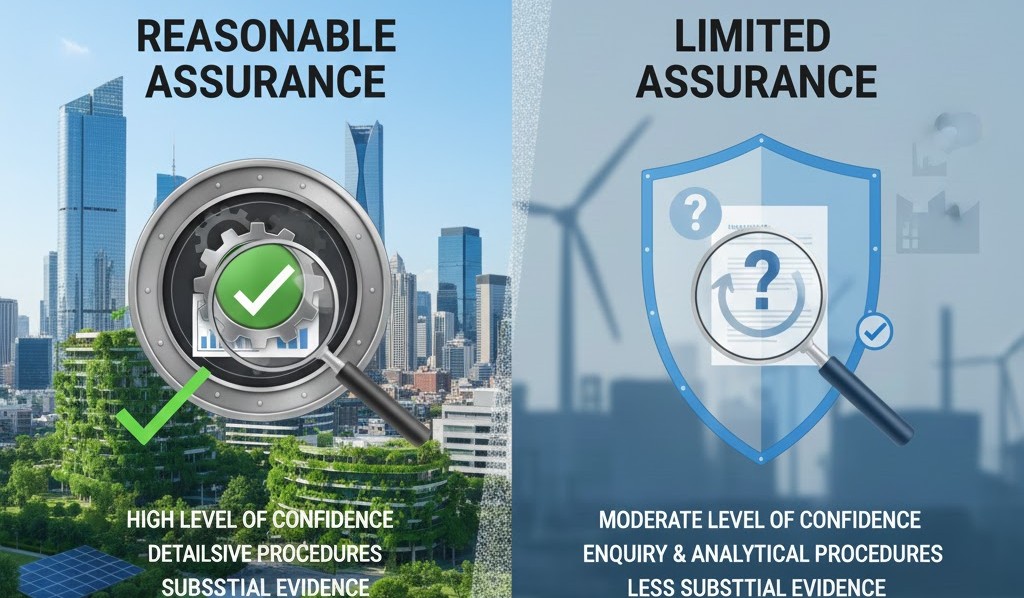
ESG has become a business imperative in India. Environmental, Social, and Governance factors now influence access to capital, regulatory compliance, customer preferences, and risk management. As more companies publish ESG reports and make sustainability claims, two distinct but complementary services have emerged. ESG advisory helps companies build their strategy, collect data, and prepare reports. ESG assurance independently verifies that the reported information is accurate, complete, and credible. Many companies confuse these two services. Some seek only advisory and skip assurance, leaving their reports unverified and vulnerable to greenwashing accusations. Others seek assurance before they have built the underlying systems needed to produce reliable data. Both approaches fail. This article explains the critical difference between advisory and assurance, why both are necessary, and how Indian companies can use them effectively to build trust with investors, regulators, and the public. The two questions every ESG journey must answerEvery company that commits to ESG reporting eventually faces two fundamental questions. The first question is strategic. What should we measure, how should we measure it, and how do we present our performance credibly? The second question is verification. Can we prove that what we have reported is true? These two questions require two different kinds of expertise. The first question is the domain of ESG advisory. The second question is the domain of ESG assurance. They are related but distinct. They involve different skill sets, different methodologies, and different relationships with the company. Understanding the distinction is essential for any company serious about ESG. ESG advisory is a collaborative, forward looking service. An advisor works with the company to build systems, improve processes, and prepare reports. The advisor is a partner in the company's ESG journey. The relationship is trusting and constructive. ESG assurance is an independent, backward looking service. An assurer examines the company's reported information, tests its accuracy, and provides an independent opinion. The assurer is not a partner but an evaluator. The relationship is professional and arms length. Neither service is better than the other. They serve different purposes. A credible ESG program requires both. Advisory without assurance leaves the company with unverified claims. Assurance without advisory leaves the company with no reliable system for producing accurate data in the first place. ESG advisory. Building the foundationsLet us begin with ESG advisory. This is the service that helps companies establish the infrastructure for credible ESG reporting. An ESG advisory engagement typically begins with a gap assessment. Where is the company today relative to where it needs to be? What data is already being collected? What data is missing? What systems are in place? What systems need to be built? The advisor maps the current state and identifies the gaps. The next phase is strategy development. Which ESG topics are material to this company? Materiality means the issues that have the most significant impact on the company's business performance or on its stakeholders. For a manufacturing company, the E in ESG might be dominant. Energy efficiency, water management, and waste reduction. For a financial services company, the G in ESG might be more important. Board diversity, executive compensation, and anti corruption controls. The advisor helps the company identify its material topics and focus its efforts where they matter most. The third phase is system building. An ESG report is only as reliable as the systems that produce the underlying data. An advisor helps the company design and implement data collection processes. This might involve setting up spreadsheets, implementing software tools, training staff, and defining roles and responsibilities. The goal is to ensure that data is collected consistently, accurately, and on a regular schedule. The fourth phase is report preparation. The advisor helps the company draft its ESG report, structure its disclosures, and align with applicable frameworks. The most common frameworks in India include the Business Responsibility and Sustainability Report (BRSR) required by the Securities and Exchange Board of India, the Global Reporting Initiative standards, and the Sustainability Accounting Standards Board standards. Each framework has different requirements. The advisor helps the company navigate them. The fifth phase is continuous improvement. ESG is not a one time project. It is an ongoing process. The advisor helps the company track performance over time, benchmark against peers, and identify opportunities for improvement. This might include setting targets, developing action plans, and monitoring progress. Throughout the advisory engagement, the relationship between the advisor and the company is collaborative. The advisor is on the company's side. They share the same goal. A credible, effective ESG program. ESG assurance. Verifying the claimsNow let us turn to ESG assurance. This is the service that provides independent verification of the company's reported information. An ESG assurance engagement is structured differently from an advisory engagement. The assurer must be independent. They cannot have been involved in preparing the report or designing the data collection systems. Independence is essential for credibility. An assurer who also advises cannot provide an objective opinion. The assurance process begins with an engagement agreement. The company and the assurer agree on the scope of the assurance. Which parts of the ESG report will be verified? Which locations or business units are included? What is the period covered by the assurance? The agreement also specifies the level of assurance. Reasonable assurance or limited assurance. Reasonable assurance is the higher level. It is comparable to the assurance provided in a financial statement audit. The assurer performs detailed testing, examines evidence, and provides a high degree of confidence that the information is accurate. Reasonable assurance engagements are more rigorous, more time consuming, and more expensive. Limited assurance is a lower level. The assurer performs fewer procedures, primarily inquiries and analytical reviews, and provides less confidence. Limited assurance is often sufficient for companies that are early in their ESG journey or for information that is difficult to verify precisely. Once the scope and level are agreed, the assurer begins their work. They interview the people responsible for collecting and reporting ESG data. They inspect documentation and evidence. They test the accuracy of calculations. They assess whether the data collection systems are designed appropriately and operating effectively. They confirm that the report includes all required disclosures and that the disclosures are presented fairly. At the conclusion of the engagement, the assurer issues an opinion. The opinion states whether the information is accurate, complete, and presented fairly. The opinion is included in the company's ESG report or issued as a separate letter. It provides stakeholders with confidence that the company's claims have been independently verified. Throughout the assurance engagement, the relationship between the assurer and the company is arms length. The assurer is not the company's partner. They are an independent evaluator. This independence is what gives the assurance opinion its value.The common confusion. Why companies mix them up Despite the clear distinction between advisory and assurance, many companies confuse the two. This confusion has several causes. ➣Unfamiliarity. ESG is still new to many Indian companies. The language, the frameworks, and the services are unfamiliar. It is easy to assume that one service covers everything. It does not. ➣Similarity in names. Both advisory and assurance start with the same letter. Both are offered by consulting firms and professional services firms. A company might hire a firm to help with ESG and not realise that the same firm should not both advise and assure. ➣ Cost pressure. Advisory and assurance both cost money. A company looking to save might try to combine them or skip one. This is a false economy. Skipping advisory leads to poor data quality. Skipping assurance leads to unverified claims. Both damage credibility. ➣ Overconfidence. Some companies believe they can handle advisory internally. They design their own systems and prepare their own reports. Then they seek assurance. The assurer finds that the underlying systems are inadequate. The assurance engagement fails or produces a negative opinion. The company has wasted time and money. The correct sequence is clear. Advisory first. Build the systems. Collect the data. Prepare the report. Then assurance. Verify the accuracy. Obtain the independent opinion. Publish the verified report. This sequence works. Skipping steps does not. Why both are necessary. Three compelling reasonsA company might ask why both advisory and assurance are truly necessary. Why cannot we just do one? Here are three compelling reasons. 1. Credibility requires independent verification.An ESG report that has not been assured is just a collection of claims. The company is essentially asking stakeholders to trust it. In today's skeptical environment, trust is scarce. Independent assurance provides evidence that the claims have been tested. It converts a promise into a verified statement. For investors, regulators, and customers, that difference is decisive. 2.Data quality requires systems.Assurance cannot create good data out of bad systems. If the underlying data collection is inconsistent, incomplete, or inaccurate, the assurer will identify those problems. The best possible assurance opinion on bad data is still an opinion on bad data. The company needs advisory to build the systems that produce good data in the first place. Then assurance can verify that the good data is accurate. 3.Continuous improvement requires both working together.The best ESG programs use advisory and assurance in an ongoing cycle. Advisory helps the company improve its systems and performance. Assurance independently verifies the results. The findings from assurance inform the next round of advisory. What weaknesses were identified? Where did the data fail testing? Those become priorities for the next improvement cycle. Together, advisory and assurance drive a virtuous cycle of continuous improvement. The Indian context. BRSR and the growing demand for assuranceIndia's ESG landscape has been transformed by the introduction of the Business Responsibility and Sustainability Report, or BRSR. The Securities and Exchange Board of India now requires the top 1000 listed companies to include a BRSR in their annual reports. The BRSR covers a wide range of ESG topics. Energy consumption, water usage, waste management, greenhouse gas emissions, employee safety, human rights, community engagement, and governance practices. The reporting requirements are detailed and specific. Companies must provide quantitative data, not just qualitative descriptions. The BRSR does not currently require assurance, but the direction is clear. The Securities and Exchange Board of India has indicated that assurance will become mandatory in the future. Some leading companies are already obtaining voluntary assurance to demonstrate leadership and build investor confidence. This regulatory trajectory creates both a challenge and an opportunity for Indian companies. The challenge is to build the systems necessary to produce reliable BRSR data. The opportunity is to get ahead of the curve by engaging advisory services now and preparing for mandatory assurance later. Companies that wait will scramble. Companies that act now will be ready.Choosing an advisor. What to look for When selecting an ESG advisory firm, companies should consider several factors. ➣ Relevant experience. Does the advisor have experience in your industry? ESG priorities differ significantly between manufacturing, financial services, technology, and healthcare. An advisor who understands your specific context will provide more valuable guidance. ➣ Framework expertise. Does the advisor understand the BRSR, the Global Reporting Initiative standards, the Sustainability Accounting Standards Board standards, and other relevant frameworks? Your advisor should be able to help you navigate the framework landscape and choose the most appropriate approach for your company. ➣ Practical orientation. Is the advisor focused on building systems that work in the real world, or are they focused on producing a glossy report? A good advisor cares about data quality, not just presentation. Ask about their approach to system design and staff training. ➣ Independence from assurance. Does the advisor also offer assurance services? If so, the same firm cannot both advise and assure you. The conflict of interest would be unacceptable. It is fine to hire a firm that offers both services, but you must ensure that the advisory team and the assurance team are completely separate and that the firm has robust policies to manage independence. ➣ Cultural fit. ESG advisory involves close collaboration. You will share sensitive information and work through complex problems. Choose an advisor you trust and feel comfortable with. Choosing an assurer. What to look forWhen selecting an ESG assurance provider, the criteria are different. ➣ Independence. The assurer must be independent of the company and independent of any advisory work performed for the company. If the same firm provided advisory services, the assurance engagement must be conducted by a separate team with no involvement in the advisory work. Many companies prefer to use different firms for advisory and assurance to avoid even the appearance of a conflict. ➣ Technical competence. ESG assurance requires knowledge of assurance standards, particularly the International Standard on Assurance Engagements 3000. The assurer should be able to explain the standard, the procedures they will perform, and the level of assurance they will provide. ➣ ESG knowledge. The assurer does not need to be an ESG expert in the same way an advisor does, but they must understand the topics they are assuring. They need to know what good evidence looks like for each metric. They need to understand the common pitfalls and errors in ESG data collection. ➣ Reputation. The value of assurance depends on the credibility of the assurer. A well known, respected assurance provider adds more value than an unknown one. Look for firms with established assurance practices and a track record of quality work. ➣ Clear communication. A good assurer explains their findings clearly, including any limitations or qualifications. They do not hide behind technical language. They help the company understand what the assurance opinion means and how to improve. The path forward for Indian companiesFor companies ready to begin or strengthen their ESG journey, here is a clear path forward. ✓ Start with a diagnostic. Engage an advisor to assess your current state. What data do you already collect? What systems do you have in place? What gaps need to be filled? ✓ Build the foundations. Work with your advisor to design and implement data collection systems. Train your staff. Establish roles and responsibilities. Start collecting data consistently. ✓ Prepare a report. Draft your first ESG report. Use the BRSR framework if you are a listed company, or another appropriate framework if you are not. ✓ Commission assurance. Before you publish your report, engage an assurer to verify the information. Start with limited assurance if reasonable assurance seems too ambitious. Even limited assurance adds credibility. ✓ Publish and improve. Release your assured report. Use the findings from the assurance engagement to identify areas for improvement. Work with your advisor to address those areas. Repeat the cycle next year. This path is not quick. Building a credible ESG program takes time. But every step builds on the last. And each year, your program becomes stronger, your data becomes more reliable, and your credibility becomes more solid. Closing thoughtESG is not a trend. It is a fundamental shift in how businesses are evaluated. Access to capital, regulatory standing, customer trust, and employee engagement all depend increasingly on credible ESG performance. Advisory and assurance are the two pillars of credible ESG reporting. Advisory helps you build the systems and prepare the report. Assurance helps you verify that the report is accurate. Neither pillar can stand alone. Build then verify. That is the sequence. That is the standard. Indian companies that embrace both will lead. Those that confuse them or skip one will struggle to be believed. The choice is clear. Build the foundations. Verify the results. Earn the trust. ...Read more

12 May 2026

In the quiet hours before a board meeting in a skyscraper overlooking the Bandra-Kurla Complex, there is a palpable shift in the air. For decades, these rooms were dedicated to the hard mathematics of profit, loss, and market expansion. Today, a new set of variables sits at the table. These variables are not just numbers. they represent the breath of the city, the safety of a factory worker in Pune, and the long-term survival of the business in a warming world. This is the realm of Environmental, Social, and Governance (ESG) integration, and in the Indian context, it is becoming the most human story in the corporate world. When we talk about ESG Advisory and Assurance, we often get lost in the technicality of the SEBI Business Responsibility and Sustainability Reporting (BRSR) framework. But if we pull back the curtain, we see that "Governance" is actually about the character of an organization. It is the silent engine that determines whether a company’s environmental and social promises are genuine or merely performance art. To write about this for a professional audience, we must move beyond the "engine room" and look at the people who are steering the ship. The Soul of the Boardroom: Governance ReimaginedGovernance is the "G" in ESG, but in many ways, it is the most important pillar because it provides the structure for the other two. In India, corporate governance has traditionally been viewed through the lens of family-run legacies or strict regulatory compliance. The transition to ESG-led governance is a human evolution of leadership. 1. Diversity as a Mirror of SocietyFor a professional website, the conversation around board diversity often starts and ends with gender quotas. However, a humanized approach to governance in India looks deeper. It asks: does this board reflect the world it operates in? We are seeing a trend where Indian boards are actively seeking "Cognitive Diversity." This means bringing in independent directors who aren't just retired CEOs or bankers, but environmental scientists, social activists, and digital ethicists. The human story here is the breaking of the "Old Boys' Club." When a board includes a director who has spent their life studying water scarcity in rural Maharashtra, the company’s water stewardship policy moves from a technical document to a lived reality. This diversity of thought acts as a safeguard against groupthink and ensures that the company remains connected to the ground reality of the Indian people. 2. The Ethical Compass of Executive PayOne of the most powerful tools in the ESG advisory kit is the restructuring of executive compensation. In the past, a CEO’s bonus was tied almost exclusively to EBITDA or stock price. Today, leading Indian firms are linking a significant portion of variable pay to ESG targets. Imagine a scenario where a Managing Director’s year-end bonus is dependent on reducing the company’s carbon footprint by 10% or achieving a 20% increase in the representation of women in middle management. This creates a direct human incentive for ethical leadership. It forces the leadership to care about the "S" and the "E" with the same intensity they bring to the financial balance sheet. It humanizes the C-suite by making them personally accountable for the company’s impact on the world. The Engine Room: Technical Implementation with a PurposeMoving from the boardroom to the factory floor, the implementation of ESG requires a sophisticated blend of technology and human intuition. This is where "Advisory" meets "Action." 1. The Digital Nervous System of ESG DataOne of the greatest challenges for Indian MNCs is the sheer scale of data collection. A company with dozens of manufacturing units across the country has thousands of data points: energy bills, waste logs, employee safety records, and community grievance reports. Advisory firms are now helping companies implement ESG SaaS (Software as a Service) platforms that act as a digital nervous system. These platforms automate the collection of data, but the human element remains critical. A software tool can flag a spike in water usage at a plant in Tamil Nadu, but it takes a human manager to investigate the cause and work with the local community to fix the leak. The professional narrative here is about "Empowered Data." We use technology to handle the drudgery of reporting so that people can focus on the strategy of improvement. 2. Climate Risk Assessment (TCFD) as a Tool for ResilienceThe Task Force on Climate-related Financial Disclosures (TCFD) sounds like a dry, technical framework. But in India, climate risk is a life-and-death matter. For a business with assets in flood-prone areas of Kerala or heatwave-vulnerable regions of Rajasthan, TCFD is a tool for human resilience. Advisory involves "Scenario Planning." We ask: what happens to our supply chain if the monsoon is 30% stronger this year? How do we protect our outdoor workers when temperatures hit 48°C? By quantifying these physical risks, companies can invest in protective infrastructure and better insurance for their employees. This is the human side of "Assurance." It is about providing certainty to stakeholders that the company has a plan to protect its people and its assets from an unpredictable climate. The Social Fabric: Beyond CSR to Social EquityIn India, the "S" in ESG has long been dominated by the 2% CSR mandate. While CSR is important, ESG Advisory pushes companies to look at "Social Equity" across their entire value chain. 1. The Human Rights of the Supply ChainA sustainable company cannot have a "clean" headquarters and a "dirty" supply chain. Advisory services are increasingly focusing on "Human Rights Due Diligence" (HRDD). This involves mapping the supply chain down to the deepest tiers to ensure that there is no child labor, no forced labor, and that fair wages are being paid. The humanized approach here is one of "Supplier Partnership." Instead of just sending an auditor to find faults, companies are working with their smaller suppliers to help them improve their labor standards. They are providing training on safety, offering better credit terms for ethical compliance, and treating the supplier as an extension of the corporate family. This shifts the focus from "policing" to "uplifting." 2. Health and Safety as a Governance PriorityIn the industrial belts of Gujarat and Haryana, the physical safety of workers is the ultimate metric of a company’s character. ESG Assurance involves verifying that safety protocols are not just written in a manual but are practiced on the floor. When an assurer validates that a factory has gone 500 days without a lost-time injury, they are confirming that 500 families have had their breadwinners come home safe every single night. This is where the "Social" and "Governance" pillars intersect. A board that prioritizes safety is a board that values human life over a minor increase in production speed. The Role of Technology in ESG AssuranceTo ensure accuracy and transparency, the modern Indian firm is turning to advanced technology to provide "Investor-Grade" data. » Satellite Monitoring: Using high-resolution imagery to verify reforestation claims or to monitor methane leaks at industrial sites. » IoT Sensors: Real-time monitoring of effluent treatment plants to ensure that no untreated waste is being discharged into local water bodies. » Blockchain for Ethics: Tracking "Conflict-Free" minerals or ethically sourced raw materials through every step of the manufacturing process to provide an unalterable record of integrity. These technologies provide the "Assurance" that global investors demand, but they also serve a higher purpose. They prevent "Greenwashing" by creating a culture of radical transparency. In the professional world, this is known as "Building a Single Version of the Truth." The Cultural Shift: From Compliance to ConvictionThe most difficult part of ESG Advisory isn't the technical implementation. it is the cultural shift. For many legacy businesses in India, ESG is initially viewed as an Western imposition or a regulatory hurdle to be jumped. 1. Education and Internal AdvocacyHumanizing ESG means educating everyone from the security guard to the Chairman on *why* this matters. Advisory firms are now creating "ESG Champions" programs within organizations. These are employees from various departments who volunteer to lead sustainability initiatives. When a junior accountant suggests a way to reduce paper waste, or a logistics manager finds a more efficient route that saves fuel, they are participating in the governance of the company. It democratizes the sustainability journey. It turns ESG from a "C-suite project" into a collective human endeavor. 2. Transparency as a Competitive EdgeIn the past, Indian companies were often guarded about their internal data. The new era of ESG Assurance requires a shift toward "Radical Transparency." By being honest about their challenges—where they are falling short on diversity or where their emissions are rising—companies actually build more trust with stakeholders. The professional insight here is that investors in 2026 value a company that is honest about its struggles and has a clear plan to fix them, more than a company that claims to be perfect. This honesty humanizes the brand. It shows that the company is a learning organization, capable of adapting to the complexities of the modern world. India’s Opportunity: Leading the Global SouthAs we look toward the end of the decade, India has the opportunity to define what ESG looks like for the developing world. We are not just following global standards. we are adapting them to our unique social and environmental context. The humanized professional narrative of India’s ESG journey is one of "Inclusive Prosperity." It is a vision where our industrial growth does not come at the cost of our environment, and where our corporate success is measured by the well-being of our citizens. ESG Advisory and Assurance are the tools we use to navigate this path. They provide the structure, the data, and the credibility. But the fuel for this journey is the human desire to build something that lasts—a legacy that our children can be proud of. Conclusion: A Call to the New Guard of Indian BusinessThe implementation of ESG is the defining challenge of our generation of professionals. Whether you are in the boardroom, the legal department, or on the factory floor, you are a part of this transition. Strategic Next Steps for Professionals:» Look for the Human Behind the Data: Every carbon metric or safety stat represents a real-world impact. Keep that perspective at the center of your reporting. » Champion Diversity of Thought: Encourage your board and your teams to look beyond traditional backgrounds. Fresh perspectives are the best defense against risk. » Invest in Transparency: View assurance not as an audit to be feared, but as a badge of honor to be earned. » Practice Radical Honesty: Be clear about your goals and your gaps. Trust is the most valuable asset in the modern economy, and it is built on truth. The skyscrapers of Mumbai and the factories of Chennai are no longer just places of business. They are laboratories for a more sustainable and equitable future. By humanizing our governance and professionalizing our purpose, we can ensure that the India of 2070 is a nation that has truly arrived. The silent engine of change is humming. It is time for us to step up and lead the way. ...Read more

12 May 2026

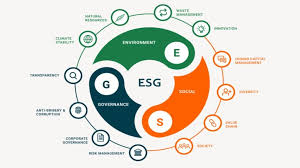
Businesses today operate in a world that is changing far more rapidly than ever before. Climate change, resource scarcity, social inequality, ethical governance concerns, and growing public awareness are reshaping the expectations placed upon organisations across every industry. Companies are no longer judged only by their financial performance or market value. Increasingly, they are also being evaluated based on how responsibly they manage environmental impact, social responsibility, and corporate governance practices. This shift has brought Environmental, Social, and Governance principles, commonly known as ESG, into the centre of modern business strategy. ESG is no longer viewed as a niche sustainability concept limited to large multinational corporations. It has become an important framework guiding how businesses operate, grow, communicate, and build long term resilience. At the same time, stakeholders today expect greater transparency and accountability from organisations regarding their ESG commitments and performance. Investors, regulators, consumers, employees, and communities increasingly want reliable information about how companies address environmental risks, labour practices, diversity, ethics, and governance standards. This growing demand for responsible and transparent business practices has significantly increased the importance of ESG Advisory and Assurance services.  ESG Advisory helps organisations integrate sustainability, ethical governance, and social responsibility into business operations and long term strategic planning. ESG Assurance focuses on verifying ESG related data, reports, and disclosures to ensure that information shared with stakeholders is accurate, credible, and transparent. Together, ESG Advisory and Assurance support businesses in building trust, improving sustainability performance, strengthening governance systems, and preparing for a future where responsible business practices are becoming essential rather than optional. Understanding ESG and Its Growing ImportanceThe concept of ESG is based on three interconnected pillars that influence how organisations operate and create long term value. Environmental factors focus on how businesses impact the natural environment. This includes carbon emissions, energy usage, waste management, water conservation, pollution control, renewable energy adoption, climate risk management, and resource efficiency. Social factors examine how organisations manage relationships with employees, customers, suppliers, and communities. Areas such as labour rights, workplace safety, diversity, inclusion, employee welfare, customer protection, and community engagement all fall within this category. Governance focuses on leadership, ethics, accountability, transparency, compliance, and decision making structures within organisations. Corporate governance includes board practices, anti corruption policies, risk management systems, shareholder rights, and ethical business conduct. Together, these three pillars provide a broader understanding of organisational performance beyond financial results alone. In the past, sustainability and ethical business practices were often treated as secondary concerns. Today, ESG performance increasingly influences investment decisions, regulatory frameworks, consumer trust, and corporate reputation. Businesses that ignore ESG risks may face financial losses, reputational damage, legal scrutiny, operational disruptions, and declining stakeholder confidence. The Rise of ESG in IndiaIndia’s business landscape is undergoing a major transformation as sustainability and governance expectations continue to evolve. Rapid industrialisation, urbanisation, technological growth, and expanding global trade have strengthened India’s economic position significantly. However, these developments have also increased pressure on natural resources, infrastructure systems, and social equity. Environmental issues such as air pollution, water scarcity, climate vulnerability, waste generation, and energy consumption are becoming increasingly serious concerns across the country. At the same time, businesses are facing greater scrutiny regarding labour conditions, governance practices, transparency, and ethical accountability. Cities such as Mumbai, Bengaluru, Delhi, Hyderabad, and Chennai have become major centres for ESG consulting, sustainability reporting, climate risk management, and corporate governance initiatives. Indian regulators and financial institutions are also encouraging stronger ESG disclosures and sustainability reporting standards. Investors increasingly expect companies to demonstrate how they manage ESG risks and opportunities. As a result, ESG is gradually becoming integrated into mainstream business planning rather than remaining limited to sustainability departments alone. What is ESG Advisory?ESG Advisory involves helping organisations understand, develop, implement, and improve ESG strategies within business operations and long term decision making. Many companies recognise the importance of sustainability and responsible governance but struggle to determine where to begin or how to integrate ESG effectively into complex organisational structures. ESG Advisory services provide guidance in areas such as:› Sustainability strategy development› ESG risk assessment› Carbon footprint reduction› Climate transition planning› ESG reporting frameworks› Diversity and inclusion policies› Governance strengthening› Regulatory compliance› Stakeholder engagement› Sustainable supply chain managementAdvisory services help businesses align ESG goals with operational realities and long term corporate objectives. Importantly, ESG Advisory is not simply about compliance or image management. It focuses on helping organisations build resilience, improve efficiency, manage risks, and create sustainable long term value. Moving Beyond Sustainability as a TrendFor many years, sustainability initiatives were sometimes viewed primarily as public relations exercises or optional corporate programs. However, this perception has changed significantly. Today, ESG is increasingly linked directly to financial performance, investment attractiveness, operational stability, and market competitiveness. Investors are paying closer attention to how companies manage environmental risks and governance practices. Consumers are becoming more conscious of ethical sourcing, labour standards, environmental impact, and corporate transparency. Employees increasingly prefer organisations that demonstrate social responsibility and ethical leadership. Businesses are therefore recognising that ESG is not separate from core strategy. It is becoming part of how organisations manage growth, innovation, reputation, and long term survival. This shift has increased demand for professional ESG Advisory services capable of helping organisations navigate complex sustainability expectations while remaining commercially competitive. Environmental Responsibility and Climate ActionOne of the most visible dimensions of ESG involves environmental responsibility. Climate change has become one of the defining global challenges of the modern era. Rising temperatures, floods, droughts, extreme weather events, and resource scarcity are already affecting economies and communities worldwide. Businesses contribute significantly to environmental impact through energy consumption, manufacturing processes, transportation systems, waste generation, and resource extraction. As environmental concerns intensify, organisations are under increasing pressure to reduce emissions, improve efficiency, and transition toward more sustainable operations. Many Indian companies are now investing in:› Renewable energy adoption› Energy efficient infrastructure› Waste reduction systems› Water conservation technologies› Sustainable manufacturing› Circular economy practices› Carbon reduction strategiesESG Advisory services help organisations identify environmental risks and develop realistic sustainability roadmaps aligned with both business objectives and environmental responsibilities. The Social Dimension of ESGWhile environmental discussions often dominate ESG conversations, the social dimension is equally important. Businesses influence people’s lives in multiple ways through employment practices, workplace conditions, community interactions, and supply chain relationships. Social responsibility within ESG includes areas such as› Employee well being› Workplace diversity› Inclusion and equity› Health and safety standards› Labour rights› Skill development› Community engagement› Customer trust› Ethical sourcingIn India, where businesses operate within highly diverse social and economic environments, social responsibility carries significant importance. Companies increasingly recognise that long term success depends heavily on trust, employee satisfaction, community relationships, and ethical treatment of stakeholders. Socially responsible organisations are often better positioned to attract talent, improve employee retention, strengthen brand loyalty, and maintain operational stability. Governance and Ethical LeadershipGovernance forms the foundation that supports environmental and social responsibility efforts. Strong governance systems help organisations maintain ethical decision making, accountability, transparency, and regulatory compliance. Corporate governance includes areas such as:› Board oversight› Ethical business conduct› Anti corruption measures› Risk management› Internal controls› Transparency in reporting› Regulatory compliance› Shareholder accountabilityWeak governance structures can undermine sustainability efforts and create serious reputational or financial risks. Recent corporate scandals across various industries globally have highlighted the consequences of poor governance practices. Stakeholders today expect organisations to demonstrate integrity and responsible leadership alongside financial performance. ESG Advisory helps companies strengthen governance frameworks and build cultures of accountability and ethical conduct. What is ESG Assurance?As ESG reporting becomes more widespread, stakeholders increasingly want assurance that the information being disclosed is accurate and reliable. This is where ESG Assurance becomes essential. ESG Assurance involves independently verifying and validating ESG related data, disclosures, sustainability reports, and performance claims. Assurance services help evaluate whether ESG information presented by organisations is:AccurateTransparentConsistentCredibleProperly documentedAligned with reporting frameworksFor example, if a company claims to have reduced carbon emissions or improved diversity representation, assurance processes help confirm whether those claims are supported by measurable evidence and reliable data systems. This verification process strengthens stakeholder trust while reducing the risk of misleading or exaggerated sustainability claims. Preventing Greenwashing and Building CredibilityOne of the major concerns in modern sustainability reporting is greenwashing. Greenwashing occurs when organisations exaggerate or falsely present environmental or sustainability achievements to appear more responsible than they actually are. As public attention toward ESG grows, some businesses may attempt to use sustainability messaging primarily for branding purposes without making meaningful operational changes. This creates skepticism among investors, consumers, and regulators. ESG Assurance helps address this issue by improving transparency and accountability. Verified ESG reporting demonstrates that organisations are serious about responsible business practices rather than simply using sustainability as a marketing tool. Credibility is becoming one of the most valuable assets in the modern corporate environment, and assurance processes play a critical role in building that credibility. Technology and ESG Data ManagementTechnology is increasingly important in ESG reporting and assurance processes. Organisations now collect large amounts of sustainability related data involving emissions, energy usage, waste generation, workforce diversity, governance indicators, and supply chain practices. Digital platforms, data analytics tools, and ESG management software help businesses:✓ Monitor ESG performance✓ Improve reporting accuracy✓ Track sustainability targets✓ Analyse operational risks✓ Maintain compliance documentationArtificial intelligence and automated reporting systems are also helping organisations manage increasingly complex ESG disclosure requirements more efficiently. However, data quality remains essential. ESG Assurance helps validate whether data collection processes and reporting systems are reliable and accurate. Challenges in ESG ImplementationDespite growing momentum, ESG implementation still presents several challenges. Many organisations struggle with:✗ Lack of standardised reporting systems✗ Difficulty measuring ESG impact✗ Limited internal expertise✗ Complex regulatory expectations✗ Data collection challenges✗ High implementation costs✗ Supply chain transparency issues Smaller businesses in particular may face difficulties integrating ESG practices due to limited financial or technical resources. Additionally, ESG priorities can vary across industries, making implementation highly context specific. Nevertheless, despite these challenges, ESG expectations are likely to continue expanding as sustainability and transparency become increasingly central to global business systems. ESG and the Future of BusinessThe future of business will depend not only on profitability but also on how responsibly organisations manage environmental, social, and governance risks. Companies that integrate ESG effectively are often better prepared for changing regulations, investor expectations, climate challenges, and evolving consumer behaviour. ESG also encourages businesses to think more long term. Instead of focusing solely on immediate profits, organisations are increasingly expected to consider broader impacts on society, the environment, and future generations. For India, ESG presents both a challenge and an opportunity. As one of the world’s fastest growing economies, the country has the chance to shape development models that balance economic growth with sustainability and social responsibility. Businesses that embrace ESG principles today are likely to play a major role in shaping a more resilient and responsible economic future. ConclusionESG Advisory and Assurance have become essential components of modern corporate strategy and governance. They help organisations integrate sustainability, ethical leadership, social responsibility, and transparency into everyday business operations and long term planning. ESG Advisory supports businesses in developing responsible strategies that address environmental, social, and governance challenges while improving resilience and long term value creation. ESG Assurance strengthens trust and accountability by verifying the accuracy and credibility of sustainability data and disclosures. Together, these services help businesses move beyond symbolic sustainability efforts toward creating measurable, transparent, and meaningful impact. In India’s rapidly evolving economic landscape, ESG is becoming increasingly important for companies seeking long term growth, investor confidence, regulatory readiness, and public trust. Ultimately, ESG is not only about compliance or reporting requirements. It reflects a broader transformation in how businesses define success in the modern world. The organisations that lead the future will not simply be those with the highest profits, but those capable of creating value responsibly while contributing positively to society, governance standards, and environmental sustainability. ...Read more