
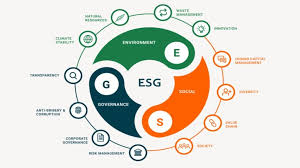
In the quiet hours before a board meeting in a skyscraper overlooking the Bandra-Kurla Complex, there is a palpable shift in the air. For decades, these rooms were dedicated to the hard mathematics of profit, loss, and market expansion. Today, a new set of variables sits at the table. These variables are not just numbers. they represent the breath of the city, the safety of a factory worker in Pune, and the long-term survival of the business in a warming world. This is the realm of Environmental, Social, and Governance (ESG) integration, and in the Indian context, it is becoming the most human story in the corporate world.
When we talk about ESG Advisory and Assurance, we often get lost in the technicality of the SEBI Business Responsibility and Sustainability Reporting (BRSR) framework. But if we pull back the curtain, we see that "Governance" is actually about the character of an organization. It is the silent engine that determines whether a company’s environmental and social promises are genuine or merely performance art. To write about this for a professional audience, we must move beyond the "engine room" and look at the people who are steering the ship.
The Soul of the Boardroom: Governance Reimagined
Governance is the "G" in ESG, but in many ways, it is the most important pillar because it provides the structure for the other two. In India, corporate governance has traditionally been viewed through the lens of family-run legacies or strict regulatory compliance. The transition to ESG-led governance is a human evolution of leadership.
1. Diversity as a Mirror of Society
For a professional website, the conversation around board diversity often starts and ends with gender quotas. However, a humanized approach to governance in India looks deeper. It asks: does this board reflect the world it operates in?
We are seeing a trend where Indian boards are actively seeking "Cognitive Diversity." This means bringing in independent directors who aren't just retired CEOs or bankers, but environmental scientists, social activists, and digital ethicists. The human story here is the breaking of the "Old Boys' Club." When a board includes a director who has spent their life studying water scarcity in rural Maharashtra, the company’s water stewardship policy moves from a technical document to a lived reality. This diversity of thought acts as a safeguard against groupthink and ensures that the company remains connected to the ground reality of the Indian people.
2. The Ethical Compass of Executive Pay
One of the most powerful tools in the ESG advisory kit is the restructuring of executive compensation. In the past, a CEO’s bonus was tied almost exclusively to EBITDA or stock price. Today, leading Indian firms are linking a significant portion of variable pay to ESG targets.
Imagine a scenario where a Managing Director’s year-end bonus is dependent on reducing the company’s carbon footprint by 10% or achieving a 20% increase in the representation of women in middle management. This creates a direct human incentive for ethical leadership. It forces the leadership to care about the "S" and the "E" with the same intensity they bring to the financial balance sheet. It humanizes the C-suite by making them personally accountable for the company’s impact on the world.
The Engine Room: Technical Implementation with a Purpose
Moving from the boardroom to the factory floor, the implementation of ESG requires a sophisticated blend of technology and human intuition. This is where "Advisory" meets "Action."
1. The Digital Nervous System of ESG Data
One of the greatest challenges for Indian MNCs is the sheer scale of data collection. A company with dozens of manufacturing units across the country has thousands of data points: energy bills, waste logs, employee safety records, and community grievance reports.
Advisory firms are now helping companies implement ESG SaaS (Software as a Service) platforms that act as a digital nervous system. These platforms automate the collection of data, but the human element remains critical. A software tool can flag a spike in water usage at a plant in Tamil Nadu, but it takes a human manager to investigate the cause and work with the local community to fix the leak. The professional narrative here is about "Empowered Data." We use technology to handle the drudgery of reporting so that people can focus on the strategy of improvement.
2. Climate Risk Assessment (TCFD) as a Tool for Resilience
The Task Force on Climate-related Financial Disclosures (TCFD) sounds like a dry, technical framework. But in India, climate risk is a life-and-death matter. For a business with assets in flood-prone areas of Kerala or heatwave-vulnerable regions of Rajasthan, TCFD is a tool for human resilience.
Advisory involves "Scenario Planning." We ask: what happens to our supply chain if the monsoon is 30% stronger this year? How do we protect our outdoor workers when temperatures hit 48°C? By quantifying these physical risks, companies can invest in protective infrastructure and better insurance for their employees. This is the human side of "Assurance." It is about providing certainty to stakeholders that the company has a plan to protect its people and its assets from an unpredictable climate.
The Social Fabric: Beyond CSR to Social Equity
In India, the "S" in ESG has long been dominated by the 2% CSR mandate. While CSR is important, ESG Advisory pushes companies to look at "Social Equity" across their entire value chain.
1. The Human Rights of the Supply Chain
A sustainable company cannot have a "clean" headquarters and a "dirty" supply chain. Advisory services are increasingly focusing on "Human Rights Due Diligence" (HRDD). This involves mapping the supply chain down to the deepest tiers to ensure that there is no child labor, no forced labor, and that fair wages are being paid.
The humanized approach here is one of "Supplier Partnership." Instead of just sending an auditor to find faults, companies are working with their smaller suppliers to help them improve their labor standards. They are providing training on safety, offering better credit terms for ethical compliance, and treating the supplier as an extension of the corporate family. This shifts the focus from "policing" to "uplifting."
2. Health and Safety as a Governance Priority
In the industrial belts of Gujarat and Haryana, the physical safety of workers is the ultimate metric of a company’s character. ESG Assurance involves verifying that safety protocols are not just written in a manual but are practiced on the floor.
When an assurer validates that a factory has gone 500 days without a lost-time injury, they are confirming that 500 families have had their breadwinners come home safe every single night. This is where the "Social" and "Governance" pillars intersect. A board that prioritizes safety is a board that values human life over a minor increase in production speed.
The Role of Technology in ESG Assurance
To ensure accuracy and transparency, the modern Indian firm is turning to advanced technology to provide "Investor-Grade" data.
» Satellite Monitoring: Using high-resolution imagery to verify reforestation claims or to monitor methane leaks at industrial sites.
» IoT Sensors: Real-time monitoring of effluent treatment plants to ensure that no untreated waste is being discharged into local water bodies.
» Blockchain for Ethics: Tracking "Conflict-Free" minerals or ethically sourced raw materials through every step of the manufacturing process to provide an unalterable record of integrity.
These technologies provide the "Assurance" that global investors demand, but they also serve a higher purpose. They prevent "Greenwashing" by creating a culture of radical transparency. In the professional world, this is known as "Building a Single Version of the Truth."
The Cultural Shift: From Compliance to Conviction
The most difficult part of ESG Advisory isn't the technical implementation. it is the cultural shift. For many legacy businesses in India, ESG is initially viewed as an Western imposition or a regulatory hurdle to be jumped.
1. Education and Internal Advocacy
Humanizing ESG means educating everyone from the security guard to the Chairman on *why* this matters. Advisory firms are now creating "ESG Champions" programs within organizations. These are employees from various departments who volunteer to lead sustainability initiatives.
When a junior accountant suggests a way to reduce paper waste, or a logistics manager finds a more efficient route that saves fuel, they are participating in the governance of the company. It democratizes the sustainability journey. It turns ESG from a "C-suite project" into a collective human endeavor.
2. Transparency as a Competitive Edge
In the past, Indian companies were often guarded about their internal data. The new era of ESG Assurance requires a shift toward "Radical Transparency." By being honest about their challenges—where they are falling short on diversity or where their emissions are rising—companies actually build more trust with stakeholders.
The professional insight here is that investors in 2026 value a company that is honest about its struggles and has a clear plan to fix them, more than a company that claims to be perfect. This honesty humanizes the brand. It shows that the company is a learning organization, capable of adapting to the complexities of the modern world.
India’s Opportunity: Leading the Global South
As we look toward the end of the decade, India has the opportunity to define what ESG looks like for the developing world. We are not just following global standards. we are adapting them to our unique social and environmental context.
The humanized professional narrative of India’s ESG journey is one of "Inclusive Prosperity." It is a vision where our industrial growth does not come at the cost of our environment, and where our corporate success is measured by the well-being of our citizens.
ESG Advisory and Assurance are the tools we use to navigate this path. They provide the structure, the data, and the credibility. But the fuel for this journey is the human desire to build something that lasts—a legacy that our children can be proud of.
Conclusion: A Call to the New Guard of Indian Business
The implementation of ESG is the defining challenge of our generation of professionals. Whether you are in the boardroom, the legal department, or on the factory floor, you are a part of this transition.
Strategic Next Steps for Professionals:
» Look for the Human Behind the Data: Every carbon metric or safety stat represents a real-world impact. Keep that perspective at the center of your reporting.
» Champion Diversity of Thought: Encourage your board and your teams to look beyond traditional backgrounds. Fresh perspectives are the best defense against risk.
» Invest in Transparency: View assurance not as an audit to be feared, but as a badge of honor to be earned.
» Practice Radical Honesty: Be clear about your goals and your gaps. Trust is the most valuable asset in the modern economy, and it is built on truth.
The skyscrapers of Mumbai and the factories of Chennai are no longer just places of business. They are laboratories for a more sustainable and equitable future. By humanizing our governance and professionalizing our purpose, we can ensure that the India of 2070 is a nation that has truly arrived. The silent engine of change is humming. It is time for us to step up and lead the way.




Add a Comment