

Kolkata | 14 August, 2026
| As corporate investment in sports grows, the real CSR impact lies beyond medals - in better education, nutrition, safety and opportunities for young athletes. |
| Summary: Sports is taking on a bigger role in India’s CSR landscape, with spending on “training to promote sports” rising from ₹311.71 crore in FY2021-22 to ₹542.53 crore in FY2022-23 and ₹692.09 crore in FY2023-24. But higher spending does not automatically translate into greater social impact. The real measure is whether these programmes help young people stay in education, access proper nutrition and healthcare, train and compete safely, and build opportunities both within and beyond sport. For girls and children from underserved communities, meaningful impact also requires equal access, strong safeguarding and support that continues beyond the CSR funding period. |
| Keywords sports-for-development, sports CSR, CSR in sports, corporate sports initiatives, grassroots sports India, sports and poverty alleviation, CSR and youth development, corporate philanthropy in sports, grassroots sports academies, sports for social development, girls in sports, women in sports India, athlete development,sports nutrition, sports education, athlete safeguarding, sports talent development, CSR impact assessment, sustainable sports development, sports CSR India |
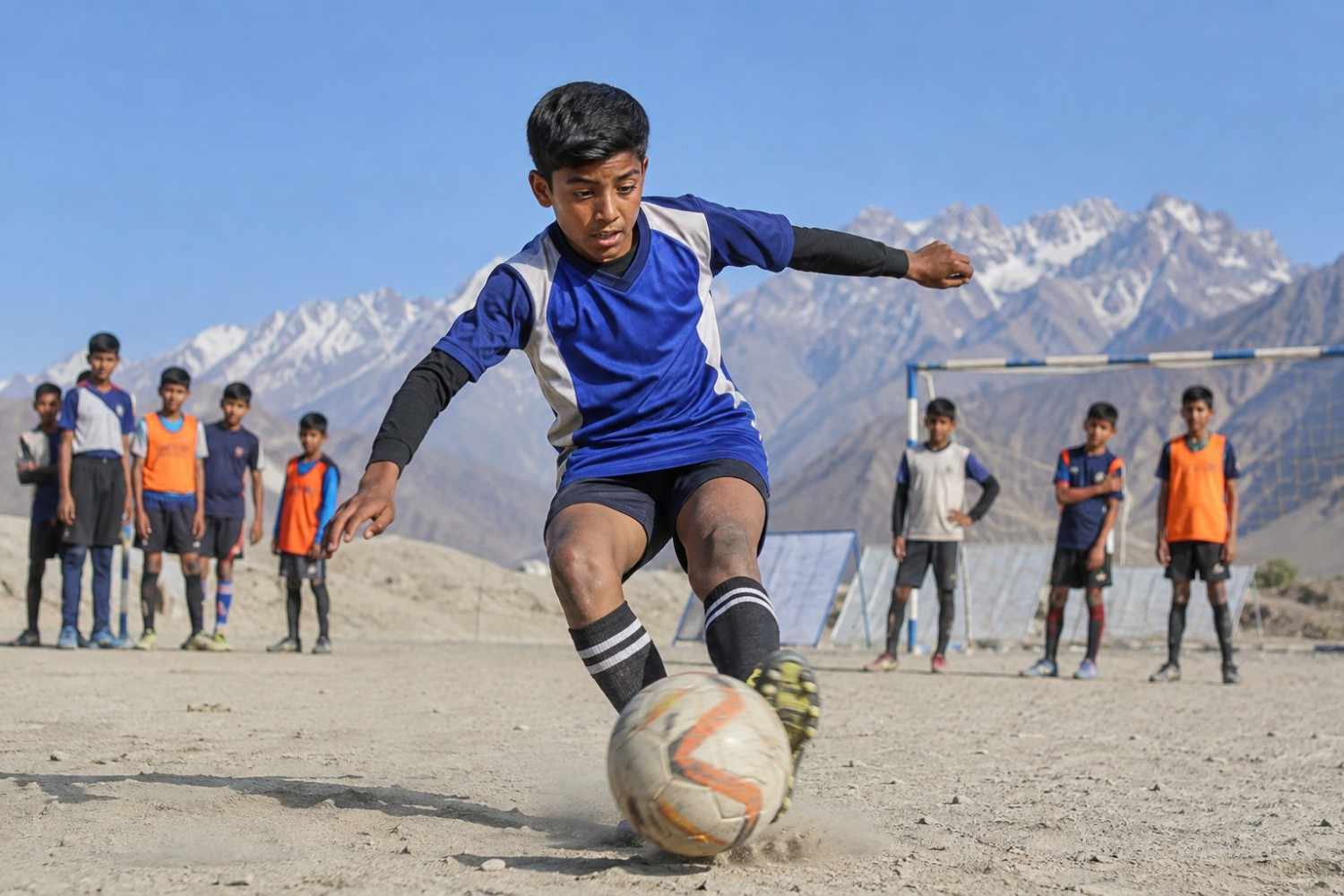
Can Sport Become More Than Just a Sponsorship?
For years, corporate involvement in Indian sport has largely focused on sponsoring teams, tournaments and elite athletes. While this brings funding and visibility to sports, a broader approach is now gaining attention: sports for development. Under this model, sport is not just about competitions or brand promotion.
It becomes a way to give young people access to coaching, education, nutrition, healthcare, mentoring and career opportunities. The timing is important. Corporate spending on sports-related training increased substantially between FY2021-22 and FY2023-24, reflecting growing corporate support for sports development programmes.
The bigger question is whether CSR reporting is also moving beyond simply measuring the number of equipment distributed, tournaments organised and participants enrolled.
CSR Spending on Training to Promote Sports
| Financial Year | CSR Spending |
|---|---|
| FY 2021–22 | ₹311.71 crore |
| FY 2022–23 | ₹542.53 crore |
| FY 2023–24 | ₹692.09 crore |
For example, a programme that trains 500 children may look successful on paper. The real test comes after the training ends: How many participants complete the programme, remain in school, continue playing and progress to district, state or national-level competitions?
These questions highlight the difference between sports sponsorship and sports for development- one supports the sport, while the other aims to use sport as a pathway to improve young people's lives.
Where Can CSR Make the Biggest Difference in Sports?
India already has a strong public sports ecosystem through programmes such as Khelo India, which supports grassroots participation, talent identification, sports infrastructure, academies and community-level sports development.
This gives CSR an opportunity to fill important gaps rather than duplicate existing efforts.
Companies can support areas where public resources may be limited, including specialised coaching, sports science, better equipment, technology, nutrition, travel for competitions and academy infrastructure.
However, CSR support should not create another standalone programme that operates separately from existing systems.
The greater opportunity lies in connecting corporate funding with schools, government sports departments, local academies and communities.
Companies can bring in specialised coaches, technology and equipment, while public institutions can provide access to young athletes and existing facilities.
This approach can also make the impact of CSR easier to measure.
If a programme aims to increase sports participation, companies should first establish what participation looked like before the programme began.
If the goal is to improve performance, there should be a clear starting point against which progress can be measured.
And if the programme promises to create new opportunities, those opportunities should be visible beyond the training ground - in education, competitions, careers or continued participation in sport.
From Participation to Progress: Can Girls Stay in Sport?
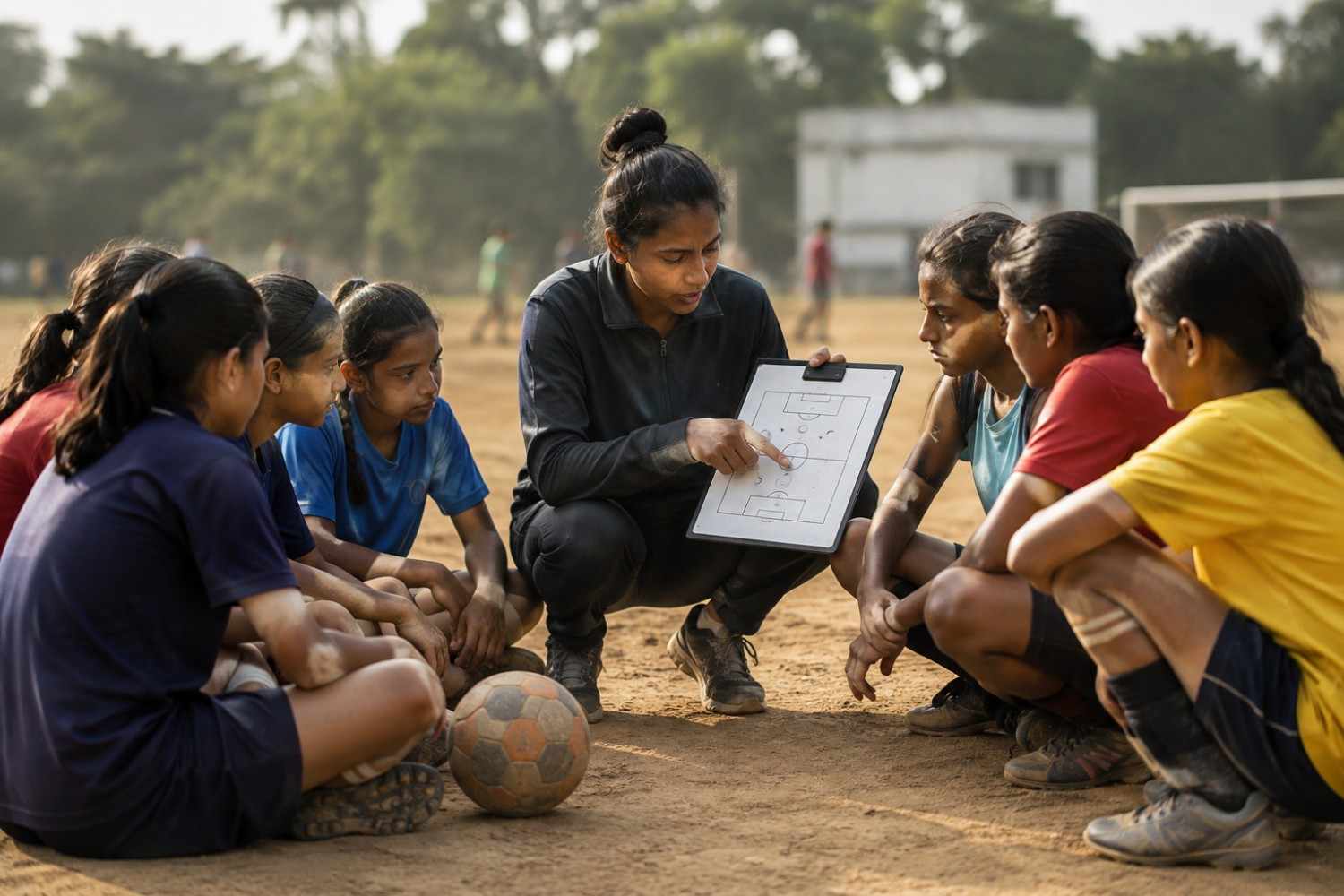
Girls’ participation is one of the clearest tests of whether a sports CSR programme is creating lasting opportunities rather than simply increasing enrolment.
Government data shows that nearly 3 lakh women have participated in around 2,600 ASMITA leagues across 33 disciplines, while around 1.59 lakh women took part in 1,287 leagues during the 2025-26 season.
These figures indicate that opportunities for women and girls to participate in sport are expanding.
But getting girls onto the field is only the beginning.
For many girls, staying in sport depends on factors beyond training itself.
Safe transportation, family support, suitable changing facilities, access to female coaches, proper nutrition and healthcare, and protection from harassment can all play an important role in helping girls continue in sport.
A CSR programme should not be considered truly inclusive simply because girls are included in its list of beneficiaries.
It should also look beyond enrolment and ask: How many girls joined the programme? How many completed the training? How many continued the following year? How many progressed to competitive levels? And do they have a safe and reliable way to raise concerns or report problems?
Most importantly, safeguarding should be built into the programme from the start - not added later as a compliance requirement.
How Sport Can Shape a Child’s Future
A child’s ability to participate in sport is closely linked to the circumstances in which they live.
For children from low-income families, regular training can become difficult when access to nutritious food, healthcare and education is limited, or when they struggle to balance school with sporting commitments.
This is why effective sports-for-development programmes need to look beyond coaching.
Nutrition support can help young athletes stay healthy and recover from training, while education support can help them remain in school.
Access to healthcare can also help address injuries and other health concerns that might otherwise force children to leave sport.
This broader approach also changes how success should be measured.
“Children trained” is an output.
“Children who completed training, remained in education and moved towards sporting or other opportunities” is an outcome.
The distinction matters because not every child will become a professional athlete and professional success should not be the only measure of a sports CSR programme.
For some children, participation may build confidence, discipline, physical fitness, social skills and stronger engagement with education.
For others, sport may open the door to district, state or national-level competition and future opportunities.
Both forms of progress are meaningful, and a strong CSR programme should be able to recognise them.
From Grassroots Training to Sporting Success
Some corporate-backed programmes are moving beyond one-time sponsorships and trying to build long-term pathways for athletes.
The Infosys Foundation and GoSports Foundation’s Gear for Gold programme, which builds on the earlier Girls for Gold initiative, now supports male, female and para-athletes across several Olympic disciplines.
Its approach combines academies, coaching, sports science, infrastructure, technology, scholarships, nutrition, injury management and competition support.
That makes the model different from simply sponsoring a tournament or funding a single event. The aim is to create a complete pathway through which athletes can develop over time:
Talent identification → Academy → Coaching → Sports science → Nutrition → Competition → Progression
Another example is JSW Sports’ Inspire Institute of Sport, which focuses on high-performance training and athlete development across Olympic disciplines.
These programmes show how corporate funding can potentially help strengthen the larger sporting ecosystem, rather than being limited to events and sponsorships.
But the real test lies in the results.
How many athletes enter the programme? How many continue? How many progress to higher levels of competition? What does it cost to achieve those outcomes? And how much of that progress can reasonably be linked to the CSR intervention?
These are the questions that can help distinguish a well-funded sports programme from one that creates a genuine talent pipeline.
Is CSR Creating Lasting Opportunities or Just Counting Activities?
This is where sports CSR needs greater transparency and stronger evidence of impact.
Companies should report the full number of people eligible for a programme, rather than highlighting only how many beneficiaries were reached.
They should also report how many participants completed the programme, how many dropped out, what outcomes were set at the outset and what the programme ultimately achieved.
Financial reporting needs the same level of clarity.
Companies should distinguish between money committed and money actually spent.
A large CSR commitment may attract attention, but a financial announcement does not necessarily mean the funds have already been used.
The same distinction applies to infrastructure. Building an academy is an output. An academy that remains operational, has the right staff and resources, is regularly used and continues to benefit athletes is an outcome.
Medals should also be viewed in context. A medal can demonstrate sporting achievement, but it does not automatically measure the wider social impact of a CSR programme.
For example, if a programme supports 1,000 children but only 20 reach elite competition, the remaining 980 should not automatically be considered unsuccessful.
Their progress may be reflected in better school participation, improved health, greater confidence, stronger social skills or continued involvement in sport.
Ultimately, the success of a sports CSR programme should not be judged only by participation numbers or medals won, but by the meaningful and lasting change it creates in the lives of the people it aims to support.
Can CSR Impact Last After Funding Ends?
Perhaps the biggest test of a sports CSR programme begins when the funding ends.
A company may support an academy for three or four years, but an athlete’s journey does not end when the CSR cycle does.
Coaches still need to be paid, equipment needs to be replaced, facilities need to be maintained, and athletes may continue to need support for travel, nutrition, healthcare and competition.
If there is no plan for these needs, even a successful programme can become dependent on continuous corporate funding.
Long-term sustainability therefore needs to be built into the programme from the very beginning.
Companies can work with state sports departments, schools, local organisations and sporting bodies, while also training local coaches and developing systems that communities can continue to manage.
The goal should be to make programmes less dependent on a single donor over time, rather than simply extending the CSR funding cycle year after year.
This brings us to the bigger question: What should sports-for-development actually measure?
The future of sports CSR should not be measured by how many tournaments are organised, kits are distributed or academies are launched, but by the lasting impact these initiatives create.
It should be judged by the progress that continues after the activity is over.
The real measure of impact lies in what happens to participants over time: Who joined the programme? Who stayed? Who completed the training? What difference did it make in their lives? Did children continue their education? Did girls remain involved in sport? Did athletes receive adequate nutrition and healthcare? Did promising players progress to higher levels of competition? Did the programme open up opportunities beyond sport?
And, most importantly, what continued after the funding came to an end?
India does not need CSR that simply puts more children on playing fields. It needs corporate investment that makes those fields safe, accessible and connected to real opportunities for growth.
The strongest sports CSR story may not always be about the athlete who wins a medal.
It could be the girl who found the support to continue her sporting journey, the child who remained in school, the athlete who gained access to essential nutrition and professional coaching, or the young guy who built confidence, developed new skills and found greater opportunities through sport.
That is when sport stops being just a CSR activity - and becomes a lasting pathway to opportunity, empowerment and development.
Sources:
- Ministry of Youth Affairs & Sports — Khelo India
For the article’s discussion of grassroots sports, talent identification, sports academies, women’s participation, disability inclusion and sport as a tool for development. - Press Information Bureau — Government of India, Ministry of Youth Affairs & Sports
For the current Khelo India ecosystem, including training centres, academies, athlete support, sports science, nutrition and athlete pathways. - Infosys Foundation & GoSports Foundation — Gear for Gold
For the article’s Infosys/GoSports case study covering academies, coaching, infrastructure, sports science, scholarships, nutrition, injury management, competition support and athlete progression. - Infosys Foundation — Girls for Gold Programme
For the article’s discussion of girls’ participation, women athletes aged 13–19, scholarships, coaching, academies and the development of sustainable sporting careers. - GoSports Foundation — Programmes & Sports Development
For the broader athlete-development and academy ecosystem, including Gear for Gold and programmes supporting athletes, academies and communities. - JSW Foundation / JSW Sports
For the article’s discussion of JSW’s sports-promotion work and its integration of sport with wider community-development areas. - JSW Energy — Annual Report 2023–24, “Empowering Communities”
Particularly relevant to the article because it documents Project Shikhar, rural boxing development, infrastructure, training and nutrition support, and collaboration with government agencies and sports associations. - Infosys Foundation Annual Report 2023–24
For the Girls for Gold evidence around academy-driven development, sports-science centres, athlete monitoring, international competition exposure and holistic education/upskilling.



Add a Comment