Impact Assessment

Impact Assessment measures the effectiveness and outcomes of projects or initiatives, especially in social and environmental areas. It evaluates whether the intended goals are achieved and helps organizations understand the real-world impact of their actions.

Showing 7

24 Aug 2026

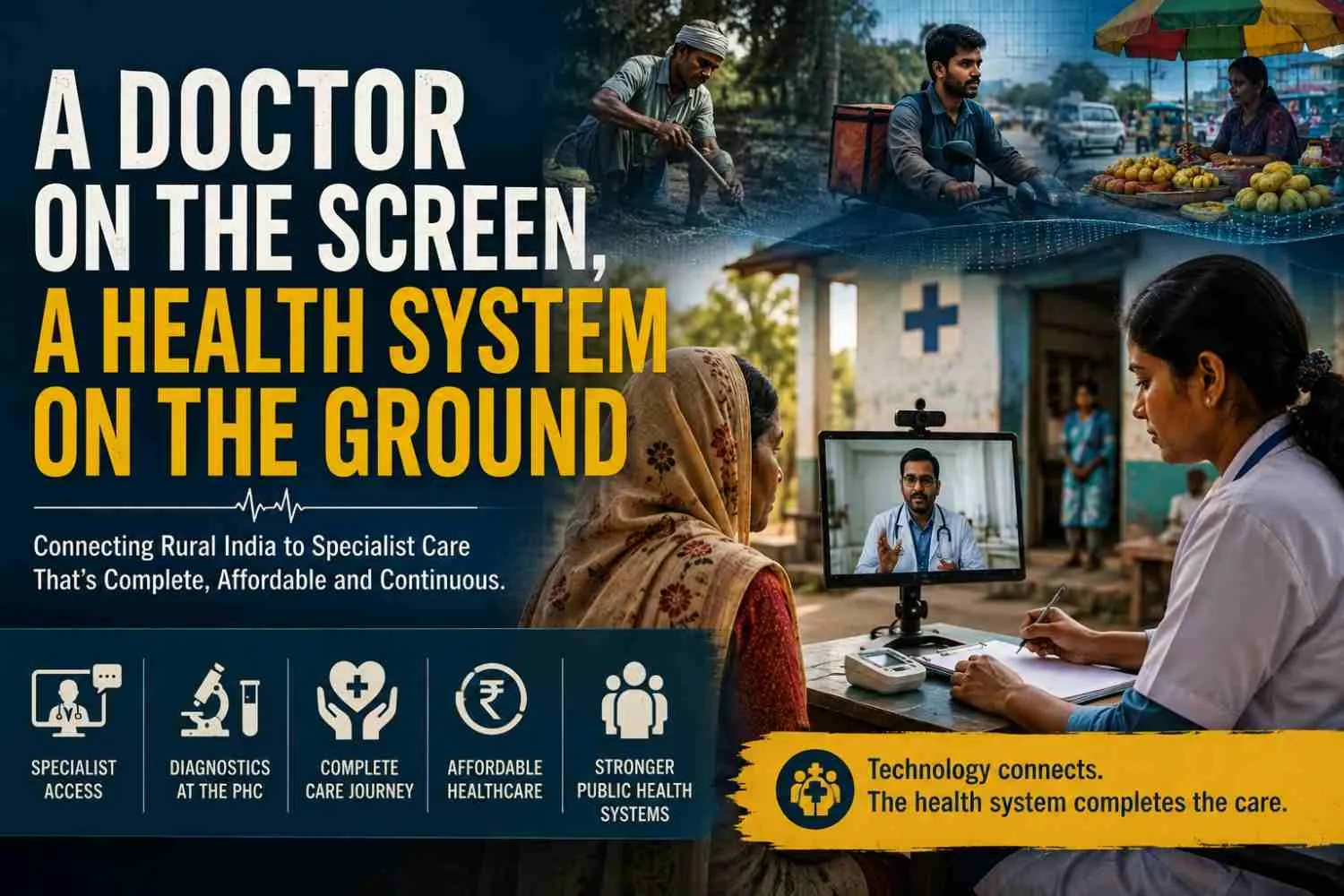
Kolkata |24 August, 2026  India’s telemedicine network is bringing specialist care closer to rural patients, but the real challenge is ensuring that a consultation leads to care that is complete, affordable and continuous. SummaryFor rural patients, seeing a specialist can mean a long journey, lost wages and repeated visits to a distant hospital. India’s telemedicine network is changing that equation by bringing specialist expertise closer to rural communities, while corporate partnerships are adding diagnostics, technology, mobile healthcare and specialist access to the mix. But a teleconsultation is only one part of the care journey. The real test is whether patients are diagnosed, treated and followed up without having to bear the same travel and financial burden. For CSR programmes, success also depends on whether public health facilities are strengthened, outcomes are measured against a clear baseline, money is actually spent as reported and systems continue functioning after corporate funding ends. KeywordsPhygital Healthcare, Rural Telemedicine, Digital Health India, eSanjeevani, Healthcare Access, Rural Healthcare, Primary Health Centres, Ayushman Arogya Mandirs, Digital Health Infrastructure, Teleconsultation, Diagnostics, Continuity of Care   Can a PHC become the gateway to a specialist hundreds of kilometres away? For many rural patients, the challenge is not simply finding healthcare. But is reaching the right doctor without travelling hundreds of kilometres, losing a day’s wages or making repeated trips to a distant hospital. India continues to face shortages and an uneven distribution of health professionals, particularly in rural and underserved areas, making specialist access a bigger challenge than simply counting the number of doctors available. Telemedicine can help change this equation by bringing specialist expertise closer to patients instead of requiring them to travel long distances for every consultation. India’s eSanjeevani platform has demonstrated the scale of this approach by connecting patients and health workers with doctors and specialists, including in rural and remote communities.But phygital healthcare cannot depend on a screen alone.The physical Primary Health Centre remains an important part of the care journey. A nurse or community health worker can examine the patient, record vital signs, conduct basic diagnostic tests, explain the specialist’s advice and help ensure that medicines, referrals and follow-up care are available. The technology can bring the specialist closer. But it is the local health system that turns a remote consultation into actual care. PHYGITAL CARE JOURNEY Village patient → Local PHC → Physical examination → Point-of-care diagnostics → Remote specialist → Treatment → Follow-up The screen connects the specialist. The PHC completes the care journey. What happens when telemedicine meets diagnostics? A specialist cannot always make a reliable diagnosis through a conversation alone. Basic diagnostic tests can provide the information needed to understand a patient’s condition and decide what treatment or referral is required. A blood-sugar or blood-pressure reading, pregnancy test, haemoglobin level or another point-of-care test can significantly change what happens after a teleconsultation. This makes diagnostics an important part of the phygital healthcare model, where digital specialist access is combined with physical healthcare services at the local level. NITI Aayog’s work across Aspirational Districts and Blocks includes healthcare interventions that bring together community outreach, frontline health workers, diagnostics and digital monitoring. The broader lesson is clear: technology works best when it is connected to the basic healthcare infrastructure patients can access locally. That means a teleconsultation should not end with a video call. It should connect to examination, diagnosis, medicines, referrals and follow-up care.Otherwise, a programme may be able to report thousands of consultations while leaving the more important question unanswered: Did those consultations actually lead to better care for patients? THE SCREEN IS ONLY ONE PART REMOTE SPECIALIST↓DIGITAL PLATFORM↓PHC / HEALTH WORKER↓DIAGNOSTICS + PHYSICAL EXAMINATION↓MEDICINES + REFERRAL↓FOLLOW-UP Technology connects the patient to expertise. Infrastructure turns that expertise into care. Can corporate partnerships strengthen the public health system? This is where corporate participation can become more than a funding exercise. Companies can bring technology, specialist networks, diagnostics, equipment, training and logistics that may help extend healthcare to communities that public facilities struggle to reach on their own.There are already examples of different approaches. Tata Trusts has worked with state governments on telehealth and mobile healthcare initiatives aimed at connecting underserved communities with doctors and specialist services. Apollo’s remote healthcare network offers another hybrid model. Its 2024–25 ESG report states that the network has delivered more than 16.5 million teleconsultations across 95 specialties, combining digital consultations with physical healthcare services. Meanwhile, Smile Foundation’s Smile on Wheels takes doctors, nurses, laboratory services and medicines directly to villages and other hard-to-reach communities through mobile medical units.These models also raise a bigger question for CSR: Should companies create separate healthcare systems of their own, or use their resources to strengthen the government facilities already serving these communities? The second approach could offer greater long-term value. Instead of creating parallel systems that may struggle to continue once funding ends, corporate partners can support existing PHCs with digital infrastructure, diagnostic equipment, specialist access, staff training and logistics, while keeping the public health system at the centre of care. The goal should not simply be to bring corporate healthcare to rural India. It should be to leave the rural healthcare system stronger than it was before the partnership began.WHO DOES WHAT? GOVERNMENT• PHCs• Health workers• Public health infrastructure• Referrals CORPORATES• Technology• Equipment• Diagnostics• Funding• Specialist networks NGOs / COMMUNITY GROUPS• Outreach• Awareness• Inclusion• Local access PATIENTS / COMMUNITIES• Care-seeking• Treatment• Follow-up• Feedback Can preventive healthcare produce a measurable social return? For CSR programmes, the focus needs to move beyond how many services were delivered to what actually changed for patients. Screening 10,000 people is an activity. Identifying patients with hypertension or diabetes, ensuring they begin treatment and helping them complete follow-up is an outcome. This distinction is particularly important when companies use technology to expand preventive healthcare. J-PAL South Asia has evaluated preventive-health interventions in India, including research on demand for hypertension screening and the impact of health camps on preventive-care investment. Its research also highlights an important limitation: technology and better monitoring systems do not automatically lead to better healthcare delivery. In Karnataka, for example, a biometric system successfully tracked the attendance of doctors at Primary Health Centres, but it did not improve attendance because the government struggled to enforce the incentives and penalties linked to the system.The lesson is relevant for corporate healthcare programmes too.A better dashboard does not automatically mean better healthcare.What matters is whether patients are being diagnosed earlier, starting treatment, completing follow-up and ultimately experiencing better health outcomes. The real measure of CSR is not the number of beneficiaries on a report, but the difference the programme makes to their lives. ACTIVITY VS OUTCOME 10,000 people reached↓7,500 screened↓2,100 diagnosed / referred↓1,600 started treatment↓1,200 completed follow-up Measure the care journey, not just the first contact. What do rural workers and migrant families need from these systems? Rural healthcare cannot be separated from the realities of work and income. For many people, accessing specialist care can mean more than a long journey. It can mean lost wages, travel costs, childcare difficulties and time away from work. A worker who has to travel to another town for a specialist consultation may lose a day’s earnings. Migrant workers may face additional barriers when their workplace and place of residence keep changing. Women may delay seeking medical care when travel, childcare responsibilities or the cost of treatment become difficult to manage. The Aajeevika Bureau’s work with migrant workers highlights how informal workers can face gaps in healthcare and social-security access, particularly when migration, low incomes and hazardous working conditions overlap. SEWA Bharat has similarly worked to improve women’s access to healthcare and social-security entitlements through community-based approaches. These experiences point to a simple principle:Healthcare technology should fit into people’s lives, rather than expect people to reorganise their lives around technology.That means rural healthcare systems also need to consider accessibility, language, affordability, mobility and physical access. These are particularly important for persons with disabilities, older people and workers who cannot easily travel. What should companies actually measure? This is where the evidence test becomes critical.Companies should report the full number of people covered, rather than using a single “beneficiaries reached” figure.If 10,000 people were enrolled, how many completed screening? How many were diagnosed? How many started treatments? And how many completed follow-ups? The baseline should be equally clear. If a programme claims that it reduced patients’ travel costs, companies should show what patients were spending before the intervention. If it claims to have improved access to specialist care, it should show how far patients previously had to travel and how that changed.The same applies to consultations. Reporting one lakh consultations does not show how many patients actually received the treatment, medicines or referrals they needed. Money also needs to be accounted for.How much was budgeted? How much was actually spent? How much went towards equipment, technology, staffing, diagnostics, training and maintenance? Companies should also report cost per outcome, rather than stopping at cost per consultation. For example, they could track the cost per completed treatment, cost per successfully screened patient or number of patients served per 1,000 people in the target population. Both absolute and intensity measures can provide a clearer picture. Absolute numbers show the scale of a programme, while intensity measures help show how efficiently resources are being used. Most importantly, the reporting boundary must remain clear.A consultation is not automatically a treated patient. A screening is not automatically a diagnosis. And a person reached by a programme cannot automatically be counted as someone whose health improved. The real evidence lies in what happened after the healthcare service was delivered. THE CORPORATE HEALTHCARE EVIDENCE SCORECARD MeasureWhat to askBeneficiary denominatorHow many people were actually covered?CompletionHow many completed screening, treatment or follow-up?OutcomeWhat changed for patients?BaselineWhat was the situation before the programme?CostHow much was actually spent?Cost per outcomeWhat did each successful outcome cost?IntensityWhat was achieved per 1,000 people or per ₹1 lakh?ContinuityWhat continued after CSR funding ended? Measure outcomes, not just activities. What happens when the CSR funding ends? This may be the most important test of any corporate healthcare partnership. A company can install telemedicine equipment, bring specialists into the system and fund diagnostics for three years. But rural healthcare needs to function long after a CSR funding cycle ends. If a programme cannot continue without corporate support, its long-term impact remains limited. So, who maintains the equipment once the funding ends? Who pays for internet connectivity? Who trains new health workers when trained staff leave? Who ensures medicines and diagnostic supplies remain available? Who manages patient referrals and follow-up? And who is responsible for the infrastructure and patient data? ESIC’s teleconsultation model offers a useful public-sector example. Its hub-and-spoke approach connects dispensaries with hospitals that act as specialist hubs, helping reduce patient travel while keeping local doctors involved in treatment and follow-up.The broader lesson is clear:Telemedicine creates lasting value when it becomes part of the regular healthcare system - not when it remains a temporary CSR project. For companies, that means the success of a partnership should be judged not only by what it delivers during the funding period, but also by what the health system is still able to deliver after the funding ends. WHAT SURVIVES AFTER CSR? DURING CSR FUNDING• Equipment purchased• Specialists connected• Staff trained• Patients reached ↓ FUNDING ENDS WHAT REMAINS?• Equipment maintained?• PHC staff still trained?• Specialist network still available?• Diagnostics still functioning?• Connectivity still paid for?• Patient follow-up still happening? CONTINUITY = REAL SYSTEM STRENGTH So, can corporate partnerships really bridge India’s rural specialist-care gap? Yes - but only if corporate healthcare moves beyond delivering services and starts strengthening the system that delivers them. India already has a network of Primary Health Centres, frontline health workers, digital platforms and an expanding telemedicine system. Corporate partnerships can add what many rural facilities struggle to access: specialists, diagnostics, technology, training, logistics and investment. But the real value of these partnerships will not be measured by how many teleconsultations were delivered or how many devices were installed. Nor should success be defined by the size of a CSR announcement.The stronger model is one in which corporate support makes the existing public health system more capable, more accessible and more sustainable. That means the evidence test has to go much further:Who was actually reached? Who completed care? How many patients received the treatment or referral they needed? What changed compared with the baseline? How much did patients save in travel, time or lost wages? What did the PHC gain? What did each successful outcome cost? And, most importantly, what continued after the corporate funding ended? These questions determine whether phygital healthcare is creating a lasting healthcare solution or simply another successful CSR activity on paper. For rural patients, however, the measure of success is much simpler.It means not having to travel hundreds of kilometres just to see the right specialist. It means being able to get basic diagnostics close to home, receive treatment without unnecessary delays and know that follow-up care will still be available.That is the real promise of phygital healthcare: bringing specialist expertise closer without leaving rural patients dependent on a screen - or on a company’s funding. The real CSR test is not whether a company can bring a doctor to a village once. It is whether its partnership can help build a rural healthcare system that continues to deliver care long after the company steps away. THE REAL TEST ACCESSCan patients reach specialist care?→ OUTCOMEDid their health actually improve?→ VALUEWas the intervention worth the cost?→ CONTINUITYDid the system survive after CSR funding? A consultation is an activity.Completed, affordable and continuous care is the outcome. The promise of phygital healthcare is not to replace the rural doctor with a screen. It is to bring specialist expertise, diagnostics and continuity of care closer to patients through the health system already in place. And ultimately, the strongest corporate partnership will not be the one that creates the biggest programme. It will be the one that leaves the rural health system more accessible, more capable and more sustainable - and less dependent on the corporate partner than it was before. Sources: Ministry of Health & Family Welfare — eSanjeevani National Telemedicine Service SourceMinistry of Health & Family Welfare — Telemedicine Services Guidelines SourceNational Health Authority — Ayushman Bharat Digital Mission (ABDM) SourceNational Health Authority — ABDM and Telemedicine FAQs SourceMinistry of Health & Family Welfare — Ayushman Arogya Mandirs, diagnostics and teleconsultation SourceMinistry of Health & Family Welfare — Annual Report 2024–25: eSanjeevani and digital health SourceMinistry of Health & Family Welfare / ABDM — eSanjeevani’s scale and assisted teleconsultation model Source Press Information Bureau — eSanjeevani integration with ABDM and continuity of care Source ...Read more
05 Aug 2026

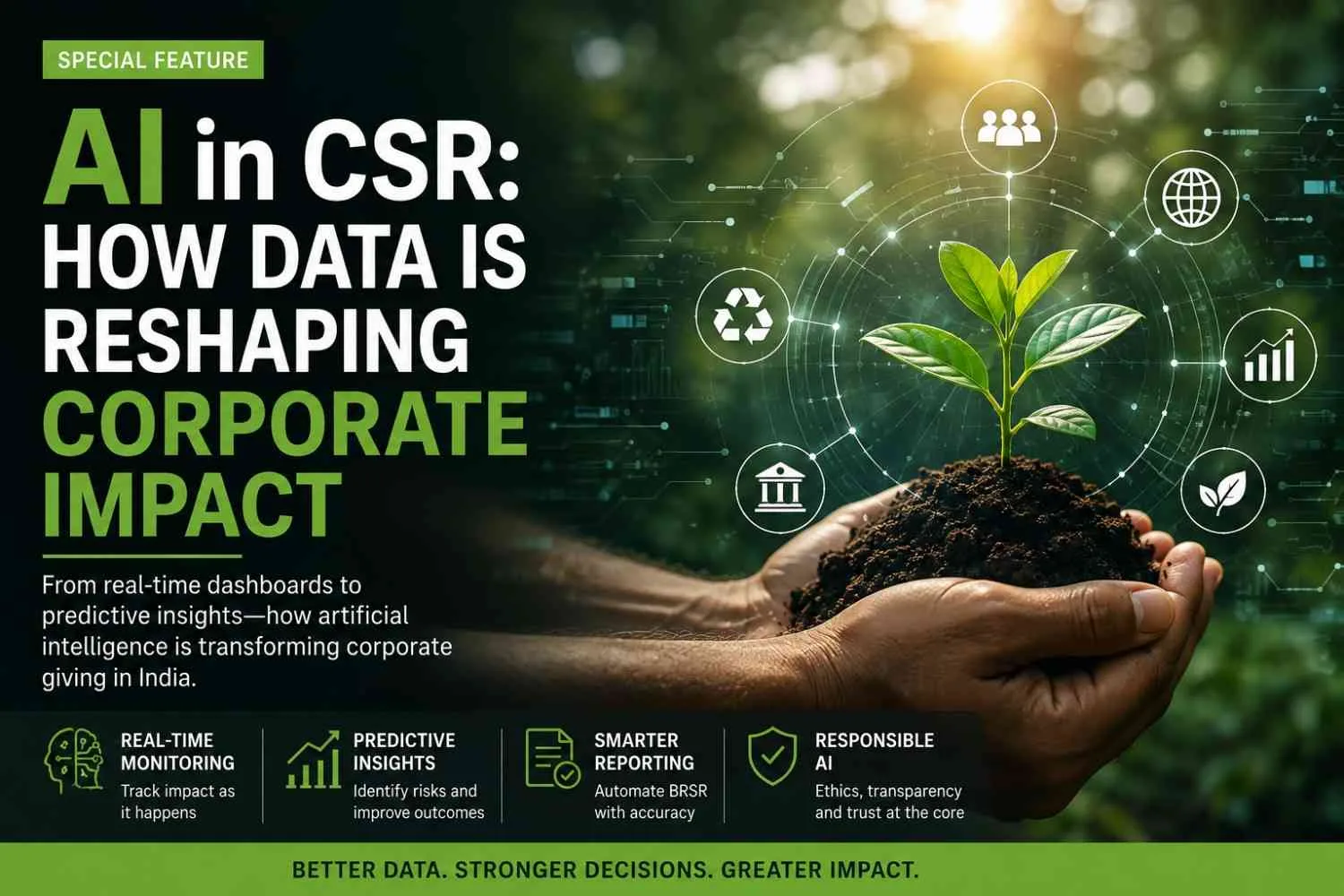
Kolkata | August 5, 2026 Artificial intelligence is rapidly transforming how companies measure, monitor and report the impact of their CSR initiatives. From predicting school dropout risks to automating sustainability disclosures, AI promises faster insights and greater accountability. Yet as algorithms begin shaping corporate giving, questions over data quality, ethical safeguards and reporting credibility are becoming impossible to ignore. Quick SummaryCorporate Social Responsibility (CSR) is entering a new phase where artificial intelligence is reshaping how social impact is measured. Companies are increasingly moving beyond annual spreadsheets and manual surveys towards real-time dashboards, predictive analytics and automated reporting systems capable of tracking beneficiaries, identifying programme risks and simplifying Business Responsibility and Sustainability Reporting (BRSR) disclosures. While these technologies promise greater efficiency and evidence-based decision-making, they also raise concerns around algorithmic bias, privacy, data manipulation and the growing gap between digital dashboards and realities on the ground. As regulators encourage greater transparency and companies invest in AI-powered impact platforms, the debate is shifting from whether AI should be used in CSR to how it can be deployed responsibly without compromising trust or accountability. KeywordsAI in CSR, CSR Impact Measurement, Artificial Intelligence, BRSR Reporting, Responsible AI, ESG Reporting, Corporate Sustainability, CSR Technology, Predictive Analytics, Real-Time Impact Monitoring   Can artificial intelligence transform corporate giving into measurable social impact- or is technology moving faster than accountability? Not long ago, assessing the success of a Corporate Social Responsibility (CSR) project was a slow and largely manual process. Field teams travelled to project locations with paper surveys, NGOs maintained handwritten records, and corporate CSR departments often spent weeks compiling data before presenting annual impact reports. By the time the data reached the decision-makers, it was too late to make timely course corrections. That approach is changing rapidly. Today, a CSR manager overseeing a digital education initiative can monitor student attendance through live dashboards, receive alerts when learning outcomes begin to decline and identify schools at risk of higher dropout rates in real time. Healthcare programmes can track patient follow-ups digitally, livelihood projects can monitor income trends through mobile applications, and sustainability teams can use automated systems to support Business Responsibility and Sustainability Report (BRSR) disclosures. This transformation reflects a broader shift in corporate India. As companies face growing expectations to demonstrate measurable social and environmental impact rather than simply report CSR spending, artificial intelligence is emerging as an important decision-support tool. Instead of relying solely on end-of-project evaluations, organisations are beginning to use AI, predictive analytics and cloud-based platforms to monitor programmes as they unfold, enabling faster and more informed interventions. The potential benefits are significant.AI can analyse large volumes of beneficiary data within seconds, identify trends that might be overlooked through manual analysis and help organisations allocate resources more efficiently. Supporters argue that this allows CSR programmes to move beyond reactive problem-solving towards proactive decision-making, addressing challenges before they affect project outcomes. Yet the growing reliance on AI also raises an important question: Can technology fully measure social impact? Community development is influenced by trust, behaviour, local realities and human relationships-factors that cannot always be captured through algorithms or dashboards. A decline in school attendance may be visible in digital data, but technology alone cannot explain whether the cause is seasonal migration, financial hardship or inadequate school infrastructure. Similarly, a healthcare platform may accurately record beneficiary numbers while failing to reflect barriers such as accessibility, awareness or social stigma. As AI becomes more deeply integrated into corporate philanthropy, the challenge is no longer collecting larger volumes of data. But to ensure that technology strengthens accountability without creating a false sense of precision. In the end, better dashboards do not automatically lead to better decisions, and measuring social impact will continue to depend as much on human judgement as on artificial intelligence. From Reporting Projects to Predicting Outcomes The evolution of CSR reporting reflects a broader shift in corporate sustainability -  from documenting activities to demonstrating measurable impact. For years, the success of CSR initiatives was largely measured through inputs such as funds spent, beneficiaries reached and projects completed during a financial year. While these indicators met statutory reporting requirements, they revealed little about whether programmes had created lasting social or environmental value. Artificial intelligence is beginning to change that approach. Rather than being used only at the end of a project for reporting, AI is becoming part of programme implementation itself. Companies are adopting cloud-based dashboards, geospatial mapping, computer vision and machine learning to monitor projects in real time, enabling CSR teams to identify risks early, compare interventions and make timely course corrections before resources are exhausted. The impact is particularly visible in education. Instead of relying solely on annual assessments, AI-enabled systems can analyse attendance, classroom engagement, learning patterns and assessment results almost in real time. Predictive models can identify students showing early signs of disengagement, allowing implementing agencies to intervene before irregular attendance leads to permanent dropout. Similar applications are being explored in skill development programmes, where algorithms help identify trainees who may need additional mentoring or financial assistance based on participation and completion trends. Healthcare initiatives are undergoing a similar transformation. Community health workers use mobile applications to upload patient data directly from the field, while AI-assisted platforms monitor vaccination coverage, treatment adherence and disease patterns across regions. Rather than measuring success only through the number of health camps organised, organisations can now track follow-up visits, treatment outcomes and areas requiring additional intervention. Livelihood programmes are also benefiting from predictive analytics. Digital platforms monitoring self-help groups, farmer producer organisations and micro-enterprises can detect changes in income, productivity and market access, enabling implementing partners to respond before financial challenges undermine programme objectives. Instead of evaluating outcomes only after a project ends, AI is helping organisations identify emerging risks while corrective action is still possible. AI is also reshaping corporate sustainability reporting. The introduction of the Business Responsibility and Sustainability Report (BRSR) by the Securities and Exchange Board of India (SEBI) has significantly increased the volume of environmental, social and governance (ESG) data that listed companies are required to disclose. Collecting, verifying and consolidating this information across multiple business units has made manual reporting more time-consuming and complex. To address this, many organisations are adopting AI-powered reporting platforms that integrate data from operational systems, identify inconsistencies, flag missing disclosures and generate draft sustainability reports. Beyond reducing administrative effort, these systems improve reporting consistency and allow management teams to focus more on analysing performance than compiling documentation. Despite these advances, however, AI remains only as reliable as the data it receives. Artificial intelligence can identify patterns, generate insights and predict future trends, but it cannot compensate for incomplete records, inaccurate field reporting or weak verification processes. Poor-quality data inevitably leads to unreliable analysis, regardless of how advanced the technology may be. For this reason, many experts view AI not as a replacement for human oversight but as a tool that strengthens decision-making when supported by credible data, robust governance and effective monitoring systems. How AI Is Changing CSR Traditional CSR MonitoringAI-Driven CSR MonitoringAnnual surveysReal-time dashboardsManual beneficiary recordsAutomated data collectionEnd-of-project evaluationContinuous performance trackingReactive interventionsPredictive analyticsSpreadsheet reportingAutomated BRSR disclosures Key takeaway: AI is shifting CSR from measuring what happened to anticipating what could happen next.  When Algorithms Meet Accountability Artificial intelligence is transforming the way CSR programmes are monitored and evaluated, but it is also introducing a new set of ethical and operational challenges. As organisations rely on algorithms to guide decisions, an important question is emerging: Can technology strengthen accountability without compromising trust? At the heart of this debate, lies the quality of data.AI systems can only produce reliable insights when the underlying data is accurate, complete and consistent. Incomplete beneficiary records, duplicate entries or reporting errors can generate misleading conclusions that appear highly credible because they are supported by sophisticated dashboards and predictive models. Unlike manual reporting, where inconsistencies are often easier to identify, algorithm-driven analysis can sometimes conceal data quality issues behind polished visualisations. This concern is particularly relevant in CSR impact assessment. Many companies and CSR consultants now use AI-enabled platforms to consolidate data from education, healthcare, livelihood and environmental programmes. While automation has significantly improved reporting efficiency, experts caution that it should complement and not replace independent field verification. Without regular validation, inaccurate beneficiary records, duplicate entries or inconsistencies across projects can find their way into impact reports and sustainability disclosures. In many cases, these errors are not intentional. Different implementing partners often use varying reporting formats, beneficiary definitions and data collection methods. A beneficiary participating in multiple programmes may be counted more than once, while attendance, outreach and engagement may be measured using different indicators across projects. AI can process these datasets rapidly, but unless the information is standardised and verified, technology may reinforce inconsistencies rather than eliminate them. Privacy and data security have also become major considerations. AI-powered CSR platforms collect personal information such as age, location, income, educational performance and health records to improve programme design and delivery. Although this enables more targeted interventions, it also raises important questions about informed consent, data ownership and cybersecurity. Many beneficiaries, particularly in rural and digitally underserved communities, may have limited awareness of how their information is collected, stored or used. To address these concerns, experts are calling for stronger ethical safeguards around the use of AI. Greater transparency in algorithms, human oversight, robust data governance, protection of sensitive information and regular third-party audits are increasingly seen as essential for ensuring that AI strengthens accountability without creating new risks. There is also a growing recognition that not every aspect of social impact can be measured through technology. AI can efficiently analyse beneficiary numbers, attendance, training hours and financial disbursements while identifying patterns that may indicate emerging programme risks.  Affected VoicesDevelopment organisations working at the grassroots say artificial intelligence is making programme monitoring faster, but not necessarily simpler.NGOs involved in education, healthcare and livelihood projects argue that digital dashboards can highlight patterns, yet they cannot replace conversations with communities. A field worker may know why a child has stopped attending school, why a family refuses a healthcare intervention or why a self-help group is struggling despite positive financial indicators- insights that rarely appear in automated reports.Consumer and civil society organisations also caution that communities should not become passive data points. They argue that beneficiaries must understand how their information is collected, stored and used, particularly as AI systems become more integrated into social programmes. For them, responsible technology is not only about better analytics but also about protecting privacy, maintaining informed consent and ensuring that people remain at the centre of every CSR intervention. However, it remains far less effective at measuring outcomes such as community trust, behavioural change, social inclusion and local ownership- factors that often determine the long-term success of CSR initiatives. For this reason, development practitioners continue to emphasise the importance of human engagement alongside technological analysis.AI can identify that attendance in a vocational training programme is declining, but conversations with beneficiaries are often needed to understand whether transport costs, household responsibilities or seasonal employment are driving that trend. Technology can reveal patterns, but people provide the context that explains them. As AI becomes more deeply embedded in corporate philanthropy, the future of CSR impact measurement is likely to depend on balancing automation with accountability. Organisations that combine advanced analytics with transparent governance, independent verification and continuous engagement with communities will not only generate more reliable evidence but also strengthen public trust in the impact they seek to create. AI Can Measure, But Can It Understand?AI Measures Well Beneficiary numbers  Attendance and participation  Learning outcomes  Health follow-ups  Resource utilisation  Reporting efficiency  Humans Still Matter For Community trust Behavioural change Inclusion and dignity Local context Cultural realities Independent verification Key takeaway: Artificial intelligence can improve measurement- but meaningful impact still requires human judgment. When Evidence Meets ScrutinyAs artificial intelligence becomes an integral part of CSR monitoring, experts argue that the technology itself must be evaluated as rigorously as the programmes it measures. A sophisticated dashboard may present real-time insights and impressive visualisations, but its credibility ultimately depends on the quality of data, the methodology behind the analysis and the transparency of the reporting process. The first challenge lies in how impact is measured. CSR programmes often use different indicators to define success. An education initiative may focus on attendance or learning outcomes, while a healthcare project may measure beneficiary reach, treatment adherence or long-term health improvements. When AI systems analyse datasets built on different definitions and reporting standards, comparing outcomes across projects becomes difficult, even if the technology functions accurately. For this reason, development economists and impact evaluation specialists continue to emphasise the importance of establishing reliable baselines before introducing AI-driven monitoring. Without a clear starting point, it is difficult to determine whether a programme has genuinely improved people's lives or simply produced more data. An algorithm may report a significant increase in school attendance, but the finding has limited value unless it is measured against credible baseline data and tracked consistently over time. Another challenge is distinguishing the impact of a single intervention from broader social change. AI platforms can efficiently capture data generated within CSR programmes, but they cannot always account for external factors that influence outcomes. Improvements in school attendance, for example, may reflect not only a company's education initiative but also better government infrastructure, scholarship schemes or wider community participation. As a result, experts caution against treating AI-generated correlations as conclusive evidence of impact. Benchmarking presents similar limitations. Many AI platforms allow organisations to compare CSR performance across projects, districts or business units. However, such comparisons are meaningful only when programmes operate under similar conditions and pursue comparable objectives. Comparing projects with different beneficiary groups, geographies or impact indicators may produce conclusions that are statistically sound but practically misleading. This is why independent assurance remains essential. AI can quickly identify anomalies, missing records and unusual reporting patterns, but it cannot replace field verification, beneficiary feedback, external audits or independent programme evaluations. Experts argue that technology is most valuable when it strengthens existing evaluation processes rather than serving as a substitute for them. The growing investment in AI also raises important questions about transparency. Companies are allocating substantial resources towards digital CSR platforms, cloud infrastructure, analytics and cybersecurity. Yet annual reports rarely distinguish expenditure on AI-enabled monitoring from broader CSR administration or programme implementation. This makes it difficult for stakeholders to assess whether these investments are improving programme delivery or primarily enhancing reporting efficiency. Ultimately, the success of AI in CSR will not be measured by the volume of data it generates, but by the quality of the decision it supports. Technology can strengthen accountability and improve impact measurement, but only when it is backed by transparent methodologies, credible data, independent verification and meaningful human oversight. Evidence Check: Questions Every AI-Powered CSR Dashboard Should Answer   Evidence TestWhy It MattersIs the methodology publicly explained?Ensures transparency and comparability.What is the baseline?Measures real change, not isolated data points.Has the data been independently verified?Reduces reporting bias and inflation.Are reporting boundaries clearly defined?Prevents misleading impact claims.Does AI support or replace field verification?Human validation remains essential.Is investment in AI transparently disclosed?Demonstrates accountability beyond technology adoption. Key takeaway: Artificial intelligence can process information at extraordinary speed, but trustworthy CSR still depends on evidence that is transparent, independently verified and grounded in reality. Beyond the Dashboard Artificial intelligence is transforming the way companies design, monitor and evaluate their CSR initiatives. What was once driven by periodic surveys and retrospective reporting is evolving into a system supported by real-time data, predictive analytics and continuous monitoring. For businesses, this means faster decision-making and more informed resource allocation. For regulators and stakeholders, it offers the potential for greater transparency, consistency and accountability in sustainability reporting. However, technology alone cannot guarantee meaningful impact. The value of AI will ultimately depend on the quality of the data it processes, the transparency of the methodologies behind it and the governance system that ensures every insight is credible and independently verifiable. While dashboards can identify patterns and emerging risks, they cannot replace human judgement, community engagement or an understanding of the local realities that shape social outcomes. As AI becomes gradually embedded in corporate philanthropy, the conversation is shifting from whether it should be adopted to how responsibly it should be used. Its long-term success will not be measured by the sophistication of its algorithms, but by its ability to strengthen decision-making, build public trust and deliver measurable improvements where they matter the most. Ultimately, no algorithm, dashboard or report can define the success of CSR. Its true measure will always be the positive and lasting change it brings to people's lives. Evidence Check ParameterStatusMethodology disclosedPartial – Varies by platformIndependent verificationEssential but inconsistentBaseline comparisonRequired for credible impact measurementAI ethics & privacyIncreasing regulatory focusHuman field validationStill indispensableAI investment disclosureLimited in public CSR reports   Key TakeawaysAI is shifting CSR from annual reporting to real-time monitoring. Predictive analytics can identify programme risks before they escalate. BRSR reporting is accelerating AI adoption across listed companies. AI cannot replace field verification or community engagement. Transparency and independent audits remain essential for credible impact reporting. Primary Sources:  Ministry of Corporate Affairs (MCA) – Corporate Social Responsibility (CSR) Framework & Companies Act, 2013https://www.mca.gov.in/ Securities and Exchange Board of India (SEBI) – Business Responsibility and Sustainability Reporting (BRSR) Frameworkhttps://www.sebi.gov.in/ NITI Aayog – Responsible AI for All: Strategy and Discussion Papershttps://www.niti.gov.in/ Ministry of Electronics and Information Technology (MeitY) – IndiaAI Mission & AI Governance Initiativeshttps://www.meity.gov.in/ CSRBOX – CSR Intelligence, Case Studies & Impact Measurement Resourceshttps://csrbox.org/ Microsoft AI for Good – AI Applications for Social Impact and Sustainable Developmenthttps://www.microsoft.com/en-us/ai/ai-for-good World Economic Forum (WEF) – Artificial Intelligence Governance & Responsible AI Reportshttps://www.weforum.org/ J-PAL South Asia – Evidence-Based Programme Evaluation and Impact Measurementhttps://www.povertyactionlab.org/south-asia ...Read more

29 Jul 2026

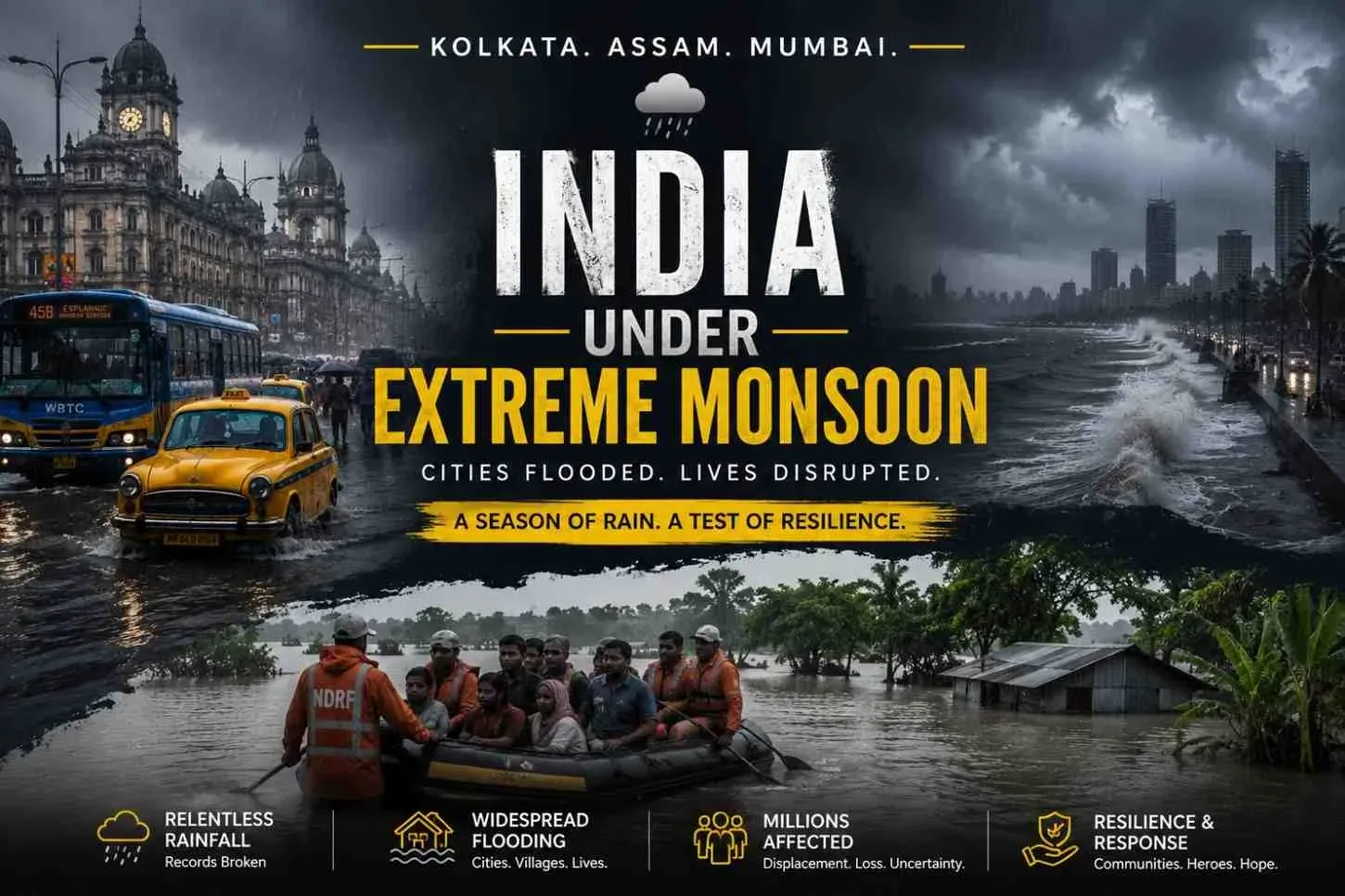
A deficit monsoon that is still drowning people India's monsoon crisis of 2026 appears contradictory only from a distance. The country has received below-normal rainfall overall, farmers in several regions are confronting moisture stress, reservoirs remain worryingly depleted, and kharif sowing has fallen behind last year. Yet, at the same time, Assam has suffered one of its most damaging floods in recent years, Arunachal Pradesh has seen nearly its entire district map disrupted at once, Himalayan states are reporting landslides and blocked roads, and intense rainfall episodes are inundating cities and villages from Odisha to Uttarakhand — while Mumbai and Kolkata have each been paralysed by their own floodwaters, and Karnataka has asked farmers to simply stop sowing. By July 28, the nationwide monsoon rainfall deficit had narrowed to approximately 16 percent, after reaching nearly 40 percent at the end of June. But this apparent recovery has not come through steady, farm-friendly rain. It has largely arrived through violent, concentrated downpours separated by prolonged dry spells. This is the defining feature of the Indian monsoon of 2026: rain is falling in the wrong places, at the wrong intensity, and increasingly at the wrong time. India is not merely experiencing a weak monsoon. It is experiencing a dangerously disorganised one. Late arrival, long pause, sudden violence The southwest monsoon reached Kerala around three days later than usual. It then stalled for nearly two weeks across important agricultural regions of western and central India. June ended with a severe national rainfall shortage. The monsoon subsequently accelerated, but unevenly. Low-pressure systems and depressions delivered bursts of extreme rainfall, while large areas continued to receive substantially less rain than normal. Between June 1 and July 22, India had received 19 percent less rainfall than the long-period average. The geographical imbalance was even sharper: East and Northeast India were approximately 32 percent deficient. The southern peninsula was around 26 percent deficient. Northwest India had a deficit of about 13 percent, while central India was approximately 9 percent below normal. These regional averages conceal extraordinary local variations. A district may receive almost no meaningful rain for two weeks and then receive a month's rainfall in several hours. The monthly total may eventually approach "normal," but the agricultural, hydrological and human consequences are anything but normal. A field needs moderate rain that penetrates the soil. Instead, torrential rain often rushes away as surface runoff, eroding topsoil, flooding settlements and leaving groundwater inadequately replenished. India's two monsoons are happening together The 2026 monsoon has effectively divided India into overlapping zones of emergency. In parts of Bihar, Jharkhand, eastern Uttar Pradesh and the Gangetic agricultural belt, prolonged rainfall deficits created drought-like conditions during crucial sowing weeks. By July 10, rainfall was below normal in 397 of India's 741 districts, while the area under kharif cultivation was approximately 16 percent lower than at the corresponding point in 2025. Conditions improved later in July, but the sowing deficit did not disappear. By July 24, farmers had planted approximately 78.7 million hectares, against 82.6 million hectares a year earlier. Rice cultivation was slightly behind last year, soybean acreage was down around 3 percent, cotton acreage approximately 4 percent, and maize sowing almost 10 percent lower. Sugarcane was one of the few major crops showing an increase. Karnataka has offered the sharpest illustration of this stress in the south. The state recorded a rainfall deficit of around 30 percent up to July 11 — having received only 203 mm of rain against a normal of 292 mm — prompting Chief Minister D.K. Shivakumar to write directly to the Prime Minister seeking a central assessment team. June alone was the state's fourth-worst in fifty years, with just 116 mm of rain against a 165–190 mm normal, a 42 percent shortfall. The Malnad region, the principal catchment for the Cauvery, Tunga and Bhadra systems, recorded the state's worst deficit at 34 percent, with the coastal belt close behind at 30 percent. The Tungabhadra reservoir near Hosapete held just 9.47 TMC ft of water against 61.88 TMC ft a year earlier — an 85 percent collapse in storage that has, in comparable past seasons, forced authorities to instruct farmers in the Cauvery basin to halt further sowing altogether. At the same moment, parts of Assam and Arunachal Pradesh were underwater. This coexistence is scientifically possible because flood and drought describe different dimensions of water stress. A flood is caused by excessive rainfall or river discharge over a short period and within a particular basin. Drought reflects accumulated rainfall deficiency, reduced soil moisture, poor groundwater recharge, falling reservoir storage and agricultural stress over time. India can therefore be flooded locally while remaining rainfall-deficient nationally. Assam: an upstream deluge becomes a human disaster Assam's late-July floods exposed the terrifying speed at which a localised rainfall event can become a regional humanitarian emergency. Very heavy rainfall over neighbouring Nagaland between July 18 and July 20 generated exceptionally high river flows entering Assam. By July 23, approximately 650,000 people across 11 districts had been affected and at least 36 deaths had been reported during that phase of the disaster. The crisis subsequently expanded. At its late-July peak, reports indicated that at least 50 people had died, approximately 700,000 had been displaced, nearly 300,000 people were staying in government shelters and around 900 villages were submerged. Helicopters were used for relief drops, while police, disaster-response forces, volunteers and civil administrators conducted rescues. By July 28, Assam's cumulative flood death toll had reportedly risen to 68, while more than 445,000 people remained affected across districts including Sivasagar, Charaideo, Jorhat, Golaghat, Nagaon and Kamrup Metropolitan. These changing numbers do not represent statistical confusion. They reflect the movement of water: some areas emerge from inundation as others are submerged, displaced residents begin returning, and new deaths or missing persons are recorded. The state's flood wave first hit Dhemaji, Lakhimpur and Dibrugarh, affecting over 22,000 people and nearly 100 villages, before riverbank erosion partially collapsed a railway bridge over the Simen River at Simen Chapari, cutting off train services and isolating villages overnight. On the ground, response has been substantial: 250 NDRF personnel, 36 NDRF boats, 65 SDRF and Fire Services boats, three Indian Army boats and 82 mobilised country boats have operated around Majuli and the worst-hit districts, alongside 71 relief camps and 202 relief distribution centres. The Chief Minister's Relief Fund has directed distribution of over 4 lakh bottled water units, nearly 2 lakh biscuit packets and roughly 40,000 milk packets for infants, while Cabinet ministers have been stationed in Charaideo and Sivasagar since the floods began. Prime Minister Narendra Modi has personally reviewed relief operations and ordered a full damage assessment, even as opposition leaders have pressed for faster release of PM-CARES funds. Why does Assam flood again and again? Extreme rainfall is the immediate trigger. It is not the complete explanation. The Brahmaputra is a vast, sediment-heavy and highly dynamic river system. It receives water from intense monsoon rain, Himalayan tributaries and numerous upstream catchments. Its channels naturally shift, islands erode and floodplains absorb seasonal excess water. But human interventions have progressively reduced the landscape's capacity to live with the river. Catchment degradation and deforestation accelerate erosion. Sediment raises riverbeds and reduces channel-carrying capacity. Wetlands and natural water-retention areas are encroached upon. Roads, housing projects and commercial construction block traditional drainage channels. Urban drains are undersized, poorly connected or clogged with waste. Assam's own urban-flood planning documents acknowledge that rapid development has consumed vacant land and disrupted natural drainage. In Guwahati, the obstruction and encroachment of wetlands and beels have removed natural stormwater reservoirs, allowing even moderate rainfall to produce severe waterlogging. Embankments provide essential protection, but they can also create a false sense of permanence. When inadequately maintained embankments breach, water enters settlements with extraordinary force. Embankments may also trap rainwater inside protected areas when drainage outlets are insufficient. The result is a cycle of emergency expenditure without corresponding reduction in vulnerability. Arunachal Pradesh: the upstream disaster nobody watches closely enough If Assam is the downstream casualty, Arunachal Pradesh is where the water begins its rampage — and the state has been battered on its own terms too. In mid-July, incessant rainfall triggered flash floods in Kurung Kumey district and landslides across Pakke Kessang, West Kameng and Papum Pare districts. The State Emergency Operation Centre reported seven deaths, 29 injuries, and more than 97,000 people affected across 425 villages spanning all 26 districts of the state — nearly the entire state machinery mobilised at once. The damage inventory reads like an infrastructure ledger wiped out overnight: 150 roads damaged, 19 bridges lost, 21 culverts destroyed, 221 water supply systems disrupted, 58 government buildings hit, 156 power lines and 224 electric poles down, 10 hydel projects damaged, two hospitals and three schools affected, alongside 541.75 hectares of crop area and nearly 1,010 hectares of forest land impacted. In Kurung Kumey, flash floods from the overflowing Kumey River washed away bridges connecting the villages of Huri, Damin and Pagam; a church, an inspection bungalow, and St Thomas School in Parsi-Parlo were all damaged, halting classes. A massive landslide buried a stretch of National Highway-13 near Pakro village, and a section of the road leading to the strategically vital Sela Tunnel in West Kameng — a key route toward the China border — was washed away entirely. Downstream and around, the same monsoon has scattered damage widely: a Bailey bridge over the Phee Khola at Phidang in North Sikkim's Dzongu region was simply washed away, cutting off road connectivity, while Meghalaya's hill roads suffered fresh landslide disruptions of their own. Arunachal Pradesh illustrates, in miniature, the whole country's 2026 paradox: a state that can log both flood emergencies in its river valleys and rainfall deficits in its interior districts within the same season — sometimes the same week. The drought is hiding inside the reservoirs Flood images dominate television screens because they are immediate and dramatic. Reservoir depletion receives far less attention, although it can affect drinking water, irrigation, electricity generation and food prices for months. On July 23, the country's 166 monitored major reservoirs held approximately 70.4 billion cubic metres of water, equivalent to only about 38 percent of their combined capacity. Storage was around 36 percent lower than at the same time in 2025. More than 50 reservoirs were holding water at or below 80 percent of their normal level, while 22 were at half their normal storage or lower. Conditions were especially concerning in parts of southern India — a picture Karnataka's near-empty Tungabhadra reservoir makes vivid. This is hydrological stress, even when isolated districts are reporting floods. Much of the rain produced by cloudbursts and extreme spells runs rapidly into rivers and drains. It may cause destruction without adequately restoring groundwater or maintaining reservoir inflows. The nation receives water, but cannot retain it where and when it is needed. El Niño has disturbed the monsoon's rhythm The most prominent large-scale climate influence in 2026 is El Niño — the abnormal warming of the central and eastern equatorial Pacific Ocean. The World Meteorological Organization had assessed an approximately 80 percent probability of El Niño conditions during June–August 2026, with a very high probability that the event would continue into late autumn. By July, the India Meteorological Department reported that El Niño conditions were prevailing and strengthening, while the Indian Ocean Dipole remained neutral. El Niño often weakens India's seasonal monsoon circulation. But it does not simply switch off rainfall. It can weaken the broad flow of moisture while atmospheric disturbances, Bay of Bengal depressions, western disturbances, the movement of the monsoon trough and the Madden–Julian Oscillation still generate intense local rainfall. This year, western disturbances — normally quiet during the monsoon — have remained active and interacted directly with the monsoon current over Jammu & Kashmir and the western Himalaya, intensifying rainfall precisely where slopes are least equipped to absorb it. Research examining more than a century of observations indicates that some El Niño years can simultaneously increase the probability of seasonal rainfall deficiency and short-duration extreme rainfall over particular regions. Thus, fewer rainy days do not necessarily mean fewer disasters. They may mean that a larger proportion of the season's rain falls during a smaller number of violent events. Climate warming is loading the dice El Niño is a natural climate cycle. The background against which it now operates is no longer natural. India's average temperature increased by approximately 0.7°C between 1901 and 2018. A warmer atmosphere can hold more moisture, while rising sea-surface temperatures increase the potential supply of water vapour to monsoon systems. This produces an apparent paradox: warming can intensify both drought and flooding. Higher temperatures increase evaporation from soil, plants and reservoirs during rainless periods. But when atmospheric conditions finally trigger rain, the additional moisture can produce much heavier precipitation. The Intergovernmental Panel on Climate Change has projected increasing heavy precipitation over parts of Asia and the Himalayan region, alongside declining snow and glacier volumes. Climate change does not cause every individual flood or landslide. It multiplies the probability, intensity and consequences of extreme events occurring within already vulnerable landscapes. The Himalaya: a natural hazard turned into a construction zone The Himalaya are geologically young, steep and unstable. Their rocks are fractured, their slopes are vulnerable to erosion, and intense rain can rapidly saturate thin mountain soils. Yet natural fragility is only half the story. Road widening, uncontrolled hill cutting, blasting, hotel construction, hydropower infrastructure, poorly designed retaining walls and the dumping of excavated debris have transformed many mountain slopes. Drainage channels are frequently blocked or redirected. Buildings have expanded onto unstable slopes and river terraces without adequate geological assessment. India's Supreme Court, reviewing disaster patterns in Himachal Pradesh, has explicitly named hydroelectric power projects, four-lane road expansion, deforestation and unchecked multi-storey construction as drivers of "ecological destruction," warning that revenue "cannot be earned at the cost of the environment and ecology." India's national landslide atlas has mapped around 80,000 landslides recorded between 1998 and 2022 across 17 states and two Union Territories, and ranked 147 districts by landslide exposure. Many vulnerable corridors include major pilgrimage routes, highways and densely visited tourist centres. By July 28, rain and landslides had reportedly blocked as many as 179 roads in Himachal Pradesh, while at least 15 monsoon-related deaths had been recorded in the state. Glacial retreat compounds the risk. The Hindu Kush Himalaya region has seen glacial cover shrink 12 percent between 1990 and 2020, with a 21 percent decline in the Ganga basin alone. ISRO's Glacial Lakes Atlas has identified roughly 2,400 glacial lakes, of which 601 have doubled in size and are considered at risk of catastrophic breach. The 2023 Sikkim GLOF remains the starkest warning of what this looks like in practice: permafrost erosion triggered a landslide into South Lhonak Lake, producing a 20-metre flood surge that destroyed the Teesta-III dam, killed at least 90 people, and inundated 276 square kilometres of farmland. The 2023 Joshimath subsidence crisis and the 2025 Dharali flash flood — which buried a Himalayan village under 12–18 metres of sediment — are cut from the same cloth: tectonic stress compounded by construction, tunnelling and drainage failures that turned a natural hazard into a man-made catastrophe. The Northeast faces similar risks. Recent modelling of rain-triggered landslides in Mizoram suggests that simultaneous slope failures with little or no warning could become substantially more frequent under high-emissions warming scenarios. The study remains a modelling assessment rather than a precise forecast, but its warning is unmistakable: yesterday's engineering standards cannot be assumed to protect tomorrow's mountains. Metros drowning by design: Mumbai and Kolkata While hill states battle landslides and the Northeast battles rivers, India's two biggest western and eastern metros have spent the season proving that flooding isn't only a mountain or a river problem — it is also, unmistakably, an urban planning failure. Mumbai's stormwater drainage network was designed in the early twentieth century to handle roughly 25 mm of rainfall per hour — a fraction of what the city's monsoons now regularly deliver. The 2005 catastrophe, when the city recorded 944 mm of rain in 24 hours, was supposed to be the wake-up call; the Chitale Committee that followed recommended sweeping drainage reforms and a dedicated authority for the Mithi River. Two decades on, areas like Bandra Kurla Complex and Hindmata still flood on cue every season — 2017, 2019, 2021, 2023, 2025, and again in 2026. The city's exposure is structural and largely self-inflicted: Mumbai was built by reclaiming seven islands, leaving large portions of the metropolis below high-tide level to begin with. Its drainage outfalls discharge directly into the sea, which works fine at low tide — but when heavy rain coincides with high tide, sluice gates must be shut to stop seawater backflow, trapping rainwater inside the city with nowhere to go. Layer on decades of destroyed mangroves, blocked natural nullahs, and — as the Bombay High Court itself observed this July — citizen and civic complicity in encroaching on drains, blocking gutters, and converting footpaths and open channels into shops and parking, and you get a city whose flooding the court bluntly called "our own creation." Mumbai's open-space ratio has been measured at roughly 0.012 hectares per 1,000 people, against a desired standard of 1.67 hectares — a 140-fold shortfall that leaves almost nowhere for excess water to go except the streets. Kolkata's flooding operates on an almost identical playbook. In one recent extreme event, the city logged 252 mm of rain in seven hours — arriving at the same moment as high tide on the Hooghly, forcing the Kolkata Municipal Corporation's drainage department to shut sluice gates and trap the deluge inside the city. As Mayor Firhad Hakim put it, describing the scale of the downpour: the canals and rivers were already full, so every attempt to drain the city simply invited more water back in. The deeper story is ecological. Kolkata's eastern wetlands once functioned as the city's natural stormwater sponge — but decades of illegal landfilling along the Eastern Metropolitan Bypass have destroyed much of that buffer for construction. Combined with a colonial-era sewerage network never rebuilt for today's population density, the result is a city where a few hours of intense rain can paralyse roads, rails, the Metro, hospitals, and festival infrastructure alike. The KMC's own diagnosis has been candid: erratic weather patterns are now delivering brief, torrential downpours that simply exceed what the ageing drainage network can pump into the canals in time. In response, the corporation has begun constructing rainwater-collection reservoirs at more than 50 identified "water pocket" locations, aiming to both cut waterlogging and recharge depleting groundwater — an admission, in itself, that pumping alone can no longer keep pace with the rain. Relief is necessary. Rehabilitation must not recreate risk Governments have mobilised rescue teams, opened relief camps, distributed food and drinking water, restored communications and used helicopters in inaccessible areas. The Prime Minister and Assam's Chief Minister have reviewed the flood situation, while central assessment teams and state agencies have begun examining losses and rehabilitation needs. In Himalayan states, highway authorities have identified vulnerable locations, positioned machinery and emergency teams, and undertaken slope stabilisation, retaining-wall, drainage and erosion-control work. In Arunachal Pradesh, the State Emergency Operation Centre has coordinated restoration of roads, bridges and water systems even as damage assessments continue across all 26 districts. In Mumbai and Kolkata, municipal corporations have leaned on additional pumps, desilting drives, and new underground rainwater-storage reservoirs — tactical measures that civic officials themselves concede are stopgaps against a structurally undersized system. But relief measured only by food packets, rescue boats and compensation cheques is incomplete. Relief camps need safe water, sanitation, health surveillance, menstrual hygiene facilities, child protection, disability access and arrangements for livestock. Families losing crops, shops, fishing equipment or daily-wage employment need immediate livelihood assistance, not merely compensation for damaged houses. Rehabilitation must rebuild schools, clinics, transport links and local markets — not only physical dwellings. Most importantly, homes repeatedly destroyed by erosion or landslides should not simply be reconstructed at the same location. Stop repairing disasters. Start redesigning risk Assam already has major flood-management initiatives supported by the World Bank and the Asian Development Bank. These include institutional strengthening, better flood forecasting, embankment and river-management measures, erosion control and climate-resilient infrastructure. Their success must be judged not by money spent or embankment kilometres completed, but by lives protected, warnings delivered, evacuation time gained and repeated displacement prevented. Every major flood and landslide should trigger an independent, publicly available review examining land-use violations, wetland destruction, drainage failures, embankment maintenance, road design, debris disposal, reservoir operations and administrative response. India needs legally enforceable floodplain zoning. Urban wetlands must be mapped, protected and restored — in Guwahati's beels, Kolkata's eastern marshes and Mumbai's mangroves alike. Encroachments blocking natural watercourses cannot be regularised indefinitely and then blamed on "unprecedented rain." Each embankment should have a public asset register, pre-monsoon safety certification and clearly identified maintenance responsibility. River management must incorporate sediment and erosion control, not merely build higher walls against water. The Himalaya needs a carrying-capacity test Every road, tunnel, hydropower project, hotel cluster and township in vulnerable mountain districts should be evaluated cumulatively. A project may appear manageable in isolation. Ten projects on the same unstable slope or river valley may create an entirely different hazard. High-susceptibility zones need strict no-construction rules. Road engineering must give priority to drainage, controlled excavation, slope reinforcement and scientific disposal of debris. Pilgrimage and tourism numbers should be aligned with local carrying capacity, evacuation routes and waste-management infrastructure. Development cannot be called development when each monsoon washes it away and leaves local residents to carry the debt, debris and deaths. Forecasts must reach the last household The IMD is increasingly issuing impact-based rainfall warnings, including alerts for flash flooding, landslides, crop damage and urban inundation. During the final week of July, it warned of extremely heavy rainfall across parts of Odisha, Chhattisgarh, Madhya Pradesh and Gujarat, along with very heavy rainfall over Himalayan states. But a forecast is only as useful as the action it triggers. Warnings must be converted into local languages, cell-broadcast alerts, sirens, community announcements and pre-agreed evacuation orders. Village volunteers, schools, local health workers and elected representatives must know exactly what a red or orange warning requires them to do. Forecast accuracy cannot compensate for administrative hesitation. 2026 is not an abnormal year to be forgotten The Indian monsoon of 2026 is a warning about the future of adaptation. It demonstrates that national rainfall averages are no longer enough. Policymakers must examine rainfall intensity, dry-spell duration, soil moisture, reservoir storage, district-level crop conditions and the exposure of people living along rivers, hills and urban drains. India requires an adaptation architecture capable of responding to simultaneous scarcity and excess. Farmers need drought-resistant seeds, crop insurance that pays quickly, local water harvesting and advisories based on actual soil conditions. Cities need permeable surfaces, functioning drains and restored wetlands. Floodplains need space for rivers. Himalayan districts need enforceable geological limits. Erosion-displaced families need legal recognition, secure relocation and livelihood support. The choice is no longer between development and environmental protection. The real choice is between development that survives the monsoon and development that becomes its next casualty. India is receiving less rain than normal nationally while people are dying from too much water locally. That is not a contradiction to be explained away. It is the clearest possible signal that the climate has changed faster than the country's systems of planning, construction, agriculture and disaster governance. The rain is no longer waiting for India to adapt.   Sources referred to India Meteorological Department (IMD) — seasonal and district-wise rainfall bulletins, 2026World Meteorological Organization (WMO) — El Niño probability assessments, 2026Intergovernmental Panel on Climate Change (IPCC) — regional precipitation and glacier projectionsAssam State Disaster Management Authority / Chief Secretary review bulletins, July 2026Assam Chief Minister's Office / DRIMS (Disaster Reporting and Information Management System) bulletinsANI — "NDRF, SDRF providing special support in Assam": Union Minister Sarbananda Sonowal (July 24, 2026); "Assam flood death toll rises to 68, CM Himanta Biswa Sarma directs coordinated relief operations"Assam Tribune — "Assam plans minister-led rehabilitation in flood-hit districts after Assembly"Sentinel Assam — "Assam Chief Secretary Reviews Flood Situation, Directs Faster Relief and Restoration in Worst-Hit Districts"Asian Mirror — "Assam Floods Turn Deadly: Death Toll Reaches 62, Over 7 Lakh People Affected"The Tribune — "Kharge targets BJP over Assam floods, demands immediate PM-CARES relief"State Emergency Operation Centre (SEOC), Government of Arunachal Pradesh — disaster bulletins, July 2026India TV News — "7 killed, over 97,000 affected as heavy rains trigger landslides, flash floods in Arunachal" (July 2026)Daily Pioneer — "Fresh Floods and Landslides Hit Arunachal Pradesh, Over 97,000 Affected" (2026); "Himalayan Climate Crisis: Why India Must Rethink Mountain Development Before It's Too Late"The News Minute — "Floods and landslides batter northeast India"Union Ministry of Agriculture and Farmers Welfare — kharif sowing progress data, 2026Central Water Commission — national reservoir storage bulletins, 2026News9live — "Karnataka CM writes to PM over worsening drought after 30% rainfall deficit"; "Karnataka sees 42% June rain deficit, Tungabhadra storage drops sharply"Deccan Chronicle — "Karnataka: 'Send A Central Team...' CM Tells PM"The Hans India — "Wide deficit in southwest monsoon rainfall sparks drought concerns"Tractor For Everyone — "IMD Monsoon 2026 Forecast: Below-Normal Rains & Kharif Sowing Impact"Sunday Guardian Live — "Mumbai Monsoon Arrival 2026: Is the City Ready to Tackle Waterlogging?"Free Press Journal — "Mumbai's Flooding, 'Our Own Creation,' But Not Ours Alone" (Bombay High Court observation, July 2026)Mumbai TV — "Mumbai Monsoon 2026: Heavy Rain Floods Roads, Disrupts Traffic and Tests City's Infrastructure"India.com — "Why does Mumbai continue to face severe flooding during the monsoon despite years of infrastructure upgrades?"ETV Bharat — "KMC Will Collect Excess Rainwater To Address Inundation, Replenish Depleting Groundwater"The Federal — "What caused Kolkata floods? A near-cloudburst, outdated drainage, ecological apathy"; "Flood here, drought there: A tale of two Indias in monsoon"Millennium Post — "KMC gears up for borough-level monsoon review" (2026)Down To Earth — "India's Erratic Monsoon: Floods, Dry Spells and a 16% Rain Deficit Driven by El Niño and Global Warming"Geological Survey of India — National Landslide Susceptibility AtlasInsights on India / Drishti IAS — "Himalayan Fragility: Causes, Consequences, and the Way Ahead for Sustainable Development"; "Strengthening Himalayan Disaster Preparedness"; "Building Resilience Against Landslides"Observer Research Foundation (ORF) — "Climate Extremes and the Development Dilemma in the Himalayas"ISRO Glacial Lakes Atlas; ICIMOD Hindu Kush Himalaya assessment, 2026World Bank / Asian Development Bank — Assam flood and river-management project documentation ...Read more

08 Jul 2026

Jakarta Became the World's Sustainability Classroom For four June days in 2026, Jakarta did more than host a congress. It became a live classroom for the world's sustainability conscience. The fifth Global Sustainable Development Congress, convened by Times Higher Education at the Indonesia Convention Exhibition from 22 to 25 June, brought together more than 5,000 people from higher education, government, industry and civil society. Its official post-event description spoke of "thought-provoking discussions, new partnerships and collaborative action" [1]. But the larger story was not merely the scale of attendance. It was the way the congress treated the Sustainable Development Goals as a practical architecture for institutions, rather than as ceremonial vocabulary for banners, annual reports and polite speeches. The attached pre-event report had anticipated exactly this shift. It described Jakarta as a crossroads of culture, commerce, policy and innovation, and argued that the world no longer needed sustainability as a slogan but as a system of action. The subsequent public conversation around #GSDCongress confirmed that this was not an empty line. The congress became a meeting ground where university presidents, ministers, impact-rating experts, ESG professionals, digital entrepreneurs, development practitioners, city planners, investors and students discussed how to move from climate concern to measurable institutional behaviour. That is why the phrase 'from sustainability talk to sustainability architecture' captures the spirit of Jakarta. The congress was not designed as an isolated education conference, a business forum or a climate seminar. It worked as a cross-sector operating table. Universities brought research and legitimacy. Governments brought planning authority. Companies brought capital, technology and value chains. Civil society brought moral pressure and ground truth. Media and digital platforms brought the possibility of public translation. Together, they formed the beginnings of an SDG delivery ecosystem. Why Jakarta Mattered Indonesia was not a neutral venue. It was part of the message. Southeast Asia is one of the most consequential regions for sustainability in the twenty-first century: fast urbanisation, vulnerable coasts, forest and biodiversity tensions, energy-transition dilemmas, youth-heavy demography, emerging middle classes and rapidly expanding higher education systems. Holding the congress in Jakarta placed the SDG conversation inside the development realities of the Global South. It reminded participants that sustainability cannot be shaped only in Western capitals, donor agencies or ranking offices. It has to be negotiated in cities that are growing, in economies that are industrialising, and in communities that live daily with climate risk and opportunity. The official GSDC 2026 agenda covered cities and communities; education, gender and inequality; environment; circular economy and materials; decarbonisation and energy; and supply chain and resources [2]. Those pillars gave the congress its intellectual spine. Cities were treated not only as places of consumption but as laboratories of resilience. Education was presented not only as a human-rights issue but as the platform for green skills and social mobility. Environment was not separated from livelihoods. Circularity was not reduced to recycling. Decarbonisation was not discussed only as technology but as finance, jobs, policy and justice. Supply chains were treated as systems of transparency, responsibility and competitiveness. This framing matters for Asia, South Asia and the Middle East. These regions are exposed to heat, floods, water stress, air pollution and livelihood vulnerability, but they also carry enormous demographic energy, digital capacity, entrepreneurial ambition and institutional expansion. Jakarta therefore allowed a different story to be told: the Global South is not merely a geography of risk. It is a geography of solutions. Phil Baty and the Global Pulse of #GSDCongress Public posts after the congress captured the emotional and institutional charge of the event. Phil Baty, Chief Global Affairs Officer and COO of Times Higher Education and one of the key global figures behind the congress, called it "a truly awe-inspiring event" and pointed to the commitment to "real societal impact" from changemakers across the world [3]. The official GSDC community message, which he amplified, described the week as a demonstration of global collaboration's power to "turn ambition into action" [3].   This was not only celebratory language. It pointed to the real transition that GSDC is trying to force across higher education. In another publicly indexed post connected to the congress, Baty shared the message that educational institutions must equip young people with "skills, knowledge and values" so that they can "create and seize the opportunities" before them [4]. That line matters because it moves sustainability from institutional reputation to student formation. If universities are serious about the SDGs, the proof will not be in brochures; it will be in graduates who can redesign systems, build ethical enterprises, read climate data, communicate risk, fight misinformation, understand ESG evidence, and work with communities. Another pre-congress discussion amplified by Baty carried a harder message for universities: "Excellence in itself is not enough anymore" [5]. The point was clear. Teaching excellence and research excellence remain necessary, but they are no longer sufficient markers of institutional greatness. Universities are now being asked to demonstrate how they address local and global challenges. That is a major reputational shift. It changes the definition of prestige from exclusivity to usefulness, from citation alone to contribution, from institutional image to public good. The Ratings Moment: Accountability Enters the Room The live release of Times Higher Education's Sustainability Impact Ratings 2026 gave the Jakarta congress a powerful accountability dimension. THE states that the 2026 rankings evaluated 1,646 universities from 116 countries and territories across 17 individual SDG tables and one overall ranking [6]. The ranking page also notes that the University of Manchester was number one overall, with Griffith University second [6]. A Times Higher Education LinkedIn post added that Asia had the greatest representation, with more than half of the universities in the global ranking, and that India was the second best represented country with 110 institutions [7]. These figures matter because they show that sustainability performance is no longer peripheral to higher education. It is becoming part of global institutional measurement. The old university brand was built on admissions selectivity, research citations, faculty reputation, industry salaries and alumni power. The new university brand increasingly asks additional questions. Does the campus reduce its footprint? Does the curriculum prepare students for a just transition? Does research solve public problems? Do partnerships help communities? Is equality measurable? Are water, energy, waste and health systems audited? Are students treated as co-creators of sustainable change? For Indian, Bangladeshi, Nepali, Sri Lankan, Gulf and Southeast Asian institutions, the implication is decisive. Sustainability reporting cannot remain a year-end documentation exercise. It has to become strategic planning. Every university should now think in terms of an SDG evidence office, green campus dashboard, community impact registry, sustainability curriculum map, industry partnership pipeline and annual public accountability statement. In this sense, the GSDC ratings moment converted the SDGs from moral aspiration into institutional evidence. South Asia Speaks: From Quality Education to Global Education Services The congress also made space for South Asian voices that linked sustainability with education, innovation and regional development. Dr Md Sabur Khan, representing Bangladesh's Daffodil ecosystem, wrote that he looked forward to sharing South Asia's experiences in sustainable impact through higher education, innovation and cross-sector collaboration, with special focus on "SDG 4" and "SDG 17" [8]. That framing is important. Quality education and partnerships are not two separate goals in the Global South. They are mutually reinforcing. Without partnerships, education reform lacks scale. Without education, partnerships lack human capital. Asish Thakur's publicly indexed reflections from Nepal extended this argument. He asked whether Nepal could become a global destination for education rather than simply a source of students, and pushed the conversation from "Study Abroad" to "Study in Nepal" [9]. He also described Nepal's greatest untapped resource as the "talent, ambition, and potential" of its people [9]. This is one of the most important educational-development insights emerging from Jakarta: sustainability is not only about conserving natural resources. It is also about transforming human capacity into regional value. The South Asian outcome beyond SustainVerse is therefore much larger than a media launch. It includes the possibility of a knowledge-services corridor across India, Bangladesh, Nepal, Sri Lanka and the Gulf; new transnational education models; SDG-led university partnerships; joint degrees in sustainability, development management and green entrepreneurship; and regional youth programmes that turn climate anxiety into employability. Jakarta gave South Asian institutions a global stage to say that they are not waiting to be invited into the future of higher education. They are ready to help design it. SustainVerse: The Launch as a Signal, Not the Whole Story Within this larger congress narrative, the launch of SustainVerse.org became a timely South Asian digital intervention. A public LinkedIn post by Victor Bhattacharya said SustainVerse was launched at the #GSDcongress Summit 2026 in Jakarta and described it as a comprehensive ecosystem for global sustainability, including a global media portal, an education portal and a marketplace [10]. Another post from him framed technology as having to play a deeper role in real-world challenges and called SustainVerse "not just a platform" but a commitment to digital solutions for a "greener, smarter, and more responsible future" [11]. This gives SustainVerse a clear mandate. It should not become merely another sustainability website carrying event reports and generic climate commentary. Its opportunity is to translate complex sustainability knowledge into public learning, professional skills, investment intelligence, CSR opportunities, product discovery, policy explainers, campus action models and short-form media. The SustainVerse marketplace describes the platform's purpose as making sustainability practical, accessible and actionable, exploring climate innovation "not as abstract ideas but as real-world possibilities" [12]. The portal's own blog similarly says the deeper purpose is to convert stories into models that can be studied, adopted, replicated and scaled [13]. The public posts also credited Prof Ujjwal Anu Chowdhury's role in shaping and bringing the SustainVerse vision to the global stage [10]. A publicly indexed Facebook result from his profile showed the journey beginning with the line, "On to Jakarta to attend" GSDC 2026 organised by Times Higher Education [14]. That small travel note now reads as more than a departure post. It became the beginning of a bridge between a global congress and a new South Asian sustainability communication platform. Outcomes Beyond SustainVerse: What Jakarta Actually Set in Motion The first major outcome beyond SustainVerse is the normalisation of sustainability as institutional strategy. GSDC Jakarta made it difficult for universities to treat the SDGs as optional outreach language. Institutions now have to connect sustainability to admissions, research, faculty work, campus operations, community partnerships, rankings and reputation. The second outcome is the rise of the university-industry-city triangle. The congress showed that the future of sustainability will be implemented where campuses, companies and cities work together. Universities can generate research and talent; companies can finance and execute; cities can provide the lived problem field of water, waste, transport, housing, energy, air, health and resilience. The practical next step is to build city sustainability labs anchored by universities and funded by industry. The third outcome is green skills as the new employability grammar. GSDC's audience included HR and people-development leaders, and the official page linked skills, talent and workforce transformation to progress toward a sustainable economy [1]. This is a curriculum revolution waiting to happen. Sustainability must enter engineering, business, media, law, design, architecture, health sciences, education and public administration. The green economy will need carbon accountants, climate communicators, ESG data analysts, circular designers, biodiversity auditors, renewable-energy managers, sustainable procurement professionals and community transition facilitators. The fourth outcome is the mainstreaming of sustainability finance. The attached context emphasised that capital is the missing bridge between vision and delivery. Jakarta reinforced that point by bringing chief financial officers, investors and responsible-investment leaders into the conversation. If universities and civil society want sustainability to move beyond advocacy, they must learn the language of bankable projects, blended finance, green bonds, transition finance, climate-risk disclosure and credible impact measurement. The fifth outcome is evidence-based SDG governance. The Sustainability Impact Ratings made visible the need for verifiable documentation. The danger is that institutions will chase ranking points. The opportunity is that they will build evidence systems that actually improve practice. The best universities will use the ratings not as trophies but as mirrors. The sixth outcome is regional confidence in the Global South. Jakarta affirmed that Asia, South Asia and ASEAN are not peripheral to the SDG future. The THE release showed Asia's numerical strength in sustainability rankings [7]. The congress's setting, speaker diversity and public posts by South Asian leaders created a psychological shift: emerging economies can contribute models, not merely receive advice. The seventh outcome is a new public-media task. Sustainability is still too often trapped in jargon: net zero, ESG, Scope 3, nature-positive, climate resilience, just transition, circularity, blended finance. Media platforms must translate this into everyday meaning. SustainVerse can do that, but so can university media labs, journalism schools, regional broadcasters and independent digital creators. The congress created content; the next challenge is pedagogy. The eighth outcome is youth leadership. The SDGs belong most directly to young people because they will inherit the consequences of today's decisions. GSDC's strongest legacy will emerge if students are not treated as photo-op participants but as researchers, communicators, entrepreneurs, community fellows, data collectors and policy challengers. The ninth outcome is a new model for CSR and ESG in South Asia. Instead of donation-led charity or report-led compliance, Jakarta points toward measurable partnerships: school climate literacy, community adaptation, green skilling, rural clean-energy entrepreneurship, biodiversity restoration, waste-to-value enterprises, sustainable tourism, responsible fashion and campus-community innovation. The tenth outcome is the repositioning of sustainability from fear to agency. The world is fatigued by climate panic without pathways. Jakarta's message was that the future must be built through alliances, metrics, finance, education, technology and courage. The Business and Policy Dividend For business, Jakarta's message was equally demanding. Sustainability can no longer be placed at the edge of the enterprise as CSR storytelling. It has to enter procurement, design, energy use, logistics, employee learning, investor communication and board-level risk management. The Asia-Pacific Sustainable Business Summit element in the attached context was therefore crucial because it joined the language of SDGs with the practical language of value chains. Companies that ignore climate risk, social inclusion, waste, water stress and community trust will increasingly face regulatory, reputational and market penalties. Companies that understand sustainability as innovation will find new products, new financing opportunities, new talent pipelines and new legitimacy. For governments, the policy outcome is a reminder that sustainable development cannot be delivered by ministries working in isolation. Education policy has to speak to industrial policy. Urban planning has to speak to water and health. Climate policy has to speak to employment. Digital policy has to speak to inclusion and data ethics. The Jakarta congress placed ministers, universities, business leaders and civil society in the same institutional room, which is exactly the model that national and state governments should replicate through regional SDG implementation councils. Such councils should not be ceremonial. They should publish indicators, budgets, responsibilities, timelines and citizen-facing dashboards. For philanthropic foundations and CSR leaders, the lesson is to move from activity counts to outcome architecture. Funding a seminar, distributing saplings or sponsoring a report is not enough. The new benchmark should ask: What changed in the community? What skill was acquired? What emission was reduced? What livelihood became more resilient? What policy was influenced? What student group continued the work? What data proves it? This outcome culture is where GSDC's emphasis on ratings, partnerships and evidence can reshape practice beyond higher education. The Communication Dividend: Making Sustainability Understandable One of the quiet but powerful outcomes of GSDC Jakarta is the recognition that sustainability will fail if it remains trapped in expert language. The public cannot act on acronyms alone. ESG, Scope 3, circularity, carbon markets, green taxonomy, nature-positive transition and climate adaptation all need translation into everyday choices, institutional checklists and local stories. This is where journalists, educators, creators and platforms become as important as scientists and financiers. They do not replace technical expertise; they convert expertise into public agency. The interview of Phil Baty by SustainVerse, visible through publicly indexed social posts though not fully fetchable during verification, should be seen in this light. Its value is not only that a senior THE leader spoke to a new platform. Its value is that a global higher education conversation can be carried into a South Asian digital public sphere. Every such interview should now be converted into multiple formats: a full article, a short explainer, reels for students, quote cards for universities, a policy brief for regulators and a checklist for campuses. That is how a congress conversation becomes a knowledge product. From Congress to Consequence The success of GSDC Jakarta should not be measured only by 5,000 attendees, speaker lists, social-media impressions or photo galleries. Those are important, but they are event metrics. The real measurement will come later. How many universities redesign curricula? How many cities create living labs? How many companies decarbonise supply chains? How many CSR projects become measurable? How many students gain green skills? How many impact dashboards are built? How many partnerships survive beyond the exchange of business cards? This is where the post-Jakarta responsibility begins. The official GSDC page says the congress is where strategies are set, partnerships are forged and real progress is made [1]. The challenge now is to turn that statement into a follow-up discipline. Every delegate should return home with a ninety-day action plan: one curriculum change, one partnership, one public communication product, one data dashboard, one student initiative and one measurable community outcome. For SustainVerse, the immediate mandate is to become the memory and explainer of the moment. It should track GSDC outcomes, profile change-makers, publish action toolkits, host interviews, decode sustainability finance, map green careers, build student-facing explainers and expose greenwashing with evidence. But the broader lesson of Jakarta goes far beyond SustainVerse. It is a message to universities, governments, companies, civil society and media: sustainable development has entered the age of execution. The world has spent decades speaking about the SDGs. Jakarta asked a sharper question: who will build them, fund them, teach them, measure them, communicate them and live them? If the congress succeeds in answering that question through partnerships and behaviour change, GSDC 2026 will not be remembered merely as a large event in Indonesia. It will be remembered as a moment when sustainability matured from advocacy into architecture. Research and Quote Source Notes Note: Direct quotations have been kept brief and are drawn only from publicly accessible or search-indexed source text. Public Facebook/Instagram pages connected to the SustainVerse interview with Phil Baty were visible in search results but some could not be fully fetched during verification; no unsupported interview quote has been invented or attributed. [1] Global Sustainable Development Congress 2026 official post-event page: https://www.gsdcongress.com/2026 [2] GSDC 2026 official agenda tracks on the event page: https://www.gsdcongress.com/2026 [3] Phil Baty LinkedIn post amplifying the GSDC wrap-up: https://www.linkedin.com/posts/philbaty_gsdcongress-activity-7475870230251188225-9q71 [4] Phil Baty LinkedIn post/transcript excerpt from GSDC 2026 welcome material: https://www.linkedin.com/posts/philbaty_gsdcongress-activity-7474842140850716673-WaRl [5] Phil Baty LinkedIn post quoting Andy Simmons on sustainability and reputation: https://www.linkedin.com/posts/philbaty_theimpact26-gsdcongress-activity-7469734753139785728-sfPM [6] Times Higher Education Sustainability Impact Ratings 2026: https://www.timeshighereducation.com/impactrankings [7] Times Higher Education LinkedIn post announcing Sustainability Impact Ratings 2026: https://www.linkedin.com/posts/times-higher-education_theimpact-theunirankings-timeshighereducation-activity-7475336764245852161-2Qxq [8] Dr Md Sabur Khan LinkedIn post on speaking at GSDC 2026: https://www.linkedin.com/posts/sabur-khan-2b9a364_gsdc2026-sdg4-sdg17-activity-7474406376815898624-Px86 [9] Asish Thakur LinkedIn post on Nepal as a global education services hub: https://www.linkedin.com/posts/asishthakur_can-nepal-become-a-global-destination-for-activity-7475116019494113280-0DcE [10] Victor Bhattacharya LinkedIn post on the SustainVerse launch at GSDC: https://www.linkedin.com/posts/victor-bhattacharya-682536b8_gsdcongress-sustainverse-sustainverse-activity-7476841930958626816-KSy- [11] Victor Bhattacharya LinkedIn post on technology for sustainable development at GSDC: https://www.linkedin.com/posts/victor-bhattacharya-682536b8_gsdcongress-sustainverse-gsdcongress2026-activity-7477262420068089857-7Uz0 [12] SustainVerse Marketplace About Us page: https://marketplace.sustainverse.org/about-us [13] SustainVerse blog: Where stories become solutions: https://sustainverse.org/home/blog/sustainverse-where-stories-become-solutions-and-sustainability-becomes-a-movement [14] Publicly indexed Facebook search result for Prof Ujjwal Anu Chowdhury's Jakarta/GSDC post: https://www.facebook.com/ujjwalkchowdhury/   ...Read more

12 May 2026

While environmental impacts like carbon reduction are relatively easy to measure in physical units, social impacts—such as increased community resilience or improved mental well-being—are notoriously difficult to quantify. The Social Return on Investment (SROI) framework addresses this by assigning a monetary value to social and environmental outcomes. This allows organizations to speak the "language of finance" while preserving the "heart of social impact." For example, an SROI analysis might reveal that for every $1 invested in a youth mentorship program, $5 of social value is created through reduced crime rates and increased future earnings. The SROI process is deeply participatory, relying on Stakeholder Engagement to define what "value" actually means. It is not enough for an organization to decide what is important; the beneficiaries themselves must identify the changes that matter most to them. This prevents "top-down" assessments that might miss the most significant impacts of a project. The process involves identifying "proxies"—financial values that represent a non-market good. For instance, the value of improved local air quality might be proxied by a reduction in local healthcare expenditures related to respiratory illnesses. The final result is an SROI Ratio, which provides a powerful narrative for stakeholders. However, the true value of the framework lies in the "Social Impact Account"—the detailed story of how the value was created and who benefited. This level of transparency is essential for the growing "Impact Investing" market, where capital is deployed with the dual goal of financial return and measurable social good. By standardizing how social value is reported, SROI helps prevent "social washing" and ensures that organizations are held accountable for the real-world promises they make. ...Read more

12 May 2026

The foundational challenge of Impact Assessment is the "Attribution Problem"—determining whether a positive change was truly caused by the project or by external factors. To solve this, organizations utilize the Theory of Change (ToC) framework. Unlike a standard project plan, a ToC is a comprehensive description of how and why a desired change is expected to happen in a particular context. It maps the causal link between inputs (resources), activities, outputs (direct products), outcomes (short-term changes), and ultimately, the long-term impact. By establishing these indicators before a project begins, managers can design an assessment that measures the right variables at the right time. A robust Impact Assessment requires a baseline study to capture the "pre-intervention" state of the target environment or community. This allows for a Counterfactual Analysis, which asks: "What would have happened if the project had never existed?" In 2026, the use of Randomized Controlled Trials (RCTs) in social impact has become more common, where a "treatment group" receiving the intervention is compared against a "control group." This rigorous approach provides the "gold standard" of evidence, allowing organizations to prove their effectiveness to donors, investors, and regulatory bodies. However, Impact Assessment is not just about success; it is about Adaptive Management. A well-designed IA identifies where the "logic chain" has broken. If the outputs are being delivered but the outcomes are not manifesting, the assessment provides the data necessary to pivot the strategy. This prevents "impact drift," where an organization continues to fund ineffective programs simply because the activities are being completed. In this sense, IA is a governance tool that ensures resources are directed toward the most effective solutions for social and environmental challenges ...Read more

26 Mar 2026

There was a time, not so long ago, when the sky was a promise kept. In the sprawling plains of Punjab, farmers knew that the first clouds of June would bring the monsoon, a rhythmic heartbeat that fed the earth. In the shimmering deserts of the Emirates, the sun was a constant, fierce companion, but one that retreated predictably as evening fell, leaving behind the cool embrace of the dunes. The world had a rhythm. Summers were hot, winters were cool, and the rains were a guest that arrived on time. That rhythm is dead. We have entered an era where the sky no longer bargains; it dictates. The years spanning 2024 to 2026 have dismantled the comfortable assumption that the future will look like the past. This concept of "stationarity"—the statistical reliance on the idea that weather patterns will remain constant—has been obliterated. Instead, we are living through a period of "global weirding," a chaotic unravelling of the seasons that has turned the weather into a violent, unpredictable force. From the melting asphalt of New Delhi to the drowned highways of Dubai, the story of our changing climate is no longer a distant warning from scientists. It is written in the sweat of a construction worker in Abu Dhabi and the despair of a farmer in Haryana. It is a story of fire and flood, of heat that kills and rain that destroys, played out across two vastly different landscapes—India and the United Arab Emirates—that find themselves united by a shared, turbulent destiny. The Furnace of the Future Imagine a heat so physical it feels like a weight on your chest. This is not the heat of a summer vacation; it is a heat that hunts you. In 2024, India witnessed a summer that defied memory. It wasn't just that the mercury climbed; it was that it refused to come down. In the arid town of Churu, Rajasthan, the thermometers groaned under the strain of 50.5 degrees Celsius. The air shimmered with a violence that scorched crops in the fields and forced birds to fall from the sky, dehydrated mid-flight. But the raw number on the thermometer tells only half the story. The true terror of this new era is the "wet-bulb" effect, a term that has moved from physics textbooks to terrifying reality. The human body is a marvel of engineering, designed to cool itself through sweat. But when extreme heat meets suffocating humidity, that mechanism fails. The sweat beads on the skin but does not evaporate, and the body becomes a trapped furnace. A wet-bulb temperature of 35 degrees Celsius is considered the theoretical limit of human survival; beyond this, even a healthy person resting in the shade will overheat and die within hours. In the coastal regions of Odisha and West Bengal, this humid heat turned deadly. It wasn't just hot; it was unlivable. For the millions of outdoor workers—the backbone of India’s economy—the air became a poison. Consider the life of Usha, a domestic worker in a crowded settlement in North Delhi. For her, the "Urban Heat Island" effect is not an academic concept; it is a sleepless night in a tin-roofed home that traps the day's heat like an oven. The concrete jungle of the city absorbs the sun's rage during the day and breathes it out at night, denying the city any respite. In May 2024, Delhi recorded its warmest night in over half a century. Usha and her neighbors poured water on their floors and slept on wet jute mats, ancient survival tactics against a modern, man-made monster. The heat poverty is stark; while the wealthy turn up their air conditioning, pumping more waste heat into the alleyways, the poor are left to bake in homes where the indoor temperature often exceeds the outdoor heat. Across the Arabian Sea, the United Arab Emirates faced its own trial by fire. The desert has always been hot, but the summer of 2025 brought a new kind of ferocity. In Sweihan, a town in the interior, temperatures surged to 51.6 degrees Celsius in May, a record that signaled the arrival of summer before spring had even said goodbye. But in the gleaming cities of Dubai and Abu Dhabi, the enemy was the humidity rising from the warming Persian Gulf. When the air temperature hit the mid-forties and the humidity spiked, the "feels-like" temperature—the heat index—soared to a suffocating 62 degrees Celsius in July 2024. In this steam room, the very air felt viscous. Eyeglasses fogged up instantly upon stepping outdoors. For the legions of delivery riders and construction workers who build and service these metropolises, the "Midday Break"—a mandatory pause in outdoor work during peak afternoon hours—became a lifeline. Yet, even the hours before and after the ban became dangerous. Research using Wet-Bulb Globe Temperature monitors indicates that workers are often in high-risk zones even during the "shoulder hours" of the morning and late afternoon. The heat was no longer a midday event; it was a lingering presence, a silent disaster that claimed productivity and health in equal measure. The statistics are grim. In 2024 alone, extreme climate events claimed over 2,000 lives in India, with hundreds attributed directly to the blistering heat. Heatwave days in India have risen by about 34 percent since 2010, a clear signal that the baseline has shifted. The heat is arriving earlier, with heatwaves striking as early as February in 2025, disrupting the natural rhythm of the seasons. When the Desert Drowns If heat is the silent killer, rain has become the sudden destroyer. The atmosphere, warmed by our carbon emissions, has become a thirsty sponge. For every degree of warming, the air can hold seven percent more moisture. This simple law of thermodynamics, known as the Clausius-Clapeyron relation, is the engine behind the chaos. It sucks the oceans and the land dry, exacerbating droughts, only to release that pent-up water in violent, explosive torrents. This mechanism turned April 16, 2024, into a day that the UAE would never forget. It began with a darkening sky that looked more like twilight than afternoon. A massive storm system, a "mesoscale convective system" fed by the anomalously warm waters of the Arabian Sea, parked itself over the desert. The atmosphere was carrying a moisture load that was statistically impossible a century ago. When the trigger was pulled, the heavens opened up in Al Ain and dropped 254 millimeters of rain in less than twenty-four hours. To put that in perspective, that is more rain than the country typically receives in two entire years. Dubai, a city engineered for hyper-aridity, was brought to its knees. The celebrated Sheikh Zayed Road, the artery of the city, vanished under churning brown water. Luxury cars floated like toys in a bathtub, and the world's busiest international airport ground to a halt as taxiways turned into lakes. In upscale neighbourhoods, residents watched in disbelief as water rose in their living rooms, ruining furniture and memories alike. Stories of resilience emerged from the chaos; neighbours in the Green Community rallied to share food and water, and 4x4 clubs mobilized to rescue stranded sedans. In the aftermath, whispers and rumours swirled. Was this cloud seeding gone wrong? Had we meddled too much with nature? The scientists were quick to correct the narrative. Cloud seeding might squeeze a little more rain out of a cloud, usually enhancing rainfall by 10 to 15 percent, but it cannot create a deluge of biblical proportions. Attributing such a massive storm to cloud seeding is akin to blaming a bucket of water for the sinking of the Titanic. This was not a lab experiment gone awry; this was the climate crisis knocking on the front door. As if to prove a point, the skies opened up again in late 2025 and early 2026. Ras Al Khaimah saw a month's rain in a day, and widespread flooding returned to Abu Dhabi and Dubai. These floods were not freak accidents; they were the new normal. The warming Indian Ocean is acting like a loaded gun, pointing moisture at the peninsula, and the atmosphere is pulling the trigger. The desert was drowning. The Himalayan Fury While the desert grappled with too much water, the mountains of India were facing their own reckoning. The Himalayas, the "Abode of Snow," are warming faster than the plains below. In July 2023, the delicate dance between the monsoon winds and western disturbances faltered, triggering a catastrophe in Himachal Pradesh. The mountains, unable to hold the soil together against the onslaught of intense cloudbursts, gave way. The Beas River, swollen with rage, reclaimed its floodplains. It tore through towns, washing away hotels, bridges, and highways as if they were made of matchsticks. This was a "cloudburst"—a localized, intense downpour dropping 100 millimeters of rain in an hour. As the mountains warm, the air rises faster, carrying more moisture due to that same thermodynamic sponge effect, turning what should be a heavy shower into a water bomb. But the tragedy in the mountains was compounded by human folly. We have built hotels on riverbeds and roads on fragile slopes, ignoring the geography of the land. When the river rose, it simply took back what was hers. Downstream, the story was one of urban paralysis. Cities like Chennai and Mumbai, once defined by their relationship with the sea, are now constantly threatened by it. We have concreted over our wetlands and lakes, the natural sponges that once absorbed the rains. Now, when the sky opens, the water has nowhere to go but into our homes. The floods in Chennai in 2015 and again in 2023 were not just acts of nature; they were the result of a city that had forgotten how to live with water.   The Mechanics of Chaos Why is this happening? Why now? To understand the madness of the weather, we must look at the planetary engine itself. The Jet Stream, that high-altitude river of air that steers weather systems around the globe, is sputtering. Historically, the Jet Stream was driven by the temperature difference between the freezing Arctic and the warm equator. But the Arctic is warming four times faster than the rest of the planet, a phenomenon known as Arctic Amplification. As the ice melts and the dark ocean absorbs the sunlight, that temperature difference shrinks. The Jet Stream, once a fast, tight belt, becomes weak and wavy. It meanders like a lazy river. When it loops northward, it allows hot air to expand and get trapped, creating a "Heat Dome". This high-pressure system acts like a lid on a pot, trapping the heat and compressing it, refusing to let it disperse. This is exactly what baked North India in May 2024, holding temperatures above 50 degrees Celsius for days on end. Conversely, when the Jet Stream dips south, it spills frigid polar air into places that have no business shivering. This explains the strange paradox of cold waves in a warming world. In the winter of 2025-2026, the deserts of the UAE saw temperatures dip near freezing. On Jebel Jais, the highest peak, the thermometer hovered near zero. In Northern India, cold waves have become sharper and more unpredictable, with dense fog paralyzing transport and sudden frosts killing crops overnight. The Indian Meteorological Department noted that some areas in the north saw between eight and eleven cold wave days, nearly double the typical number. It is not that the world is cooling; it is that the refrigerator door has been left open. The climate system is not just getting hotter; it is getting wilder, losing the stability that allowed civilizations to flourish for thousands of years. The Silent Thirst Between the fire of the heatwaves and the fury of the floods lies the quiet, grinding misery of drought. It is a slow-onset disaster that doesn't make for dramatic television footage, but it erodes the very foundations of society. In India, the "silent drought" has become a perennial visitor to regions like Maharashtra and Karnataka. The mechanism is cruel. The same thirsty atmosphere that fuels the floods also sucks the moisture out of the soil during dry spells. These "flash droughts" can wither a crop in a matter of weeks. For a farmer like Dayaram in Haryana, this volatility is a death sentence. In early 2025, just as his wheat crop was entering its critical grain-filling stage, a sudden heatwave struck. The kernels shriveled before they could mature. The harvest, and his income, dropped by thirty percent. Workers refused to toil in the fields under the furnace-like sun, leaving crops to rot. This agricultural collapse threatens the food security of a nation, complicating the supply of staples like wheat and pulses. In 2019, the city of Chennai gave the world a terrifying glimpse of what happens when the water runs out. They called it "Day Zero". The city's four main reservoirs hit dead storage levels, and taps ran dry. IT companies, the engines of modern India, asked employees to work from home because there was no water to flush the toilets in the glossy office parks. Water tankers became the most valuable vehicles on the road, guarded like gold shipments. It exposed the deep fault lines of inequality: the wealthy could buy their way out of the crisis, purchasing water from private tankers sourced from peri-urban villages, while the poor waited for hours in the sun for a single pot of water. The UAE, lacking rivers, faces a permanent Day Zero risk. It relies on the energy-intensive magic of desalination, turning the salty Gulf into potable water. But recognizing the fragility of this system—vulnerable to oil spills or war—the nation has undertaken a project of pharaonic ambition. Deep in the Liwa desert, they have created one of the world's largest artificial aquifers. They pumped desalinated water back into the ground, creating a strategic reserve that can sustain the entire population of Abu Dhabi for months in an emergency. It is a triumph of engineering, a safety net woven from water and sand. The Wisdom of the Ancients As our modern glass-and-steel cities fail under the assault of this new climate, there is a growing realization that the answers might lie in the past. Our ancestors lived in these lands for centuries without air conditioning or flood pumps. They built with the climate, not against it. These "vernacular technologies" offer low-energy, high-efficiency solutions that we are now frantically rediscovering. In the blistering heat of Dubai, before the hum of electricity, the skyline was dominated by "Barjeels" or wind towers. These ingenious structures caught the slightest breeze, forced it down a shaft where it cooled, and circulated it through the living quarters. The air accelerated and cooled as it descended, displacing the hot air below without using a single watt of power. Today, this concept is seeing a revival. At Masdar City in Abu Dhabi, a massive, modern interpretation of the wind tower cools a public courtyard, proving that passive cooling is not just history; it is a viable future. In the parched lands of Rajasthan, water was too precious to be left in open tanks where the sun would steal it. The solution was the "Stepwell"—an inverted pyramid of stone that reached down to the groundwater. These structures were not just wells; they were social sanctuaries. The air at the bottom of a stepwell is naturally cooler, often five to six degrees lower than the surface, offering a retreat from the summer blaze. In cities like Jodhpur, restored stepwells like the Toorji Ka Jhalra are now acting as urban sponges, absorbing heavy rains to prevent flooding and recharging the aquifer for the dry months. And in the homes of North India, the humble "Khus" curtain is making a comeback. Woven from the dried roots of vetiver grass and sprayed with water, these curtains turn the hot, dry "Loo" wind into a cool, fragrant breeze through evaporative cooling. It is nature’s air conditioner, zero-carbon and smelling of the earth, providing relief when the power grid fails under the strain of a heatwave. Building the Ark We cannot stop the extreme weather immediately. The carbon we have already emitted has baked a certain amount of chaos into the system. But we can learn to survive it. Adaptation is no longer a choice; it is the price of admission to the future. Dubai is pivoting. Stung by the floods of 2024, the city has looked east to China's "Sponge City" concept. The goal is to tear up the concrete and replace it with permeable pavements, rain gardens, and bioswales—surfaces that drink the water rather than repel it. The ambition is to turn a flood liability into a groundwater asset, a complete reimagining of urban design that allows the city to breathe and absorb. In India, a quiet revolution is taking place in the villages. The "Amrit Sarovar" mission, launched in 2022, is perhaps the largest community-led water conservation drive in human history. The aim is simple: to restore or build seventy-five water bodies in every single district of the country. By 2025, over sixty-eight thousand of these ponds had been completed. In villages like Surajpura, the water table has risen enough to allow farmers to harvest two crops a year, breaking the cycle of migration that empties the countryside. Cities are learning too. Ahmedabad, after suffering a devastating heatwave in 2010 that killed over a thousand people, developed the Global South's first Heat Action Plan. It is a playbook for survival: color-coded early warning systems, keeping public gardens open for shade, and the "Cool Roof" initiative. By simply painting the roofs of slum dwellings with reflective white paint, indoor temperatures can drop by three to five degrees. It is a low-tech, high-impact solution that saves lives and has been replicated in dozens of Indian cities. Technology is playing its part. Artificial Intelligence is being deployed to predict the unpredictable. In the UAE, AI-driven sensors in parks monitor soil moisture and weather forecasts, adjusting irrigation to save precious water, reducing consumption by thirty percent. In India, AI models are now forecasting floods in the Ganges and Brahmaputra basins with hyper-local precision, giving villagers those few critical hours to evacuate their livestock and families before the water hits. On the global stage, new initiatives are taking root. At COP28 in Dubai, the Global Green Credit Initiative was launched to incentivize environmental actions like water conservation, moving beyond simple carbon offsets. The UAE is also leading the Mangrove Alliance for Climate, aiming to plant 100 million mangroves by 2030 to protect coastlines from rising seas and storms. The New Normal The years 2024 to 2026 have been a harsh tutor. They have taught us that the idea of "stationarity"—that the future will be like the past—is a dangerous illusion. The extreme has become the routine. The question is not whether the climate is changing; the atmosphere has already answered that. The question is whether we can change fast enough to live within it. For India, the challenge is one of scale. How do you protect a billion people from a heat that cooks the air and a monsoon that has turned into a beast?. The answer lies in decentralized resilience. It is Usha painting her roof white. It is the village of Surajpura digging a pond. It is a government that values the life of a construction worker as much as the GDP. For the UAE, the challenge is existential engineering. A nation built on the conquest of nature must now learn to cooperate with it. It must transform from a fortress against the desert into a sponge that works with the rain. The transition to permeable cities and the strategic decoupling of water security from carbon emissions are not just policy goals; they are survival imperatives. The stories from these two nations are not just local news. They are a preview of the world to come. The fire and the flood are here to stay. We are building the ark while the rain is already falling, stitching together ancient wisdom and modern science in a race against time. The sky may be broken, but our resolve to survive under it remains the one thing that is still whole.     Table 1: Comparative Heat Metrics (2024-2025) MetricNew Delhi (India)Dubai (UAE)Peak Dry TempPrimary DangerVulnerable GroupNighttime ImpactSurvival Strategy             Table 2: Quick Reference: Key Extremes and Solutions RegionExtreme Event TypeKey Recent ExamplesPrimary CausesAdaptation StrategyIndiaHeatwaveIndiaDroughtIndiaCloudburst/FloodUAEExtreme RainUAEHeat/HumidityUAECold Spell     ...Read more