
Kolkata|19 August, 2026
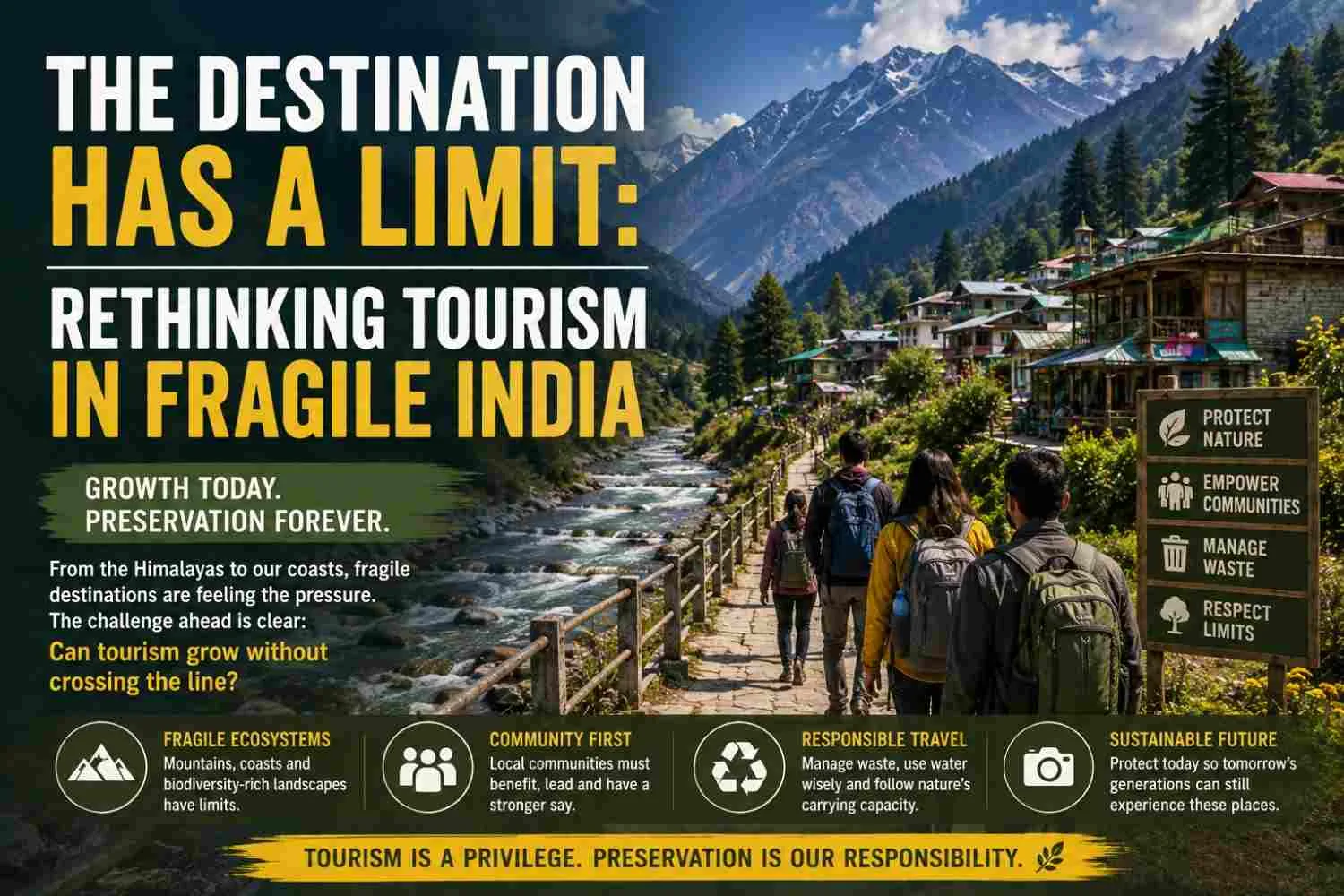
| India’s tourism economy is expanding across its mountains, coasts and biodiversity-rich landscapes, but fragile destinations are reaching the limits of what they can absorb. The next test for responsible tourism is whether growth can protect the ecosystems and communities that make these places worth visiting. |
| Summary Tourism is creating valuable economic opportunities for communities across India’s Himalayan and coastal regions. But the rapid rise in visitors is also putting growing pressure on water, waste management, natural habitats and local infrastructure. A recent carrying-capacity study of Uttarakhand’s Char Dham shows why setting clear limits on tourist numbers is becoming important. At the same time, government policy is gradually promoting carrying-capacity assessments, responsible tourism and community-based models such as homestays. Waste-management partnerships and village-led tourism offer possible alternatives to high-volume tourism, but their success depends on what happens after the initial intervention. For CSR and private tourism investment, the real test is whether ecosystems remain protected, communities retain a meaningful share of the benefits and projects continue to work after the funding cycle ends. |
Keywords Sustainable Tourism, Responsible Tourism, India Tourism, Fragile Ecosystems, Tourism Carrying Capacity, Himalayan Tourism, Rural Tourism, Community-Based Tourism, Eco-Tourism, Sustainable Travel |
How Much Tourism Is Too Much for a Fragile Destination?
For popular destinations, more tourists mean more hotels, restaurants, transport services, jobs and income for local communities.
But fragile destinations cannot absorb unlimited growth. Mountain region often has limited land, vulnerable water sources, difficult terrain, waste-management challenges and sensitive ecosystems.
Coastal areas face their own pressures, including erosion, cyclones, mangroves, wetlands, nesting sites and changing water conditions.
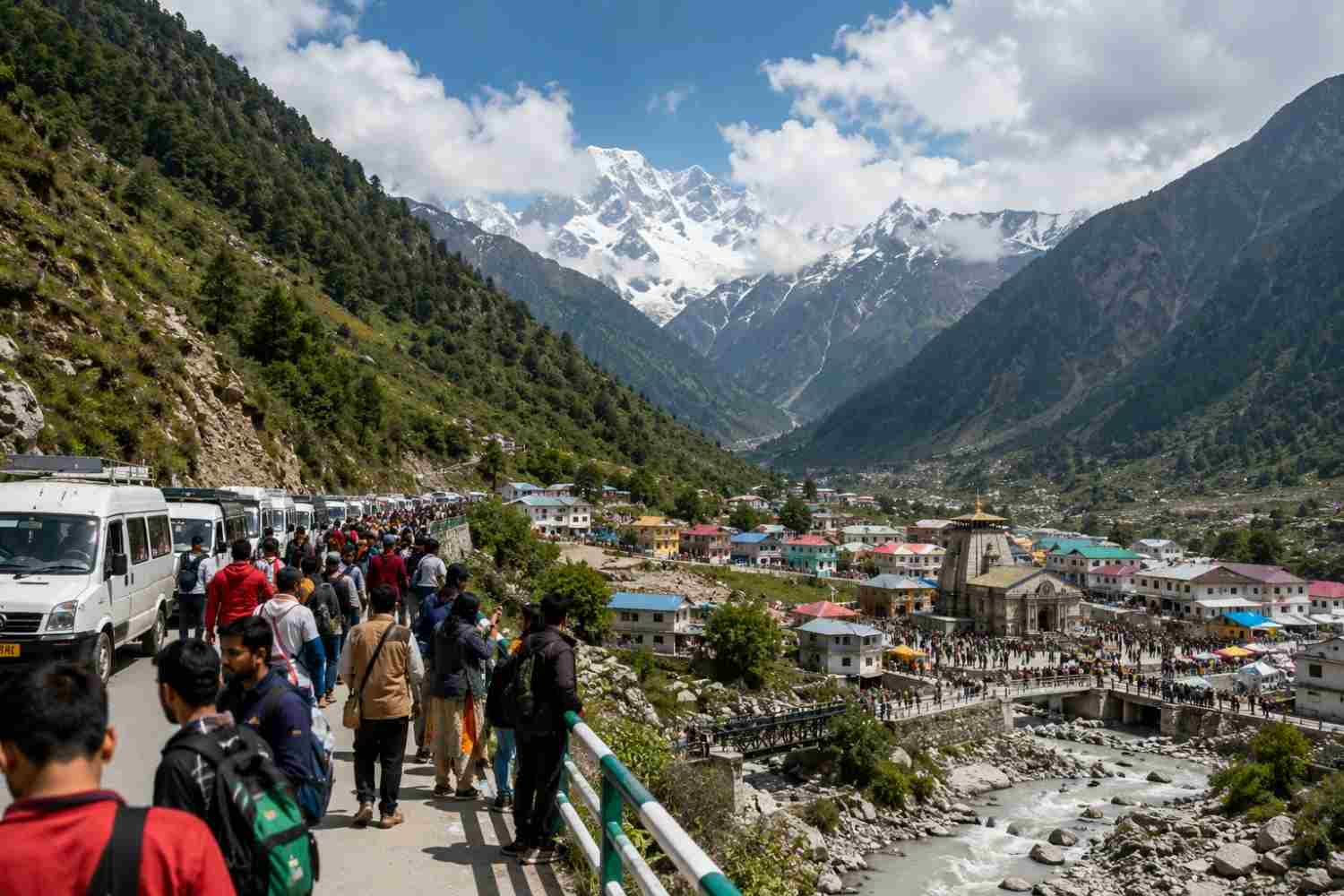
The growing pressure is already visible in the Himalayas.
A recent study found that visitor numbers to Uttarakhand’s Char Dham reached a record 5 million in 2023.
Using geoscientific, biological, socioeconomic and cultural indicators, the study estimated sustainable daily visitor limits of 15,778 for Badrinath, 13,111 for Kedarnath, 8,178 for Gangotri and 6,160 for Yamunotri.
These figures are more than tourism statistics. They represent an effort to understand how much pressure a destination can take before tourism begins to damage the natural resources and local communities that support it.
The ability to accommodate more visitors is not simply a question of physical space. Water resources, waste systems, forests and local communities may be under significant pressure.
Can Tourism Limits Work on the Ground?
India is gradually recognising that tourism growth needs to be planned at the destination level, rather than simply focusing on attracting more visitors.
The Ministry of Tourism’s National Strategy for Sustainable Tourism calls for better visitor management, physical site planning and greater community participation in tourism decisions.
The government is also encouraging states and Union Territories to assess carrying capacity when planning new tourism projects.
But the real challenge begins once these assessments are completed.
A carrying-capacity report has little value if visitor numbers continue to exceed the limits it identifies.
At the same time, restricting tourist numbers is not a simple solution.
Fewer visitors may reduce pressure on water, waste systems and fragile habitats, but it can also affect hotels, transport operators, guides, vendors and other local businesses that depend on tourism income.
This creates an important policy challenge: how can destinations protect their environment without cutting local communities out of the tourism economy?
The answer could lie in better demand management. Timed entry, seasonal visitor limits, promoting less-crowded destinations and strengthening local businesses can help spread tourism more evenly.
Instead of concentrating visitors and income in a few high-footfall locations, destinations can create opportunities for more communities to benefit while reducing pressure on fragile hotspots.
Absolutely. The ideas are strong, but the language can be made more reader-friendly, smoother and less repetitive, while still keeping the article professional. I’d also simplify the headers so they feel more natural and engaging.
Managing Tourism’s Waste, Not Just Measuring It
Waste is often one of the most visible signs of tourism pressure.
In mountain regions, poorly managed waste can find its way into water sources, attract animals and affect both wildlife and local residents.
In coastal areas, plastic and other waste can pile up along beaches, wetlands and marine ecosystems.
This makes waste management an important area for collaboration between travel companies, local authorities and community organisations.
But simply collecting waste is not enough.
If a tourism company reports collecting hundreds of tonnes of waste, it is important to ask: How much was segregated? How much was recycled or composted? How much ended up in landfills? Who managed the system? And what happened after the CSR funding ended?
A more meaningful approach would also measure waste per visitor. This helps destinations understand whether their environmental impact is actually decreasing as tourist numbers increase.
The numbers need to be viewed in context. Higher waste collection may simply reflect a rise in tourist arrivals, rather than an improvement in waste management.
Can Communities Lead Tourism?
One way to make tourism more inclusive is to spread its economic benefits beyond large hotels and commercial operators.
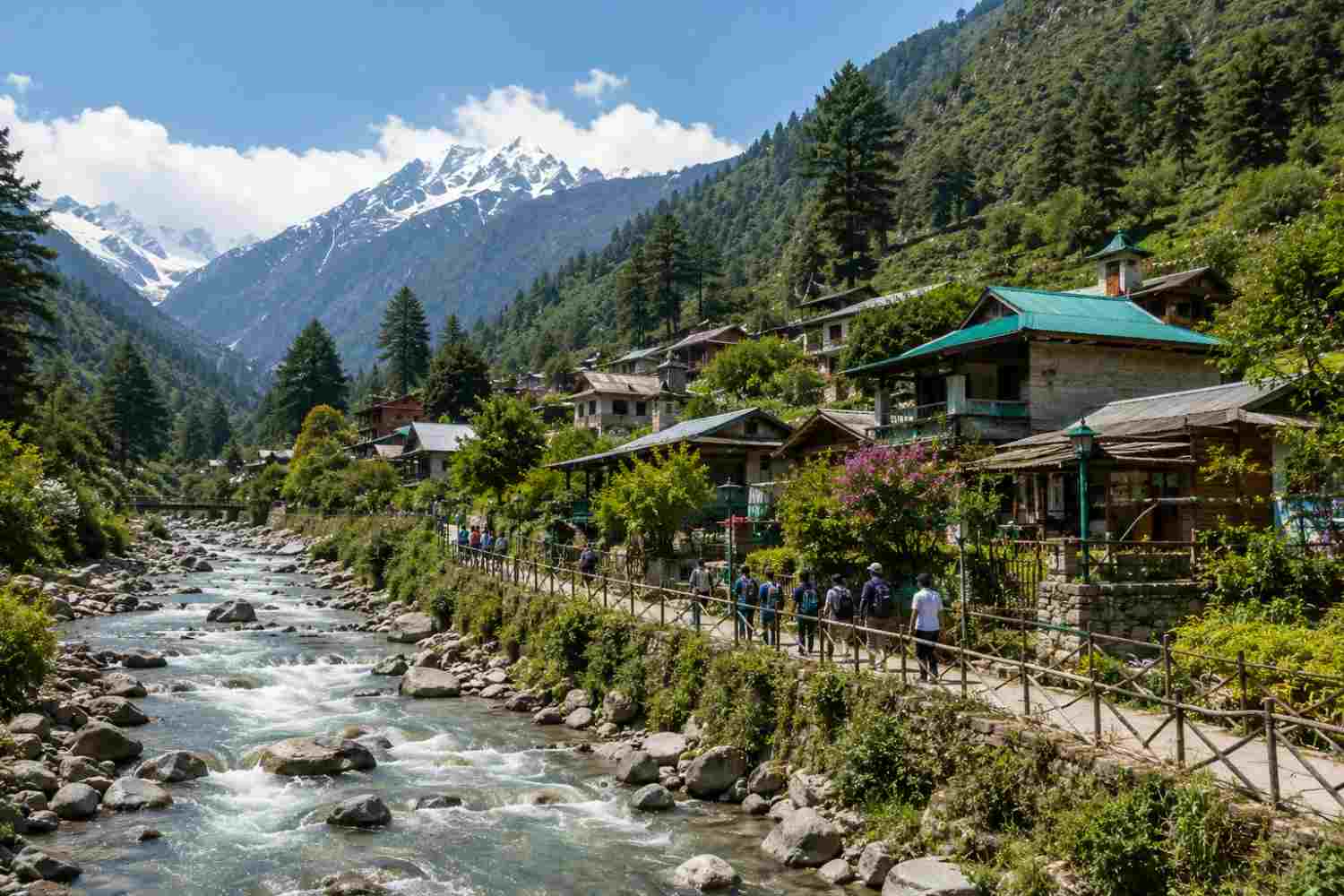
Homestays and community-based tourism allow local households to earn directly from visitors while keeping accommodation smaller and closer to existing communities.
Government policy is supporting this model.
A 2026 rural-homestay initiative under Swadesh Darshan includes plans for 1,000 homestays in tribal areas, along with financial support for village-level needs, construction and renovation, as well as technical training for homestay owners.
Ladakh also launched a Holistic Homestay Support Framework in March 2026, aimed at developing village-led tourism enterprises with a focus on quality, preparedness and sustainability.
These efforts point to a broader idea: tourism growth does not always have to depend on large-scale infrastructure.
A well-managed homestay can turn an existing household asset into a source of income while giving visitors a more direct experience of local culture.
But homestays are not automatically sustainable.
A 2026 study of Himalayan homestays in Kalimpong found that their sustainability depends on factors such as infrastructure, accessibility, social conditions and environmental performance.
It also highlighted how poorly planned tourism can lead to waste accumulation, environmental damage and greater pressure on local resources.
Community-based tourism, too, must operate within the limits of what a destination can sustainably support.
Who Really Benefits When Tourism Grows?
For local communities, the real question is not how many tourists a destination attracts, but whether tourism creates stable local incomes without making everyday life more difficult for residents.
In Himalayan villages, residents can earn through homestays, guiding, transport and food services.
But alongside these economic benefits, communities may also face more waste, greater demands on local water resources and changes to land use.
That is why community participation cannot stop at creating jobs.
Who owns the land? Who controls tourism development? Who receives and shares the revenue? Who has the authority to decide where infrastructure is built? And do local communities have a meaningful voice when development puts their resources at risk?
These questions are particularly relevant in regions where forests, grazing lands and other natural resources are managed through customary systems and community institutions.
A stronger community-based tourism model therefore gives residents a meaningful role in decision-making, ownership and sharing of benefits, rather than treating them only as service providers.
Recent policy thinking on Himalayan tourism has also emphasised community participation, local workforce development and stronger connections between tourism, conservation and local businesses.
What Does Real Community Consent Look Like?
Community consent should mean more than simply holding a consultation meeting.
When a project affects forests, coastal areas or resources used by local communities, companies should clearly record who was consulted, what concerns were raised and whether those concerns influenced the final plans.
For example, if a proposed resort is moved away from a sensitive forest after residents and environmental assessments identify the area as important, that shows avoidance.
If local residents receive a share of tourism revenue or own a stake in the business, that is benefit sharing.
But if a project moves ahead despite community objections, without showing how environmental and livelihood concerns were addressed, it becomes difficult to call the project genuinely “community-based.”
That is why independent community interviews are important. The people living in the destination should be able to speak freely about both the benefits and the costs of tourism, without their responses being shaped by project management.
How Green Is an “Eco-Resort” Really?
Certification can help set common standards for sustainable tourism. But having a certificate should not be treated as proof that a project is environmentally responsible.
India’s tourism sector is promoting sustainable practices through initiatives such as Travel for LiFE and sustainability criteria for tourism businesses gradually.
However, a resort can install solar panels, reduce plastic use and market itself as “eco-friendly” while still consuming large amounts of groundwater, being built on sensitive land or producing more waste than the local system can manage.
The real test lies in the evidence.
Ask:
Was the local ecosystem assessed before construction began?
Were sensitive habitats identified and avoided?
How much water does the property use per guest?
How much waste does it generate per guest?
Were local communities meaningfully consulted?
How many employees and suppliers are from the local area?
And perhaps most importantly:
Are these indicators being tracked year after year?
A certification may confirm that a resort meets sustainability standards when it is awarded, but long-term environmental performance requires continued monitoring.
What Makes Tourism Regenerative?
THE RESPONSIBLE TOURISM EVIDENCE TEST
Ecological Baseline
↓
Avoid Sensitive Habitat
↓
Community Consent & Tenure
↓
Benefit Sharing
↓
Waste & Water Performance
↓
Multi-Year Habitat Monitoring
↓
Actual CSR Spend & Long-Term Continuity
CSR-funded projects should be judged by more than the numbers announced. Companies should disclose the original budget, actual expenditure and scope of their reporting.
If ₹5 crore is announced but only ₹2 crore is spent, the gap deserves explanation.
Likewise, a waste-management initiative cannot be considered a lasting success if it works only while CSR funding is available and disappears once the funding ends.
For habitat restoration, the number of saplings planted is only a starting point. What matters more is how many survive and continue to grow three or five years later.
The same principle applies to community tourism. Counting homestays is useful, but tracking how many remain active, how much income they generate and how much of that income reaches local households gives a far better measure of impact.
Can Tourism Grow Without Consuming the Destination Itself?
India does not have to choose between tourism and conservation. But it does have to decide what kind of tourism it wants to build and what it is willing to protect along the way.
Tourism can create jobs, support local businesses and bring valuable income to communities. But when growth comes without limits, the same industry can put pressure on water resources, waste systems, habitats, infrastructure and the people who call these destinations home.
A more responsible approach begins by recognising that growth cannot be measured by visitor numbers alone.
It means managing tourist flows, spreading demand beyond overcrowded hotspots, strengthening local businesses, involving communities in decisions and building infrastructure that reflects the ecological limits of each destination.
Homestays can help keep tourism income within communities.
Waste-management partnerships can reduce the environmental burden of visitors. Carrying-capacity assessments can help establish clear limits.
Certification can set standards for more responsible operations. But none of these measures is a guarantee of sustainability on its own.
The real test comes years later.
Is the destination healthier? Are its natural resources better protected? Are local communities earning more without bearing a greater burden? And are the systems created through tourism still working after the initial funding, publicity or project period has ended?
For companies, this means measuring not just what was built, funded or promised, but what continues to deliver results.
For communities, it means having a genuine voice in decisions, a meaningful share of the benefits and a say in how their resources are used.
For governments, it means turning carrying-capacity assessments into clear and enforceable limits, rather than leaving them as recommendations on paper.
A fragile mountain, forest or coastline cannot be treated as an endlessly expandable tourism asset. Its natural resources are not infinite, and neither is its ability to absorb the pressure of visitors.
The destination is the asset.
And if tourism damages the ecosystem, exhausts the resources and weakens the livelihoods that make a place worth visiting in the first place, the industry is not simply harming the destination - it is undermining its own future.
That is why regenerative tourism must ask a different question. Not how many more tourists can this destination accommodate?
but:
What will still be here, thriving and protected, long after the tourists have gone?
Sources:
- Ministry of Tourism, Government of India — National Strategy for Sustainable Tourism (https://tourism.gov.in/index.php/whats-new/national-strategy-sustainable-tourism) (Tourism India)
- Ministry of Tourism, Government of India — National Strategy and Roadmap for Development of Rural Tourism (https://tourism.gov.in/sites/default/files/2026-02/National%20Strategy%20and%20Roadmap%20for%20Development%20of%20Rural%20Tourism.pdf) (Tourism India)
- PIB / Ministry of Tourism — Development of 1,000 Tribal Homestays under PM-JUGA (https://www.pib.gov.in/PressReleasePage.aspx?PRID=2212575) (Press Information Bureau)
- UT Ladakh Administration — Holistic Homestay Support Framework, March 2026 (https://ladakh.gov.in/secretary-tourism-launches-holistic-homestay-support-framework/) (Ladakh Government)
- Scientific study — Carrying capacity and strategic planning for sustainable tourism practices in the Char Dham, Uttarakhand (https://pmc.ncbi.nlm.nih.gov/articles/PMC12534453/) (PubMed Central (PMC))
- PubMed — Char Dham carrying-capacity study (https://pubmed.ncbi.nlm.nih.gov/41107367/) (PubMed)
- Scientific study — Sustainable homestay tourism in the Himalayas: A multicriteria evaluation approach (Kalimpong) (https://www.sciencedirect.com/science/article/abs/pii/S2211464525002568) (ScienceDirect)
- Ministry of Tourism — Travel for LiFE (https://nidhi.tourism.gov.in/home/page/travel-for-life) (NIDHI)





Add a Comment