

There are two West Bengals that rarely meet in the same policy room. One is the familiar story of a culturally rich state with busy cities, strong political theatre, and pockets of impressive social progress. The other is the quieter, harder truth that lives at the edges: the saline, amphibious delta of the Sundarbans in the south and the arid, undulating plateau of Purulia in the west. These are not just “remote” regions. They are frontline geographies where development repeatedly breaks—under climate stress, under market extraction, under governance gaps, and under the daily arithmetic of deprivation.
At first glance, Sundarban and Purulia look like they belong to two different countries. In the delta, life is negotiated with the tide; water surrounds you, yet safe water can be scarce and sometimes dangerous. In Purulia, the land rises into lateritic uplands—red earth, scattered hills, sal forests—and long months when the sky withholds rain and the ground cracks like old pottery. But the two places carry a shared burden that the word “backwardness” fails to explain. The poverty here is not a single problem; it is a system. And systems persist because multiple forces keep reinforcing them.
This report reads these two regions together—because their crises rhyme. It names the “what, who, when, where, and how” of chronic rural underdevelopment, and then draws a practical road forward: not abstract “growth,” but a sustainable rural economy built on water security, nutritional dignity, resilient livelihoods, fair markets, and institutions that treat people as partners rather than beneficiaries.
Two geographies, one pattern: development that keeps collapsing
When people describe “lack of development,” they often list familiar deficits—low income, weak roads, inadequate healthcare, poor schooling, few jobs. In Sundarban and Purulia, those deficits are real, but the deeper story is structural: development here behaves like a temporary structure in a storm zone. A cyclone, a drought, a funding freeze, a disease outbreak, or a market crash doesn’t merely create hardship; it resets households back to zero. In such places, poverty is not only low income. Poverty is the absence of safe choices.
The system typically runs through four reinforcing loops.
One loop begins with fragile nature and fragile livelihoods. In Purulia, rain falls but the land cannot hold it; in the Sundarbans, water arrives as salinity, floods, storm surges, and contamination. When the environment is stressed, livelihoods collapse fast because they are narrow—too dependent on a single crop, a single season, or a single risky extractive activity.
A second loop turns weak public services into a hidden “poverty tax.” If drinking water is unreliable, healthcare distant, transport patchy, schools under-resourced, and welfare unpredictable, the household pays every day—through lost workdays, debt, undernutrition, dropouts, and untreated illness. This tax is rarely counted, yet it is the most consistent drain on rural resilience.
A third loop is the extraction market problem. When producers sell raw goods—paddy, fish, forest products, lac, leaves—into markets controlled by intermediaries, value leaks out of the region. The village remains busy, but poor.
A fourth loop is chronic risk that forces distress decisions. Repeated shocks—cyclones, embankment breaches, crop failure, wage delays, illness—push rational short-term choices that damage long-term prospects: pulling children out of school, selling assets, cutting mangroves for repairs, overfishing, over-extracting groundwater, or accepting unsafe migration.
This is why these regions are not merely “underdeveloped.” They are trapped in development that repeatedly breaks.
Where the story unfolds: islands of water, uplands of runoff
The Sundarbans crisis concentrates in the remote blocks of South 24 Parganas—the island and riverine geographies where roads, hospitals, and markets are expensive to build and easy to lose. Places like Gosaba, Patharpratima, and Kultali sit at the meeting point of ecology and insecurity. The very soil is unstable; the cost of every concrete structure includes ferries, tides, and logistics. In such terrain, infrastructure does not simply “arrive.” It must survive.
Purulia’s crisis concentrates in a different ecology: the lateritic soil, rugged topography, and uneven hydrology of the Chota Nagpur Plateau fringe. The district receives significant rainfall in many years, but the landscape’s geology—porous laterite and crystalline basement rock, combined with undulating slopes—pushes water into rapid runoff and evaporation rather than storage and recharge. This creates a cruel paradox: “green drought” fields that look alive after rain but cannot hold soil moisture long enough to carry crops through dry spells.
Two landscapes, two hazards—cyclones and salinity in one, drought and runoff in the other—yet both produce a similar outcome: a permanent survival economy.
What “backwardness” actually looks like: capabilities denied, not only income lost
The most honest way to measure underdevelopment is to look at capabilities: can people reliably access safe water, secure housing, healthcare, education, and dignified work? In Purulia and the Sundarbans, these capabilities are routinely interrupted, delayed, or denied.
Consider nutrition, the most intimate ledger of development. In Purulia, child wasting is extremely high, with under-five wasting reported in the range of roughly a quarter to nearly a third of children—an indicator of acute malnutrition that cannot be explained away as a seasonal dip. It signals chronic food insecurity and fragile access to basic services, especially in the most marginalized hamlets. Among some tribal communities, the nutrition crisis is even more severe. In the Sabar community, studies referenced in the notes indicate very high prevalence of malnutrition among children, including a significant share categorized as severely malnourished. This is not merely “poverty.” It is a prolonged emergency that reduces learning capacity, health outcomes, and lifetime earnings.
In the Sundarbans, malnutrition wears a coastal accent. Children show alarming levels of stunting and anaemia, and women and adolescent girls carry a heavy anaemia burden—shaped by poverty diets, limited vegetable cultivation in saline conditions, and repeated health shocks. Here, water quality is not a footnote. Saline contamination and unsafe drinking sources feed disease, increase healthcare costs, and reduce household productivity. A region cannot “grow out of poverty” when bodies are repeatedly weakened before children even reach school age.
Housing exposes the same structural trap. In the Sundarbans, kutchha mud houses are not merely an indicator of low assets; they are a cyclone-risk multiplier. Each major storm—Aila in 2009, Amphan in 2020, Yaas in 2021—does not just damage homes. It wipes out savings, destroys stored food and tools, kills livestock, contaminates ponds, and pushes families into debt to rebuild the same fragile structure again. Poverty becomes a literal cycle: build, lose, rebuild, lose again.
In Purulia, the housing trap is tied to heat, dryness, and water scarcity. Families spend hours fetching water as local sources dry by late winter or early summer. This “time poverty” falls heavily on women and girls. The hours lost are hours not spent on income generation, childcare, education, or rest—yet they are spent merely to keep the household functioning.
Underdevelopment here is visible in what people cannot reliably do: drink safely, stay healthy, keep children learning continuously, save without fear of sudden loss, and plan beyond the next shock.
Who pays the price: the most vulnerable become the default shock absorbers
Underdevelopment always has a face. In these regions, the face is often tribal, female, young, and land-poor.
In Purulia, a large share of the population belongs to Scheduled Tribes and Scheduled Castes, groups that have historically been excluded from land security, quality public services, and stable markets. The Sabar community sits at the extreme edge of this exclusion. Branded under colonial frameworks as a “criminal tribe” in 1871, they continue to face stigma and suspicion that blocks access to mainstream livelihoods and dignity. When welfare mechanisms falter, the Sabars are often the first to fall through the cracks—because their social distance from power is greatest.
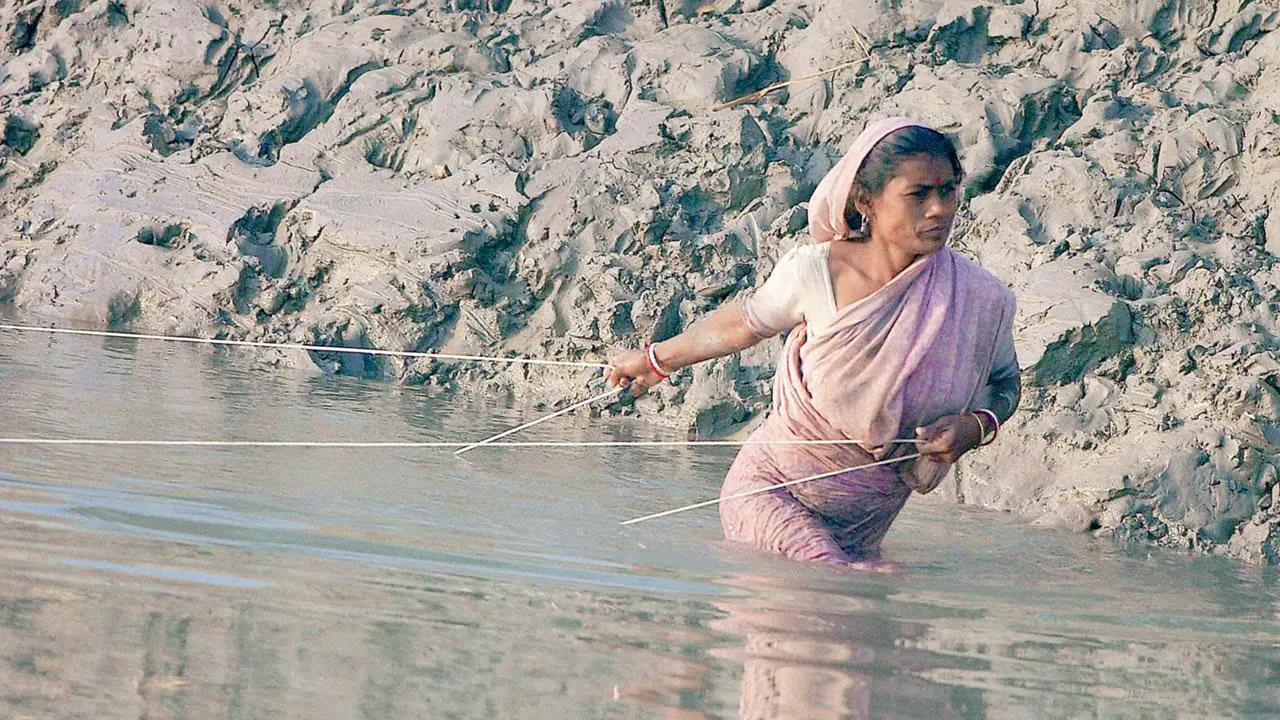
In the Sundarbans, the frontline shock absorbers are often women. They collect water, manage households, and frequently participate in livelihoods that put bodies directly in contact with saline water—such as collecting prawn seedlings. The region’s “saltwater burden” is not just an environmental term; it is a gendered health crisis. Prolonged exposure to saline water, combined with poor sanitation options and limited healthcare access, is associated in the notes with widespread reproductive health problems and infections. The desperation to escape chronic pain and illness has reportedly led many women to undergo hysterectomies at young ages. Meanwhile, pregnant women exposed to high salinity in drinking water face elevated risks of gestational hypertension and preeclampsia, placing both mothers and infants at risk and perpetuating intergenerational poor health.
Youth pay in a different currency: the collapse of safe options. When schooling is interrupted, skills remain thin. When local skilled jobs are absent, migration becomes the default. But informal migration pathways often mean wage theft, unsafe work, and coercion. In the Sundarbans, where post-disaster desperation spikes, the notes describe heightened vulnerability to trafficking: young girls and women lured with promises of marriage or jobs and then exploited in distant cities. In Purulia, seasonal migration to brick kilns frequently resembles bonded labour conditions—low wages, poor living conditions, missing schooling, and health risks.
The “who” of underdevelopment is therefore not abstract. It is the people with least power to buffer shocks: the landless, the unrecorded sharecropper, the migrant, the adolescent girl, the tribal household on uplands where water runs away.
When the crisis deepened: policy paralysis meets climate acceleration
These regions have faced long histories of neglect, but the crisis has sharpened in recent years as climate impacts intensify and governance becomes less reliable.
The Sundarbans has lived through repeated cyclone shocks with increasing intensity and devastating storm surges. Each major event has left behind a familiar chain reaction: embankment breaches, saline inundation of fields, contamination of ponds, crop failure, disease spikes, livestock loss, and migration. The embankment system itself is a historical artifact; many stretches trace back to colonial-era construction and remain fragile earthen structures. When they fail, it is not merely flooding; it is a chemical invasion of salt that can keep land fallow for months or years, destroying food security and forcing livelihood pivots.
In Purulia, climate variability shows up as erratic monsoons and longer dry spells, sharpening the mismatch between water-intensive monoculture and the region’s hydrological reality. The notes describe how even when rainfall totals appear adequate in theory, rapid runoff and evapotranspiration leave farmers exposed to dry spells. That exposure turns crop failure into routine risk rather than an exception.
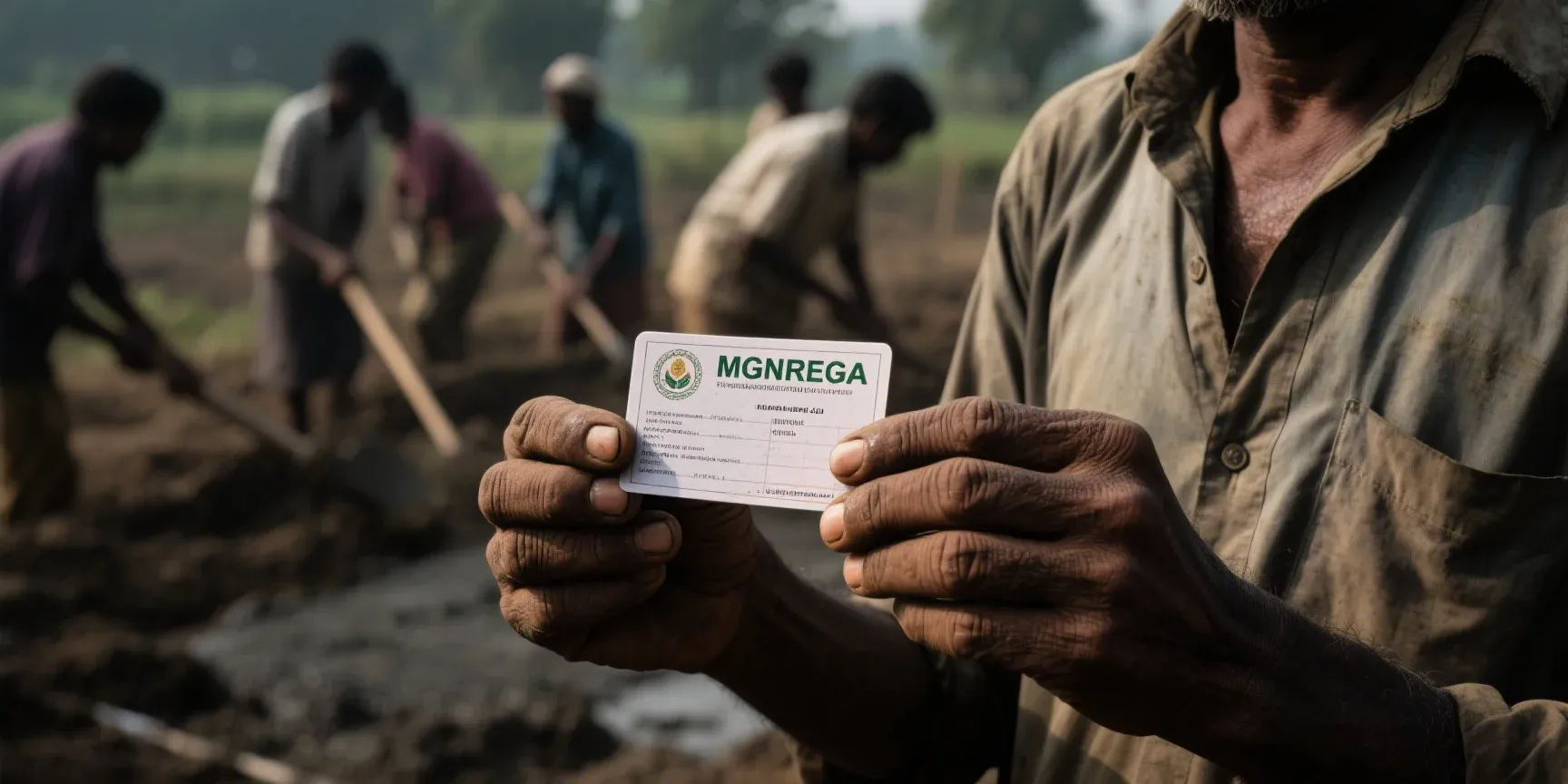
Then came an additional human-made shock: the prolonged disruption of the rural employment safety net. The notes describe that since around late 2021 and particularly after the stoppage of MGNREGA funds from March 2022 amid allegations of irregularities and political conflict, a massive number of rural workers were left without wages and work. For rainfed Purulia and single-crop Sundarban islands, this freeze is not a bureaucratic dispute; it is a manufactured famine condition. When the guaranteed-work buffer collapses, the poorest households lose their only predictable cash flow during lean months. The results follow quickly: reduced food intake, distress sale of assets, untreated illness, and forced migration under worse terms.
This is the “when” that matters: climate risk rising faster, while institutional reliability weakens—creating a compound crisis.
How poverty is produced “by design”: policy and governance that sustain exclusion
A hard truth runs through both regions: deprivation is not only accidental. It is also produced through choices—what is funded, what is enforced, what is ignored, and who is treated as a legitimate citizen.
One design failure is the collapse or politicization of entitlements. MGNREGA was meant to guarantee a basic floor of employment. In these geographies, it also served as a resilience tool: families could survive lean months without selling assets or migrating under coercion. When funds and work are withheld for extended periods, starvation becomes not a “mysterious tragedy,” but a predictable outcome of policy paralysis.
A second design failure is tenure insecurity—who legally belongs on land and who is treated as temporary. In the Sundarbans, the notes describe abysmal implementation of the Forest Rights Act of 2006, especially where tiger reserve status is used to justify a fortress-conservation mindset. Traditional fishers, honey collectors, and forest-dependent communities remain in limbo, often treated as encroachers rather than custodians. Without community forest rights and secure recognition, people live under constant threat of harassment, fines, and eviction. They cannot invest in long-term livelihoods because the state refuses to recognize their legitimacy.
In Purulia, the design problem shows up through land alienation and weak enforcement of protective tenancy laws. Statutes intended to protect tribal land can be undermined through loopholes, fraudulent transfers, and administrative complicity. Sharecroppers also face exclusion when they are unrecorded. Without formal recognition, they cannot access institutional credit, crop insurance, or farmer-support benefits; they remain trapped in informal debt markets with usurious terms.
A third design failure is contractor-centric infrastructure that treats crises as recurring construction opportunities rather than opportunities to build durable resilience. In the Sundarbans, embankment spending can become a revolving door of repair contracts. When quality oversight is weak and designs ignore ecosystem dynamics, embankments breach again, and the same villages pay again—in damaged homes, lost crops, and renewed debt.
A fourth design failure is budgetary illusion: allocation that looks substantial on paper but is structurally inadequate for the scale of the problem, while also being consumed by recurring or ad-hoc expenditures rather than transformative adaptation. The notes point to an allocation of hundreds of crores for Sundarban affairs that still becomes a “drop in the ocean” once one accounts for the extraordinary costs of deltaic infrastructure and the tendency for spending to cluster around hard engineering rather than long-term bioshields and water security.
Underdevelopment, then, is not simply “lack of money.” It is money spent in ways that do not change vulnerability.
How poverty is produced “by default”: survival strategies that become ecological traps
Not all damage comes from villains. Much comes from patterns that make sense today but destroy tomorrow.
In the Sundarbans, one of the most destructive defaults is the uncontrolled expansion of brackish-water shrimp aquaculture. Shrimp offers the lure of quick profit in a region where agriculture is increasingly unviable under salinity. But the notes describe how saline river water introduced into inland ponds and paddy fields gradually salinizes surrounding soil and freshwater sources, turning adjacent land infertile for years. Shrimp itself is vulnerable to viral disease; a failed crop can leave a farmer in massive debt with ruined land. Over time, the “boom and bust” dynamic creates a few winners with capital and many losers who watch their land’s long-term viability collapse.
The ecological cost compounds when shrimp farms encroach on mangrove buffers or when polluted wastewater harms indigenous fish populations, reducing traditional fishers’ catch. The landscape becomes poorer at producing food and more dependent on risky exports.
In Purulia, the default trap is an ecological mismatch—persisting with water-intensive paddy monoculture in a semi-arid, runoff-prone geography. When monsoons are erratic, crop failure becomes routine and debt accumulates. Meanwhile, unscientific cultivation on undulating terrain accelerates soil erosion. Each heavy rain washes away topsoil, leaving behind rocky subsoil that produces even less, requiring more inputs for less yield. Poverty limits investment in water management; low productivity sustains poverty. The loop tightens.
Groundwater mismanagement sits across both regions as a silent default. Where private submersibles proliferate in stressed blocks, the commons is depleted. Drinking water wells dry earlier, women walk farther, and the hidden poverty tax increases. Regulation exists on paper but is often weak on the ground, allowing the tragedy of the commons to become a normalized reality.
Defaults are not moral failures. They are predictable behaviours when survival is uncertain. The real question for development is whether policy can make the sustainable choice the easiest choice.
The lived experience: how deprivation enters bodies, calendars, and decisions
In Purulia’s most marginalized hamlets, hunger is not dramatic; it is constant. The notes describe deaths that are officially attributed to “illness” but sit on a foundation of chronic malnutrition and untreated conditions. When wages are absent and healthcare costs require travel, even manageable diseases become fatal. Families reduce meals, sell goats, sell utensils, and borrow at crushing interest. This is not a story of laziness; it is a story of systems that fail the poorest at predictable moments.
In the Sundarbans, deprivation arrives with the tide and with the storm. A household may count the day’s water trips, the salt taste in a pond, the medicine cost for hypertension, the lost wage if a clinic visit takes a whole day by boat. Post-cyclone months magnify everything: water-borne disease spikes, food stocks shrink, schooling breaks, and traffickers exploit desperation.
Underdevelopment is also temporal. In Purulia, poverty has a seasonality: lean months when agriculture provides little work and households survive on migration or odd jobs. In the Sundarbans, poverty has a disaster rhythm: years and months are remembered by cyclones, embankment breaches, and the time it takes land to recover from salinity. In both, the calendar is a development indicator.
What sustainable rural development actually means here: resilience that you can see and feel
Sustainability in these regions cannot be reduced to slogans. It must be visible in everyday life.
In Purulia, sustainability begins with water security through decentralization. The defining move is to capture rain where it falls, slow runoff, store water, and recharge groundwater—so that agriculture can support more than a single rainfed gamble. Climate-smart agriculture then becomes possible: shifting toward millets, pulses, oilseeds, horticulture, and agroforestry systems that match the water reality while improving soil health and nutrition. Livelihood diversification—goatery, poultry, lac cultivation on host trees such as palash and kusum—creates income options when crops fail. The real measure is whether a household can go through summer without a water crisis and through lean months without distress migration.
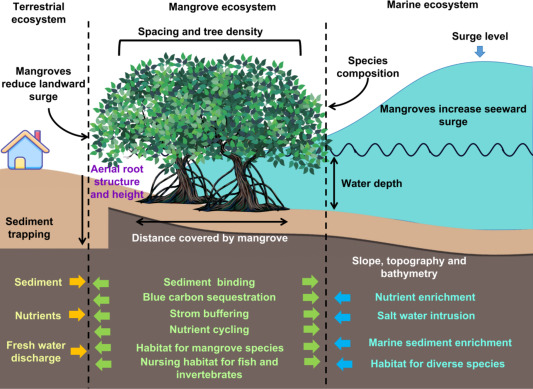
In the Sundarbans, sustainability begins with bio-shield protection and saline-adapted livelihoods. The mangrove is not scenery; it is infrastructure. Where the mangrove buffer is intact, cyclone damage is reduced. Where it is degraded, storms cut deeper. Saline-tolerant agriculture and indigenous seed revival become crucial—rice varieties that can survive inundation where high-yield varieties fail, allowing food security to persist after embankment breaches. Safe water sovereignty must be treated as a development emergency: household-level rainwater harvesting and filtration that remains functional through floods. A sustainable tourism model is not an imported resort economy but community-owned eco-villages, homestays, and guided conservation experiences where revenue stays local and creates incentives to protect forests and wildlife.
Across both regions, sustainable rural development becomes real when public services are reliable, when value addition happens inside the region rather than outside it, when women’s economic power is visible in enterprises and decision-making, when youth can earn locally in skilled roles, and when risk is managed rather than merely endured.
What is already being done: green shoots worth scaling, and why they matter
Despite the severity of the crisis, these regions are not empty of solutions. The notes describe multiple real-world practices that already work—and could work at scale if supported with policy, finance, and governance.
In Purulia, one transformative approach is the “Hapa” or farm-pond model promoted by organisations such as PRADAN. By dedicating a small fraction of land to a rainwater harvesting pond, marginal farmers can irrigate a second crop, grow vegetables, and sometimes rear fish—creating both income and nutrition. The power of this model is that it converts monsoon rain from a fleeting event into stored capital. When such ponds are combined with contour trenches, check dams, and watershed treatment, the landscape itself begins to hold water rather than shed it.
Government programs oriented toward rainwater harvesting and pond re-excavation have similar design logic. The core insight is straightforward: in a runoff-dominated landscape, water assets must be created and maintained as a system, not as one-off construction targets.
In the Sundarbans, seed sovereignty initiatives are a quiet but profound revolution. Community groups conserving and distributing indigenous salt-tolerant varieties have demonstrated that climate adaptation is not always high-tech; sometimes it is the retrieval of locally evolved intelligence. When storms inundate fields with saline water, seed choice becomes the difference between harvest and hunger.
Women’s collectives and self-help groups matter in both regions because they can do what fragmented households cannot: bargain, save, invest, and enforce community rules. In Purulia, women’s groups have taken up lac cultivation and marketing, breaking middlemen control. In the Sundarbans, women’s groups managing mangrove nurseries link livelihoods directly to protection of the bio-shield.
Community-led eco-village models in the delta, supported by local organisations, show how tourism can be regenerative rather than extractive: solar-powered village services, community-managed mangrove tours, and homestays where revenues circulate locally.
And the region has emerging value levers. A geographic identity for products like Sundarban honey can raise market value through quality control, branding, and direct procurement—if benefits are protected for primary producers rather than captured by intermediaries. The lesson is not that labels solve poverty. The lesson is that place-based value can become a bargaining tool when producers are organised.
These “what is being done” stories matter because they prove a crucial point: the barrier is not absence of ideas. The barrier is scale, continuity, and power.
What must be done next: from relief to rights, from projects to systems
The road ahead cannot be a pile of disconnected schemes. It must be a resilience economy compact—built around rights, water, health, livelihoods, and fair markets—with clear roles for state, local institutions, civil society, and communities.
The immediate horizon is stabilization. Both regions require administrative reliability: entitlements should arrive on time, wages should not be delayed for months, and public systems must behave predictably. Restoring the employment guarantee is not optional; it is the shock absorber that prevents starvation, asset sales, and unsafe migration. In Purulia, emergency employment must be tied to drought-proof assets—ponds, check dams, contour bunds, and recharge structures—so that work today creates water security tomorrow. In the Sundarbans, employment and climate funds must prioritize mangrove nurseries, bio-shield restoration, raised plinths, and water systems that remain safe through floods.
Safe water must be treated as a frontline public health intervention, not a slow infrastructure project. In the delta, household-level rainwater harvesting tanks and filtration reduce the saltwater burden that drives disease and reproductive health harm. Mobile medical services—especially boats equipped for women’s health screening—must reach remote islands, because distance is itself a health determinant. In Purulia, the summer drinking-water crisis requires pre-season readiness: source revival, groundwater governance, and local storage that reduces hours lost to water collection.
The medium horizon is to build local economies that keep value at home. In the Sundarbans, this means regulating aquaculture so that short-term profit does not permanently salinize landscapes and concentrate benefits among a few. Integrated systems—fish and crab culture with mangrove buffers, saline-tolerant cropping where feasible, and community rules to reduce conflict and disease—can convert water into livelihood without converting land into waste. Fisheries require value-chain upgrades: ice, grading, cold rooms, reliable transport, and direct market access so fishers earn more per kilogram rather than chasing higher volumes at greater ecological cost. Honey and non-timber forest products require processing units, quality standards, cooperatives, and transparent procurement.
In Purulia, the medium horizon requires a decisive crop and livelihood shift: millets, pulses, oilseeds, agroforestry, horticulture, and livestock systems matched to hydrology. But farmers will not shift on “awareness” alone. The shift requires input support, extension services that actually reach marginal farmers, and assured markets through procurement, local processing, and integration into nutrition programs. Value addition in forest-based products—lac, sal leaves, mahua-based products—requires common facility centres, storage, branding, and direct buyer links. Craft clusters and regulated, locally owned tourism can diversify incomes if profits do not leak out to external operators.
The long horizon is political economy reform: how power and value flow. Climate adaptation must become the core development plan, not an add-on. In the Sundarbans, sea level rise, salinity intrusion, and cyclone intensification are not future threats; they are operating conditions. Infrastructure must be designed to survive repeated shocks: cyclone shelters that double as community centres, raised housing plinths, resilient water systems, decentralized solar microgrids, and livestock structures built for floods. Bio=shields—mangroves and nature-based defences—must be treated as first-line infrastructure, with community stewardship incentivized and enforced.
In Purulia, controlling extraction and landscape degradation is essential. Mining and quarrying pressures that destabilize hills and forests worsen runoff, reduce recharge, and deepen water insecurity. Without regulation and enforcement, the district’s water crisis will intensify no matter how many ponds are dug. The region needs a water-first development doctrine: watershed governance as the foundation for agriculture, health, and livelihoods.
Across both regions, contractor governance must shift toward community-governed infrastructure. Embankments, water bodies, commons, and local assets need transparent quality audits, maintenance budgets, and local monitoring, because repeated failure is not “natural disaster”; it is preventable vulnerability.
Finally, girls’ trajectories must be protected as development strategy, not charity. Early marriage remains high in these contexts and directly reduces education, health, and economic capacity. Sustainable rural development will not happen if half the population is prevented from becoming skilled adults. Education must integrate local ecology and resilience knowledge, while also creating pathways to skilled rural service roles—solar technicians, para-vets, water system operators, disaster responders, food processors, eco-guides, and digital sellers—so youth can earn locally with dignity rather than migrate by compulsion.
The future that matters: staying as a choice, not a trap
Imagine two ordinary scenes.
In the Sundarbans, a household enters cyclone season without the feeling that everything can be erased overnight. Safe water is stored. A shelter is reachable. Livelihoods can recover because the economy is built with the tide, not against it. Women are not forced into illness by the saltwater burden. Children return to school because the shock did not become permanent displacement.
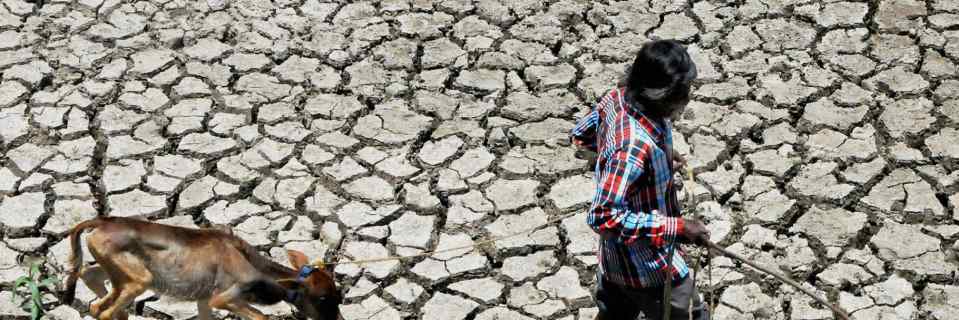
In Purulia, a farmer watches the monsoon without seeing it as a verdict. Water is stored. Soil holds moisture longer. A second crop is possible. Income does not collapse for half the year. Women do not lose days walking for water. Children eat and learn with bodies strong enough to absorb education.
This is the real definition of rural development in frontline geographies: people remain not because they are trapped, but because staying becomes a rational, dignified choice. The tide will still rise. The red soil will still dry. Nature will remain challenging. But chronic backwardness is not nature’s destiny. It is a system humans have built—and therefore a system humans can rebuild.




Add a Comment