
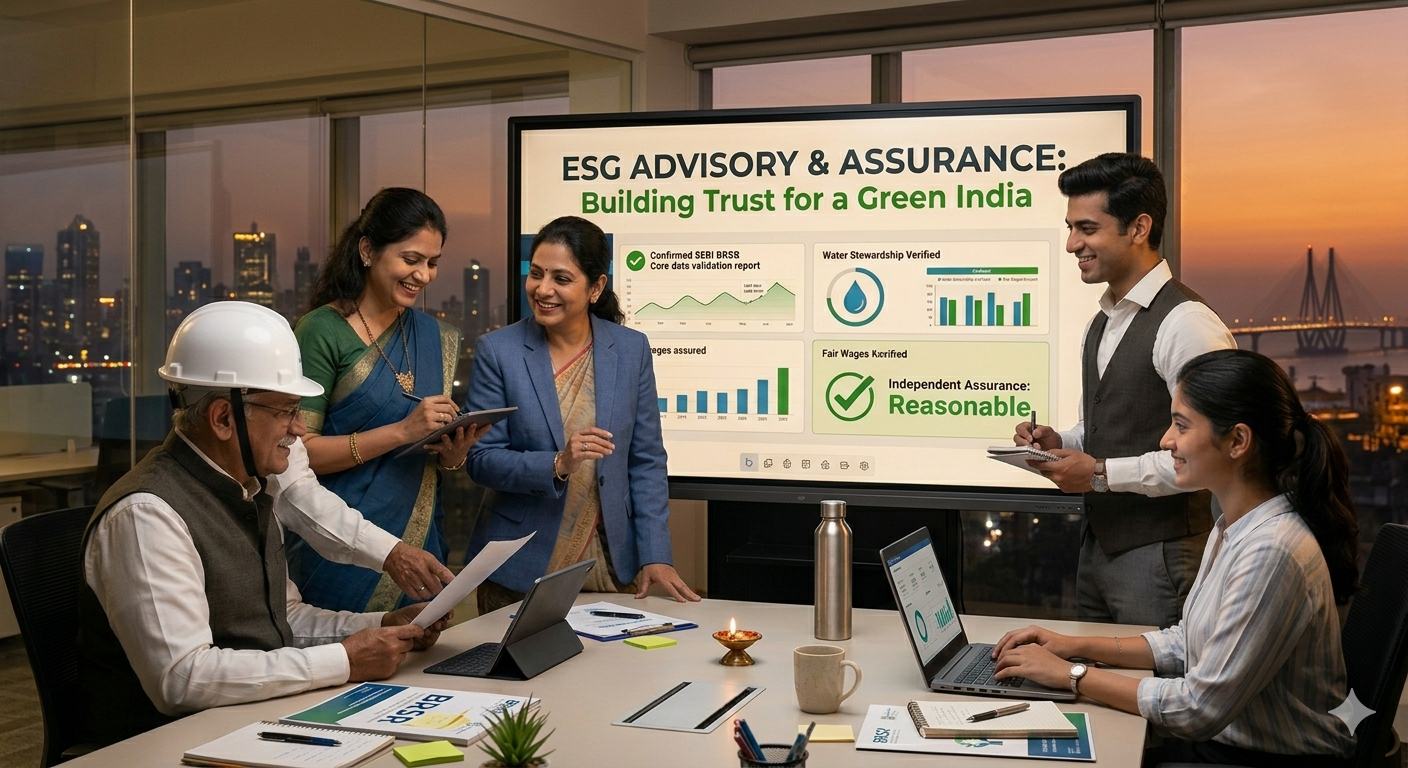
In the mahogany-paneled boardrooms of Mumbai and the high-tech hubs of Bengaluru, a new language is being spoken. It is not the language of quarterly profits or market share alone, but a more complex dialect of "materiality," "scope emissions," and "social equity." This is the era of ESG (Environmental, Social, and Governance), and for the Indian professional, it represents the most significant shift in corporate accountability since the introduction of independent audits.
At its heart, ESG Advisory and Assurance is about one thing: trust. It is the process of proving that a company's promises to the planet and its people are backed by data, not just marketing. In India, where the gap between corporate ambition and grassroots reality can be wide, the role of the advisor and the assurer is to bridge that divide with integrity. To understand this landscape in 2026, we must look past the spreadsheets and see the human stories of transformation that are redefining Indian business.
The Advisory Horizon: Crafting a Strategy with a Soul
ESG Advisory is often mistaken for a compliance exercise, especially as the Securities and Exchange Board of India (SEBI) has made Business Responsibility and Sustainability Reporting (BRSR) mandatory for the top 1,000 listed entities. However, the most successful Indian firms view advisory as a strategic compass.
1. Beyond the "Tick-Box" Culture
For many years, corporate responsibility in India was synonymous with CSR (Corporate Social Responsibility)—the 2% of profits spent on philanthropy. Advisory in 2026 has moved far beyond this. It is about integrating sustainability into the very DNA of the business model.
When an advisor walks into a traditional textile mill in Tiruppur, they aren't just looking for solar panels. They are looking at the health and safety of the workers, the transparency of the chemical supply chain, and the long-term viability of the water sources. The humanized narrative here is the transition of a business owner from a "boss" to a "steward." Advisory helps these leaders understand that protecting the river they draw water from is not a cost—it is an investment in their own survival.
2.The Great Decarbonization Roadmap
India’s commitment to Net Zero by 2070 has put immense pressure on heavy industries like steel and cement. ESG advisors are the architects of this transition. They help firms navigate the "Climate Finance Taxonomy," a structured system that defines what truly counts as a "green" investment in the Indian economy.
The human story in decarbonization is found in the "Just Transition." Advisors work with HR teams to ensure that as a coal-fired plant is decommissioned, the workers are not simply discarded. They are reskilled for the green hydrogen or battery storage roles of the future. This is the "S" (Social) in ESG in action—ensuring that the drive for a cleaner planet does not come at the expense of human dignity.
The Assurance Anchor: Building a Fortress of Data
If Advisory is the roadmap, Assurance is the proof that you’ve actually arrived. In a world increasingly skeptical of "greenwashing," third-party verification has become the ultimate currency of credibility.
1.The Death of the "Fluff" Report
Until recently, many sustainability reports were filled with glossy photos of smiling children and saplings being planted. Assurance has put an end to this. Starting in the 2025-26 fiscal year, SEBI’s BRSR Core framework requires quantifiable, auditable metrics that are as rigorous as financial statements.
The process of assurance is deeply technical, but its purpose is human. When an auditor verifies a company’s water-usage data in a drought-prone region like Marathwada, they are providing assurance to the local community that the company isn't depleting their life-source. They are providing assurance to a global investor in London or Singapore that the "risk" of water-related shutdowns has been accurately measured and managed.
2. The Challenge of “Dirty Data”
One of the biggest hurdles for Indian firms is data integrity. ESG data is often fragmented across different departments—HR has the diversity stats, Operations has the energy bills, and Procurement has the supplier audits.
Assurance professionals act as "data cleaners." They implement systems that track information from the source—like an IoT sensor on a factory chimney—directly to the report. This reduces human error and intentional manipulation. For the professional reader, the takeaway is clear: in 2026, an unverified ESG claim is a liability. It invites regulatory fines, investor flight, and irreparable brand damage.
The Financial Ripple Effect: Why Credibility Pay
The ultimate reason for the surge in ESG Advisory and Assurance in India is the "Green Premium." Evidence from 2026 shows that Indian firms with high ESG scores and independent assurance demonstrate better financial stability and a lower cost of capital.
1. Lowering the Cost of Debt
Banks and NBFCs (Non-Banking Financial Companies) are increasingly offering "Sustainability-Linked Loans" (SLLs). In these arrangements, the interest rate is tied to the company’s ESG performance. If the company meets its carbon reduction or gender diversity targets—verified by an independent assurer—the interest rate drops.
This creates a powerful human incentive for change. It turns the CFO into a champion for sustainability because they can directly see the impact on the bottom line. It isn't just about "doing good" anymore. it is about being more profitable through being more responsible.
2. Attracting the Global Titan
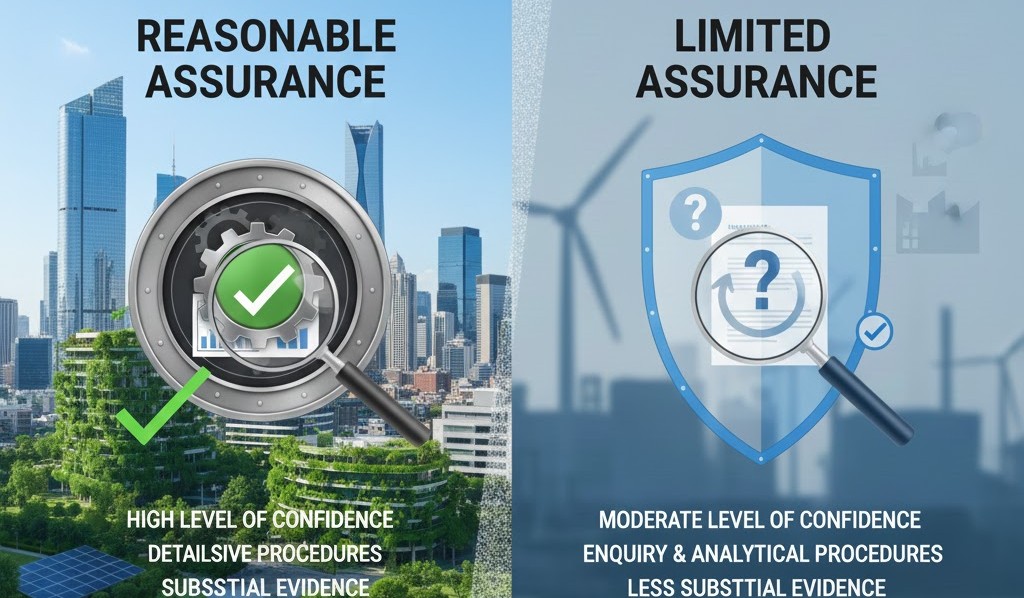
Global institutional investors, managing trillions of dollars, are looking at India as a standout option among emerging markets. However, they are wary of the lack of standardized data. By providing "Reasonable Assurance"—the highest level of audit—Indian firms are effectively speaking the universal language of global finance.
Sustainable investing in India is projected to hit $125 billion by 2026. This capital is flowing into sectors like e-mobility, agritech, and waste management. The humanized side of this investment is the creation of a new, green middle class. It is the funding that allows an Indian startup to deploy thousands of electric delivery scooters, providing clean air for the city and a stable income for the drivers.
The Governance Pillar: Leading from the Top
While the "E" and "S" often get the headlines, the "G" (Governance) is the foundation of ESG Advisory. Without strong governance, environmental and social initiatives are destined to fail.
1. Diversity as a Strategic Asset
Governance advisory in India has a strong focus on board diversity. In 2026, this has moved beyond just having one woman on the board to comply with the law. It is about cognitive diversity—bringing in experts in climate science, human rights, and digital ethics to the boardroom.
The human story here is the "opening up" of the traditional Indian corporate structure. It is the realization that a board that looks and thinks the same way is a board that is blind to emerging risks.
2. Executive Compensation and Accountability
A key trend in ESG Advisory is linking executive pay to sustainability targets. When the CEO's bonus is tied to the company’s safety record or its carbon footprint, the entire organization takes note. This shifts the focus from short-term "quarterly-ism" to long-term value creation. It forces a more humanized view of the company’s legacy.
Overcoming the Hurdles: The Road to 2030
Despite the progress, the path for ESG in India is not without its challenges. The professional community must address:
» The Talent Gap: There is a massive shortage of professionals who understand both Indian business realities and global ESG frameworks. Investing in "Green Upskilling" is the most urgent human need in this sector.
» SME Integration:While the top 1,000 firms are reporting, the millions of small and medium enterprises (SMEs) that form the backbone of the Indian supply chain are lagging behind. Advisory must find ways to make ESG accessible and affordable for the "Chote Bhai" of Indian industry.
» Data Standardisation: 73% of investors still find ESG ratings inconsistent. The move toward SEBI-registered rating providers is a step in the right direction, but we need more harmony between Indian and global standards.
Conclusion: The New Social Contract
ESG Advisory and Assurance are not just technical services. they are the tools we use to write a new social contract for Indian business. They represent a future where a company’s value is measured by its contribution to the world, not just its extraction from it.
As professionals, our role is to ensure that this transition is rooted in reality. We must be the ones who ask the hard questions, who demand the verified data, and who never lose sight of the human being at the other end of the supply chain. In the bustling markets and quiet villages of India, the green shift is happening. By bringing credibility to this shift, we are building an India that is not just a global economic powerhouse, but a global moral leader.
The "Green Budget" of 2026-27 and the rise of the Carbon Credit Trading Scheme are just the beginning. The real work happens every day, in the diligent collection of data and the courageous setting of targets. Let us build a corporate India where transparency is the light, and trust is the energy that moves us forward.



Add a Comment