
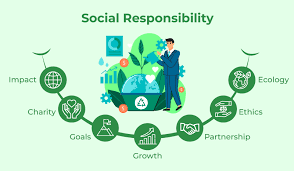
In today’s rapidly evolving business environment, companies are no longer evaluated solely on the basis of profit and market performance. Consumers, investors, governments, and communities increasingly expect businesses to contribute positively to society while operating in an ethical and transparent manner. This growing expectation has made Corporate Social Responsibility, commonly known as CSR, an essential part of modern business strategy rather than a voluntary add on.
Corporate Social Responsibility refers to the efforts made by businesses to contribute toward social, environmental, and economic well being beyond their primary commercial activities. CSR initiatives may focus on education, healthcare, environmental sustainability, rural development, women empowerment, skill development, sanitation, community welfare, and many other areas that create positive societal impact.
However, simply launching CSR activities is not enough. Businesses today are expected to ensure that their CSR programs are meaningful, transparent, legally compliant, and capable of generating measurable impact. This is where CSR Advisory and Audits become increasingly important.
CSR Advisory helps organisations design, implement, and manage effective social responsibility strategies aligned with both business values and community needs. CSR Audits, on the other hand, evaluate whether these initiatives are being carried out responsibly, efficiently, and in compliance with regulatory frameworks.
Together, CSR Advisory and Audits help companies move beyond symbolic social initiatives toward creating long term, accountable, and sustainable impact.
Understanding the Importance of CSR in Modern Business
The relationship between businesses and society has changed significantly over the past few decades. Earlier, companies were primarily expected to generate profits, create employment, and contribute to economic growth. While these responsibilities remain important, businesses are now also expected to address broader social and environmental challenges.
This shift has been driven by multiple factors. Growing awareness regarding climate change, rising social inequality, environmental degradation, labour rights concerns, and ethical business practices has increased pressure on organisations to operate responsibly.
Consumers today often prefer brands that demonstrate social consciousness and environmental commitment. Investors are also paying greater attention to Environmental, Social, and Governance standards when evaluating companies. Businesses that ignore social responsibility may face reputational risks, reduced public trust, and increasing regulatory scrutiny.
In India, CSR has become especially significant because of the country’s diverse social and developmental challenges. Issues such as poverty, educational inequality, healthcare accessibility, rural infrastructure, unemployment, and environmental stress continue to affect millions of people across different regions. Corporate participation in social development therefore carries enormous potential for creating positive change.
India’s CSR Framework and Legal Landscape
India became one of the first countries in the world to legally mandate certain companies to spend on CSR activities through the Companies Act, 2013.
Under this framework, qualifying companies are required to allocate a percentage of their average net profits toward CSR initiatives. The law also outlines eligible sectors for CSR spending and requires businesses to disclose their CSR activities transparently.
This legal structure significantly transformed the corporate approach toward social responsibility in India. CSR shifted from being viewed primarily as philanthropy to becoming a structured and strategic component of corporate governance. Cities such as Mumbai, Bengaluru, Delhi, Hyderabad, and Kolkata have become major centres for CSR planning, sustainability consulting, social impact partnerships, and compliance management.
As CSR regulations evolved, companies increasingly realised the importance of expert guidance and systematic evaluation. This growing complexity contributed to the rise of specialised CSR Advisory and Audit services.
What is CSR Advisory?
CSR Advisory involves guiding organisations in planning, implementing, monitoring, and improving their social responsibility initiatives.
Many companies genuinely want to contribute positively to society but struggle to identify where to focus, how to allocate resources effectively, or how to measure impact meaningfully. CSR Advisory services help businesses address these challenges by developing structured strategies aligned with organisational goals and community needs.
Effective CSR planning requires more than simply donating funds or conducting one time events. Long term impact depends on understanding local realities, identifying genuine social needs, collaborating with stakeholders, and designing sustainable programs.
CSR advisors help organisations:
✓ Identify priority social sectors
✓ Develop strategic CSR frameworks
✓ Select suitable implementation partners
✓ Ensure legal compliance
✓ Measure social impact
✓ Improve transparency and reporting
✓ Align CSR activities with sustainability goals
The role of CSR Advisory has become especially important as businesses increasingly recognise that well designed CSR initiatives can strengthen both community relationships and corporate reputation.
Moving Beyond Charity Toward Sustainable Impact
One of the most important changes in modern CSR thinking is the shift from short term charity toward long term sustainable development. Traditional corporate philanthropy often focused on donations, sponsorships, or isolated social activities. While these efforts could provide temporary support, they did not always create lasting impact.
Modern CSR strategies focus more on sustainable and measurable outcomes. For example, instead of only donating school supplies, companies may invest in teacher training, digital education infrastructure, rural internet access, or long term scholarship programs. Similarly, environmental CSR projects increasingly focus on renewable energy, water conservation, waste management, afforestation, and climate resilience rather than symbolic environmental campaigns alone. CSR Advisory helps companies design initiatives that create meaningful and sustainable improvements within communities rather than temporary visibility.
The Human Side of CSR
At its core, CSR is about people. It reflects the understanding that businesses do not operate in isolation from society. Every company depends on communities, workers, consumers, natural resources, and public infrastructure in some form. CSR initiatives therefore have the potential to improve lives directly.
In rural areas, corporate support for education and healthcare can create opportunities for children and families who may otherwise lack access to basic services. Skill development programs can improve employability for young people. Women empowerment initiatives can strengthen economic independence and social participation.
Environmental projects can also have deeply human outcomes. Clean water programs, sustainable agriculture initiatives, renewable energy projects, and waste management systems all contribute toward healthier living conditions and stronger community resilience. When designed thoughtfully, CSR programs create value not only for businesses but also for society as a whole.
What are CSR Audits?
While CSR Advisory focuses on planning and strategy, CSR Audits focus on evaluation, accountability, and compliance.
A CSR Audit examines whether a company’s CSR initiatives are being implemented effectively and responsibly. It helps determine whether projects align with legal requirements, financial transparency standards, organisational commitments, and intended social objectives.
CSR Audits play an important role in ensuring that CSR activities are not merely symbolic exercises or public relations efforts. An audit may evaluate:
✓ Fund allocation and utilisation
✓ Compliance with CSR regulations
✓ Project implementation processes
✓ Documentation and reporting
✓ Social impact outcomes
✓ Stakeholder engagement
✓ Governance and accountability systems
Audits help businesses identify gaps, improve efficiency, strengthen transparency, and ensure that CSR investments generate meaningful results. In recent years, stakeholders have become increasingly concerned about greenwashing and superficial sustainability claims. CSR Audits help build credibility by providing structured evaluation and accountability.
Why Transparency and Accountability Matter
Transparency has become one of the most important expectations in modern corporate governance. Consumers and investors increasingly want evidence that companies are genuinely committed to responsible practices rather than using CSR only for branding purposes.
Clear reporting and regular audits help organisations demonstrate authenticity and accountability. They also improve trust among stakeholders, including employees, investors, regulators, local communities, and implementation partners. For example, if a company claims to support rural education programs, stakeholders increasingly expect measurable evidence such as:
✓ Number of schools supported
✓ Infrastructure improvements
✓ Student outcomes
✓ Teacher training initiatives
✓ Long term project sustainability
CSR Audits help organisations evaluate whether intended goals are actually being achieved and whether resources are being used effectively.
CSR and Environmental Sustainability
CSR initiatives are increasingly connected to environmental sustainability goals. Many Indian companies are investing in projects related to:
✓ Renewable energy
✓ Water conservation
✓ Waste management
✓ Afforestation
✓ Plastic reduction
✓ Sustainable agriculture
✓ Climate adaptation
As environmental concerns continue growing globally, businesses are under increasing pressure to reduce ecological impact and support sustainable development. CSR Advisory services help organisations align social responsibility efforts with broader sustainability frameworks and Environmental, Social, and Governance objectives.
This integration is becoming especially important because environmental and social challenges are often interconnected. Water scarcity, pollution, climate change, and resource depletion directly affect public health, livelihoods, and economic stability.
The Role of Technology in CSR Management
Technology is playing a growing role in improving CSR planning, monitoring, and reporting. Digital platforms now allow organisations to track CSR spending, monitor project implementation, analyse impact data, and maintain compliance documentation more efficiently. Data analytics tools help companies measure outcomes more accurately and identify areas requiring improvement.
Geographic Information Systems, mobile applications, and digital dashboards are also being used to monitor field projects in real time, particularly in rural development and environmental sustainability initiatives. Technology improves transparency while making CSR management more structured and measurable.
Challenges in CSR Implementation
Despite growing awareness and investment, CSR implementation still faces several challenges. One major issue is the lack of long term planning. Some organisations continue to approach CSR as an annual obligation rather than an integrated sustainability strategy. Another challenge involves identifying genuine community needs. Without proper research and stakeholder engagement, CSR projects may fail to create meaningful impact.
Monitoring and impact measurement also remain difficult for many organisations. Social progress is often complex and cannot always be measured through short term numerical indicators alone. Additionally, smaller organisations sometimes struggle with compliance requirements, reporting standards, and documentation processes.
In certain cases, CSR initiatives may also become overly focused on visibility rather than sustainability. CSR Advisory and Audits help address these challenges by providing professional guidance, evaluation systems, and accountability frameworks.
Building Responsible Businesses for the Future
The future of business will increasingly depend on trust, accountability, and sustainability.
Companies are no longer judged only by financial performance but also by how responsibly they contribute to society and the environment. CSR Advisory and Audits support this transformation by helping businesses develop more thoughtful, transparent, and impactful social responsibility strategies.
In India, where businesses have the opportunity to contribute toward large scale social development, responsible CSR practices can play a meaningful role in addressing educational inequality, healthcare access, environmental sustainability, skill development, and community welfare. Corporate responsibility is gradually evolving from being a compliance requirement into a broader philosophy of ethical and sustainable business leadership.
Conclusion
CSR Advisory and Audits have become essential components of responsible corporate governance in the modern business environment. They help organisations move beyond symbolic social initiatives toward creating measurable, transparent, and sustainable impact.
Through strategic planning, effective implementation, accountability systems, and continuous evaluation, businesses can ensure that their CSR efforts genuinely benefit communities while aligning with long term sustainability goals.
For India, the importance of effective CSR is especially significant. With growing economic influence comes greater responsibility to contribute toward inclusive and sustainable development. Well designed CSR programs can support education, healthcare, environmental protection, women empowerment, rural development, and many other critical social priorities. At the same time, audits and accountability mechanisms help ensure that these efforts remain transparent, ethical, and impactful.
Ultimately, CSR is not only about compliance or reputation management. It reflects a deeper understanding that businesses and society are interconnected. The most successful companies of the future will not simply be those that generate profits, but those that create value responsibly while contributing positively to the world around them.







Add a Comment