
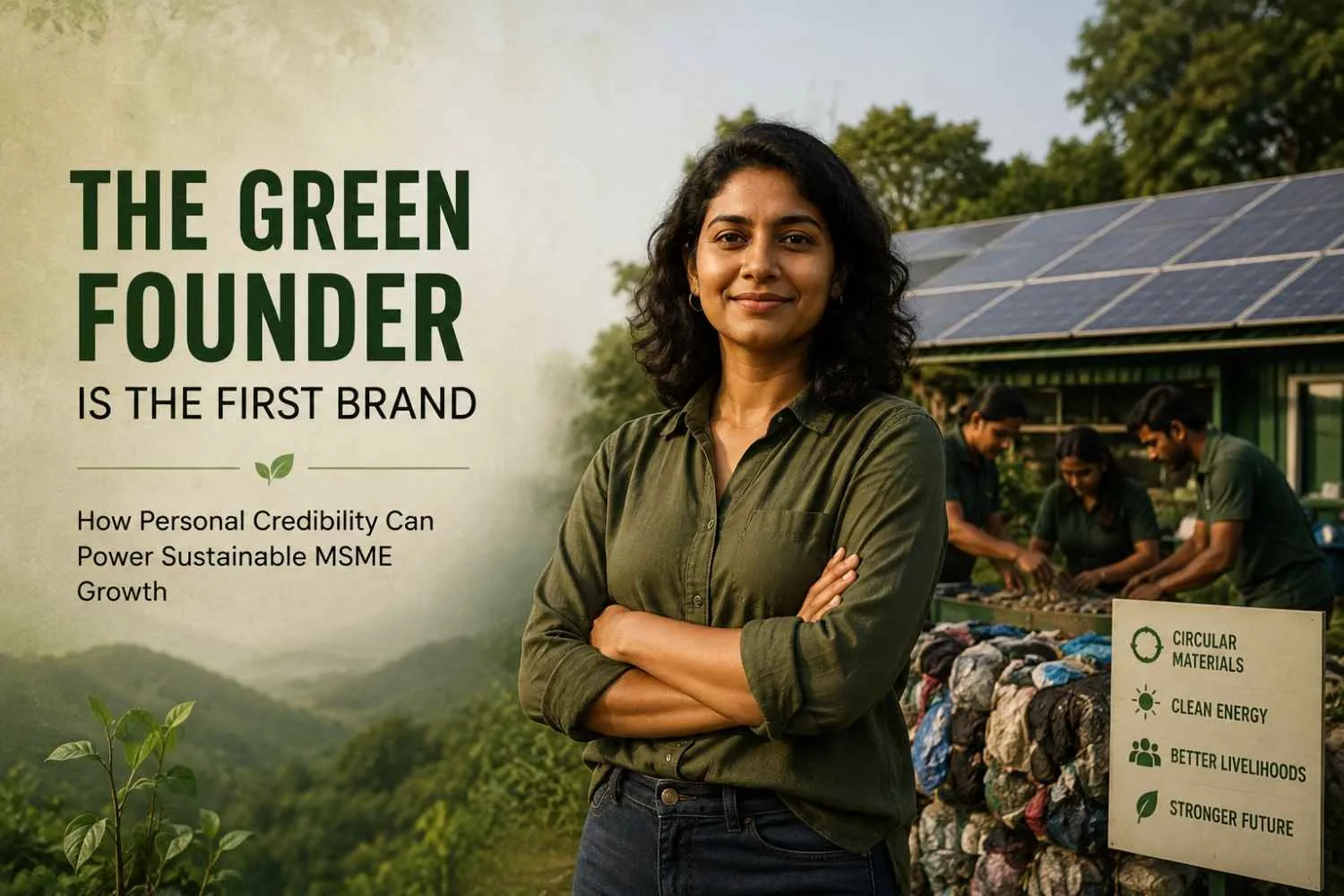
How Personal Credibility Can Power Sustainable MSME Growth
By Professor Ujjwal K Chowdhury
Communication Specialist
| A sustainability startup may begin with a cleaner technology, circular product, climate solution or social mission. But before the market believes the solution, it often has to believe the human being building it. For India’s green MSMEs, founder credibility can become the low-cost capital that wins the first customer, attracts the first investor, opens the first institutional door and turns a worthy idea into a trusted movement. The challenge is not to become famous. It is to become trusted for something that matters. |
Summary For sustainability-driven MSMEs, personal branding is not vanity marketing. It is strategic trust infrastructure. Early-stage founders can rarely outspend large corporations, but they can out-explain, out-teach, out-listen, out-network and out-humanise them. A credible founder can make complex green technologies understandable, impact propositions investable and behavioural change desirable. But green businesses carry an additional burden: purpose must be supported by economics, claims by evidence, and storytelling by integrity. The founder’s journey must therefore progress from Founder Brand → Startup Brand → Category Brand → Institutional Brand. |
Keywords Green MSMEs, Sustainable Startups, Founder Branding, Personal Brand, Climate Entrepreneurship, Circular Economy, Social Enterprise, Impact Investment, Green Business, Sustainability Communication, Founder Credibility, ESG, ClimateTech, Clean Energy, Bengal Startups, Purpose-driven Entrepreneurship |
Hashtags #GreenEntrepreneurship #MSME #SustainableStartups #FounderBrand #PersonalBranding #GreenBusiness #ClimateTech #CircularEconomy #SocialEnterprise #ImpactInvesting #Sustainability #StartupIndia #BengalStartups #BuildInIndia #PurposeToProfit |
Before They Buy Your Product, They Buy the Possibility
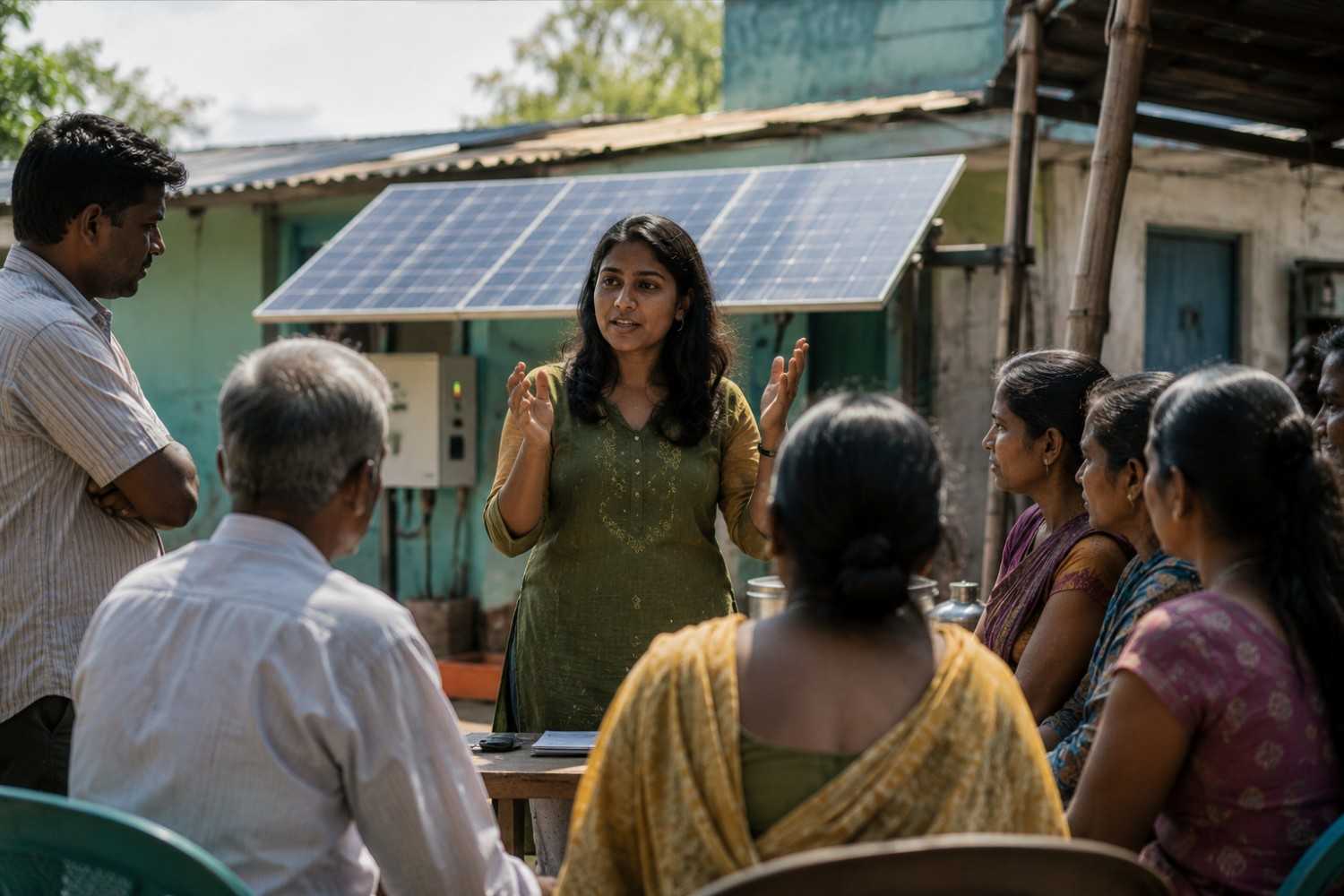
Imagine a small entrepreneur entering the market with a solar-powered solution for rural enterprises.
The technology may work.
The economics may make sense.
The environmental case may be compelling.
Yet a customer encountering the company for the first time does not possess ten years of audited performance with which to judge it. Neither does an impact investor, distributor, corporate partner, employee or journalist.
They are being asked to believe in an unfinished future.
And therefore, before they completely understand the company, they inevitably examine the people behind it.
Who is this founder?
Does she understand the problem?
Has he spent enough time in the field?
Can this team execute?
Are the sustainability claims real?
Will they still be accountable when something goes wrong?
This is why, particularly during the first thousand days of a sustainability-led MSME, credibility is not decoration. It is operating capital. The company may still be unknown. The founder need not be.
A logo identifies a company.
A credible founder gives people a reason to examine it.
That distinction can determine whether the first email gets answered, whether an incubator offers a meeting, whether an employee leaves a safer job to join, whether a CSR head takes the pilot seriously, or whether an investor agrees to hear the story.
Large companies can purchase enormous attention.
Green MSMEs usually cannot.
But the smaller enterprise can sometimes out-explain, out-teach, out-listen, out-network and out-humanise the corporation several hundred times its size.
That is the green founder's asymmetric advantage.
Do Not Ask: “How Do I Become Famous?”
Ask: “What Must I Become Trusted For?”
This is perhaps the most important shift a startup founder can make.
“Green entrepreneur” is not positioning.
“Sustainability professional” is not positioning.
“Visionary founder” tells the market almost nothing.
Consider the difference:
Generic: Sustainable fashion entrepreneur.
Memorable: Building commercially desirable products from post-consumer textile waste while creating decentralised livelihoods.
Or:
Generic: Climate entrepreneur.
Memorable: Building climate-resilient livelihood enterprises for vulnerable coastal communities.
Or:
Generic: Renewable-energy founder.
Memorable: Developing decentralised clean-energy systems that help rural micro-enterprises become more productive.
Suddenly the founder has a territory.
A useful personal brand builds a mental chain:
Name → Problem → Expertise → Evidence → Trust.
The goal is not maximum visibility.
The goal is maximum relevance among the people who can change the trajectory of the enterprise.
A green MSME does not initially need one million followers.
It may need 20 serious customers, ten knowledgeable mentors, ten aligned investors, ten journalists or sector communicators, ten institutional partners and a handful of people capable of opening the right doors. The founder-brand playbook therefore emphasises disciplined relationship-building over algorithmic popularity.
Green Businesses Sell More Than Products. They Sell Transition.
Selling an ordinary product is difficult.
Selling behavioural change is harder.
The sustainable entrepreneur may be asking customers to:
change a familiar material;
segregate waste;
switch an energy source;
accept an unfamiliar technology;
pay differently;
reuse rather than discard;
alter transportation habits;
trust decentralised production;
change farming practices;
or believe that environmental responsibility and commercial success can coexist.
You are therefore not simply selling solar panels, EV technology, an upcycled handbag, bio-packaging, regenerative agricultural inputs or a waste-management service.
You are selling the credibility of the transition.
The stronger the behavioural change required, the greater the need for explanation.
And that turns the founder into something larger than a salesperson.
The founder becomes an educator of the market.
Teach Before You Sell
One of the greatest mistakes green startups make is turning every communication channel into an advertisement.
“Buy our sustainable product.”
“We are transforming the planet.”
“We are disrupting the industry.”
“We are revolutionising sustainability.”
The language becomes bigger while the evidence remains small.
A stronger founder takes the opposite route.
Explain why the existing system wastes resources.
Explain why recycling economics is difficult.
Explain lifecycle costs.
Explain why rural clean-energy adoption sometimes fails.
Explain financing barriers.
Explain consumer behaviour.
Explain why apparently sustainable materials contain hidden trade-offs.
Explain policy changes.
Explain what you discovered from customers.
Explain where your first prototype failed.
A circular-fashion founder can teach textile waste and reuse economics.
A clean-energy founder can explain financing and last-mile distribution.
A ClimateTech entrepreneur can interpret climate risk and adaptation for MSMEs.
A sustainable-food founder can intelligently discuss soil, sourcing, packaging, logistics and consumption.
The documents recommend five particularly powerful forms of impact-founder content: problem explanation, field learning, business-model explanation, impact reporting and informed commentary on the larger system.
The principle is simple:
Own the problem conversation before trying to own the market.
When the ecosystem repeatedly learns something useful from you, you stop appearing as another vendor.
You begin becoming an authority.
Purpose Is Not a Business Model
Sustainability entrepreneurs often possess something extraordinarily powerful: conviction.
But conviction can create a dangerous blind spot.
A noble intention does not repair weak unit economics.
A powerful story does not compensate for poor distribution.
An SDG logo does not prove impact.
A successful pilot does not automatically mean scalability.
Serious impact investors eventually ask two questions:
Can this enterprise become financially viable?
and
Can it genuinely produce the social or environmental outcomes it claims?
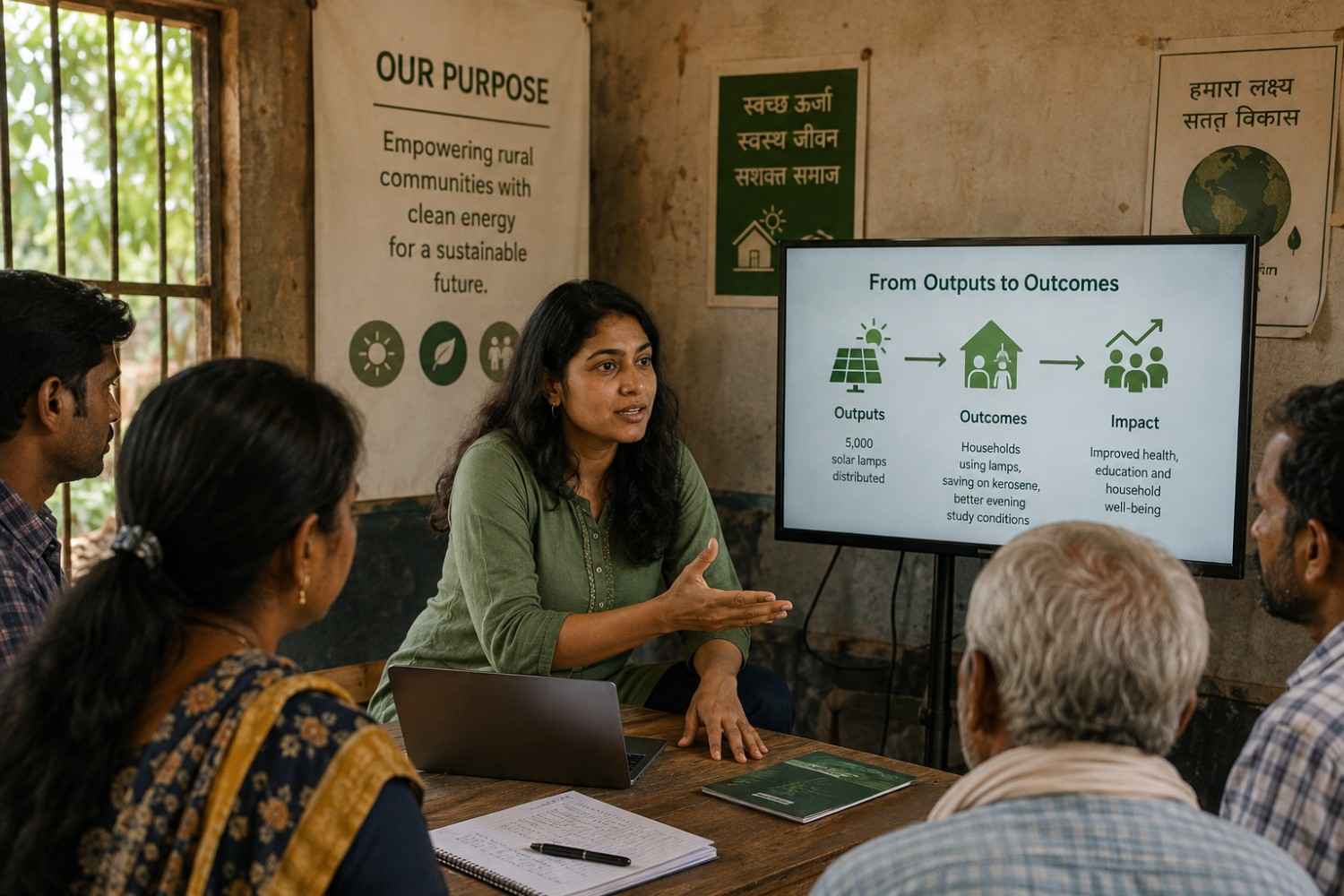
A strong green-founder brand must therefore communicate four things simultaneously:
Connection: Why do you care about the problem?
Understanding: What have you learned about it?
Business Model: Who pays, why, how much, how repeatedly and at what cost?
Impact: What verifiably changes because your intervention exists?
This is where green entrepreneurs must learn perhaps the most important vocabulary of impact:
Outputs are not outcomes.
Distributing 5,000 solar lamps is an output.
Households consistently using those lamps, reducing kerosene expenditure or obtaining better evening study conditions are outcomes.
Demonstrating durable health, educational or household-economic improvement to which the intervention plausibly contributed takes the argument further towards long-term impact.
Do not make your impact claim larger than your evidence.
Make your evidence stronger.
An entrepreneur who tells an investor, “We have reached 10,000 households, but verified outcome data currently covers 3,200,” may appear less spectacular.
The founder may actually appear more investable.
Because transparency signals maturity.
Heart. Head. Hands. The Green Founder's Three Tests
Social and environmental entrepreneurs face an ethical burden ordinary consumer businesses may not.
Their stories may involve poverty, farmers, women, climate disasters, vulnerable communities, water scarcity, waste pickers, energy poverty or public health.
People cannot become scenery for the founder's hero story.
A credible sustainability entrepreneur therefore requires three dimensions:
Heart
Empathy. Respect. Listening. Consent. Human connection.
Head
Economics. Systems understanding. Policy awareness. Evidence. Behaviour. Structural causes.
Hands
Execution. Team-building. Finance. Operations. Measurement. Course correction.
Too much heart without evidence becomes sentimentalism.
Too much data without humanity becomes bureaucracy.
Too much founder glorification converts communities into marketing props.
The discipline is beautifully simple:
Tell the story. Do not steal the story.
Credit local partners.
Let communities possess agency.
Obtain consent.
Acknowledge weak numbers.
Share what did not work.
In green business, transparency is not a communications weakness.
Transparency is a trust technology.
Harish Hande: Speak About the System Around the Product
SELCO offers a powerful lesson.
The important founder-brand insight is not merely that Harish Hande spoke about solar energy.
His public identity became connected to the ecosystem around decentralised energy: affordability, financing, livelihoods, infrastructure and underserved communities.
That produces a much larger leadership territory.
He is not merely explaining a solar device.
He is discussing the conditions under which energy access becomes economically and socially useful.
The founder-brand lesson distilled by the source is crucial:
Speak about the system around your product.
Finance.
Behaviour.
Livelihoods.
Infrastructure.
Policy.
Distribution.
Because category advocacy creates institutional relevance.
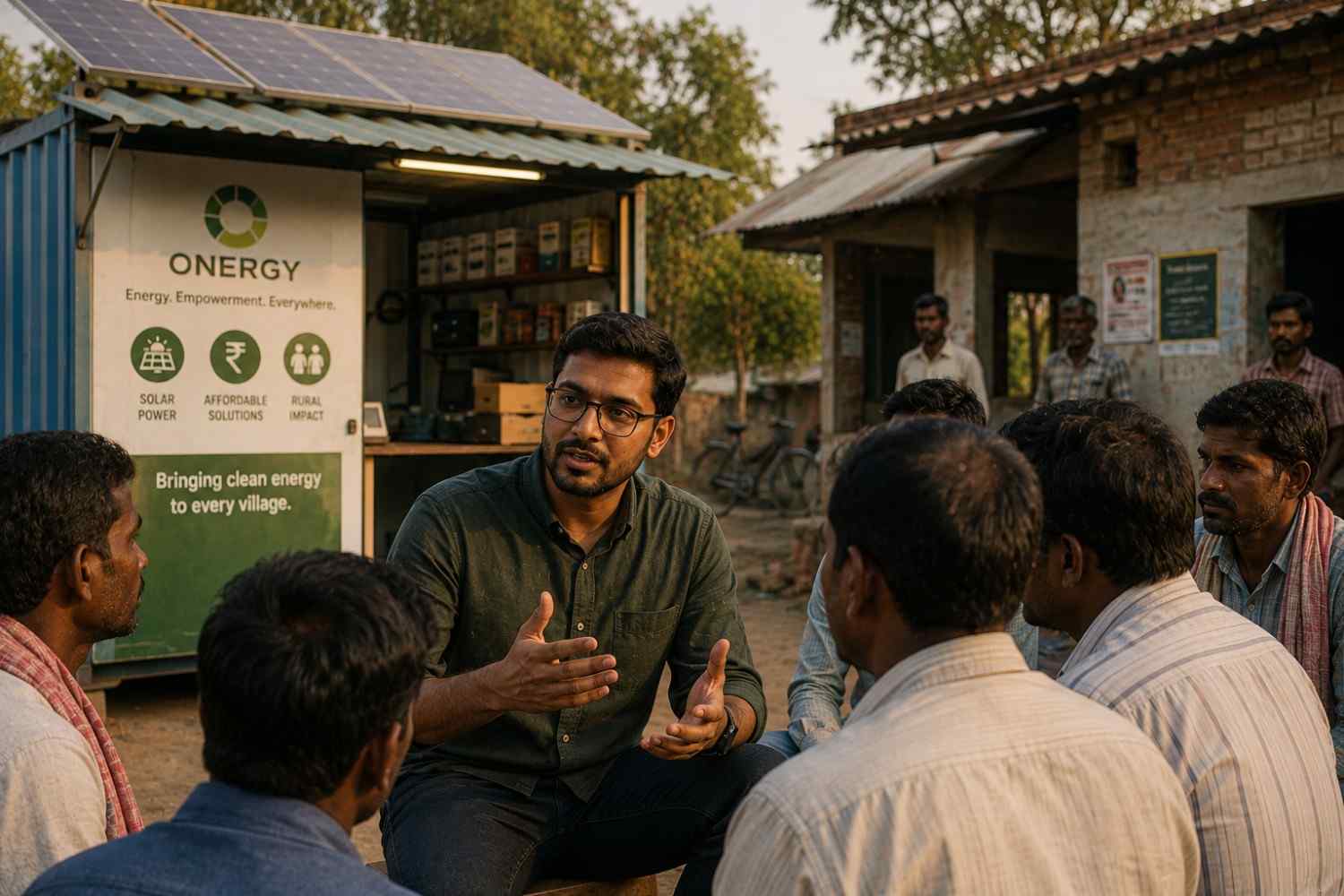
ONergy: Sometimes Friction Is the Better Story
Green entrepreneurship loves success stories.
Markets contain friction.
And talking intelligently about friction can make founders more believable.
The Bengal-linked ONergy example underscores that decentralised clean-energy adoption is not merely a technology challenge. Affordability and distribution substantially affect market creation.
Hence an unusually useful communications insight emerges:
“Why adoption is difficult” can be more persuasive than “why our technology is exciting.”
Founders should stop pretending every sustainability transition is effortless.
Show that you know why it is difficult.
Then demonstrate how your business systematically attacks each barrier.
That is not negative communication.
That is competence.
Twirl.store: Turn the Abstraction of Circularity Into a Living Story
“Circular economy” can sound like language from a conference brochure.
Consumers need to see it.
The example of Twirl.store and founder Sujata Chatterjee connects fabric waste, upcycling and women's livelihoods.
The abstraction becomes tangible.
For a founder communicating circularity:
show the material before;
show the material after;
show who collects it;
show who transforms it;
explain what the consumer pays for;
explain the waste avoided;
explain the livelihood supported;
and publish only the numbers you can verify.
Then “circularity” stops being jargon.
It becomes an economic and human story.
This approach can apply equally to recycling, construction waste, bio-materials, food waste, repair businesses and sustainable packaging.
Make sustainability visible.
Goonj: Sometimes the Founder Changes the Language of the Category
Anshu Gupta and Goonj present another important lesson.
The public framing of discarded clothing moved beyond the conventional vocabulary of leftover charity towards dignity, development and community action.
That illustrates the extraordinary potential of founder communication.
A founder can sometimes change not only a product category, but the language through which society understands a problem.

That is category leadership.
Tomorrow's great green businesses may similarly redefine:
what society calls waste;
what society considers mobility;
what constitutes responsible fashion;
what “affordable” energy really means;
what sustainable food should cost;
what resilient housing looks like;
and what responsible consumption actually requires.
The greatest entrepreneurs do not merely occupy categories.
They help rewrite them.
The Bengal Advantage: Build Here. Speak to the World.
Bengal gives sustainability entrepreneurship an unusual intellectual and social base: design, culture, academic institutions, rural-development experience, social innovation, creative communities and a global diaspora.
Yet good ventures can suffer from small communication ambition.
The better positioning is not:
“We are a Kolkata startup.”
It is:
“We are an Indian startup built from Kolkata.”
And for green ventures, the opportunity becomes even larger.
A Sundarbans entrepreneur developing climate-resilient livelihoods is not addressing a merely “local” problem. Lessons from coastal Bengal can be relevant to Bangladesh, Indonesia, island economies, parts of Africa and climate-vulnerable coastal communities around the world.
A Bengal circular-fashion venture can participate in global textile-waste conversations.
A Kolkata clean-energy company can enter international energy-transition networks.
The source captures the progression powerfully:
Bengal → Bharat → World
Build credibility locally.
Build markets nationally.
Build knowledge globally.
Geography need no longer determine intellectual reach.
A founder can work in Sundarbans and contribute to a global climate-adaptation conversation.
Turn Visibility Into Business Infrastructure
There is an uncomfortable truth founders must remember:
Followers do not pay salaries.
Likes do not automatically produce customers.
A viral reel is not necessarily an investment strategy.
Applause is not cash flow.
Therefore every significant founder-brand asset should possess a plausible conversion path.
A LinkedIn article can lead to a technical note, case study or demonstration.
A conference speech can lead through a QR code to a partnership page.
A webinar can generate qualified enquiries.
A newsletter can build recurring relationships.
Media coverage can become sales collateral, recruitment credibility or investor validation.
Networking must enter a founder CRM containing who was met, where, why the relationship matters, what value can be offered and what the next action should be.
The source makes the principle explicit:
Personal branding without relationship management becomes wasted visibility.
Measure accordingly.
Not followers alone.
Track:
qualified customer enquiries;
demo requests;
referrals;
investor conversations;
institutional introductions;
CSR conversations;
partnership meetings;
speaking invitations;
strong job applications;
media citations;
content-assisted sales;
repeat stakeholder engagement;
and verified impact outcomes.
That is founder-brand ROI.
Your 90-Day Green Founder Brand Sprint
For a sustainability MSME ready to start immediately, the documents suggest a practical progression.
Days 1–15: Own a Territory
Choose the exact sustainability problem you want your name associated with.
Interview customers.
Talk to communities.
Listen to sector specialists.
Do not begin by proclaiming your solution.
Begin by understanding the problem better than most people discussing it.
Days 16–30: Build the Proof Stack
Collect your genuine credentials:
domain experience;
prototype evidence;
research;
pilot learnings;
testimonials;
partnerships;
customer evidence;
and at least three impact metrics you can genuinely substantiate.
Days 31–45: Build an Intellectual Identity
Publish useful explanations.
Share one serious field-learning story.
Explain your business model plainly.
Develop one distinctive but defensible point of view.
Do not merely repeat the industry's fashionable language.
Have something useful to say.
Days 46–60: Enter the Ecosystem
Connect intelligently with customers, incubators, researchers, investors, CSR leaders, journalists, policymakers and entrepreneurs.
Enter with a better networking question than:
“What can you do for me?”
Ask:
“How can I become useful here?”
Days 61–75: Demonstrate, Don't Announce
Publish evidence.
A pilot learning.
An impact dashboard.
A material journey.
A customer case.
A before-and-after process.
An insight showing what changed because customers or communities challenged your assumptions.
Days 76–90: Convert Credibility
Connect articles, webinars, media appearances, speeches and professional networking to:
sales;
partnerships;
investment;
talent;
distribution;
and customer acquisition.
Then ask one ruthless question:
Which activities produced serious conversations—and which produced merely engagement?
Greenwashing Can Destroy in Days What Branding Built in Years
Sustainability founders face one final danger.
The temptation to exaggerate goodness.
Do not call yourself revolutionary without evidence.
Do not present a pilot as national scale.
Do not inflate beneficiary numbers.
Do not claim carbon reduction you cannot measure.
Do not imply institutional endorsement that does not exist.
Do not convert vulnerable people into marketing props.
Do not confuse an award with evidence of impact.
Do not decorate an ordinary business with SDG language and assume that constitutes sustainability.
Impact investors specifically distrust inflated claims, unverified carbon assertions, sentimental storytelling unsupported by outcomes and generic SDG alignment disconnected from the actual business model.
This is not merely about ethics.
It is risk management.
Employees talk.
Customers compare.
Communities remember.
Investors investigate.
Journalists verify.
Digital records survive.
The truth scales better than hype.
AI can certainly help entrepreneurs research, organise, translate, edit and repurpose their communication. But technology should amplify the founder's mind—not manufacture one. As generic machine-produced “thought leadership” proliferates, original judgement, genuine field experience and demonstrable knowledge become more valuable, not less.
And Finally, Become Smaller Than the Institution
Here lies the paradox of successful personal branding.
At the beginning:
Founder = Company
The enterprise borrows reputation from the person.
Customers trust the founder.
Employees follow the founder.
Investors evaluate the founder.
Journalists quote the founder.
But if the company succeeds, the equation must change:
Company > Founder
Credibility must migrate.
Into the product.
Into processes.
Into measurable outcomes.
Into intellectual property.
Into customer experience.
Into other leaders.
Into research.
Into communities.
Into institutional reputation.
Otherwise the powerful founder becomes the company's greatest key-person risk.
The destination prescribed in the founder-brand framework is therefore:
Founder Brand → Startup Brand → Category Brand → Institutional Brand
That is the real ambition.
Not becoming an influencer.
Becoming an institution builder.
Not accumulating followers.
Accumulating trust.
Not appearing green.
Building something whose sustainability can be seen, measured, experienced and believed.
India does not merely need thousands of entrepreneurs selling eco-friendly products.
It needs a new generation of founders capable of making sustainable choices attractive, sustainable technologies understandable, sustainable enterprises profitable and sustainable transformation scalable.
So build the cleaner technology.
Perfect the circular product.
Solve the water problem.
Create the renewable-energy model.
Reimagine agriculture.
Reduce the waste.
Protect the ecosystem.
Strengthen the community.
But while doing all of this, remember that markets do not encounter ideas in isolation.
They encounter people who carry those ideas.
Build the solution.
Prove the impact.
Teach the market.
Own the problem conversation.
Earn the trust.
Then allow your reputation to open the door through which the enterprise can grow.
And never build a personal brand bigger than the truth of your business.
Build a reputation powerful enough to help that truth travel farther.
Because the planet does not need more entrepreneurs who merely look green.
It needs founders who can make better ideas understandable, better businesses investable, better practices desirable—and sustainable change unstoppable.



Add a Comment