Total Articles 238+

Environmental

Environmental compliance focuses on how a company interacts with and impacts the natural environment. It includes managing carbon emissions, reducing pollution, conserving water, improving energy efficiency, and adopting sustainable practices such as renewable energy and waste reduction. The aim is to minimize environmental harm and ensure long-term ecological balance.

Showing 12/44

31 Aug 2026

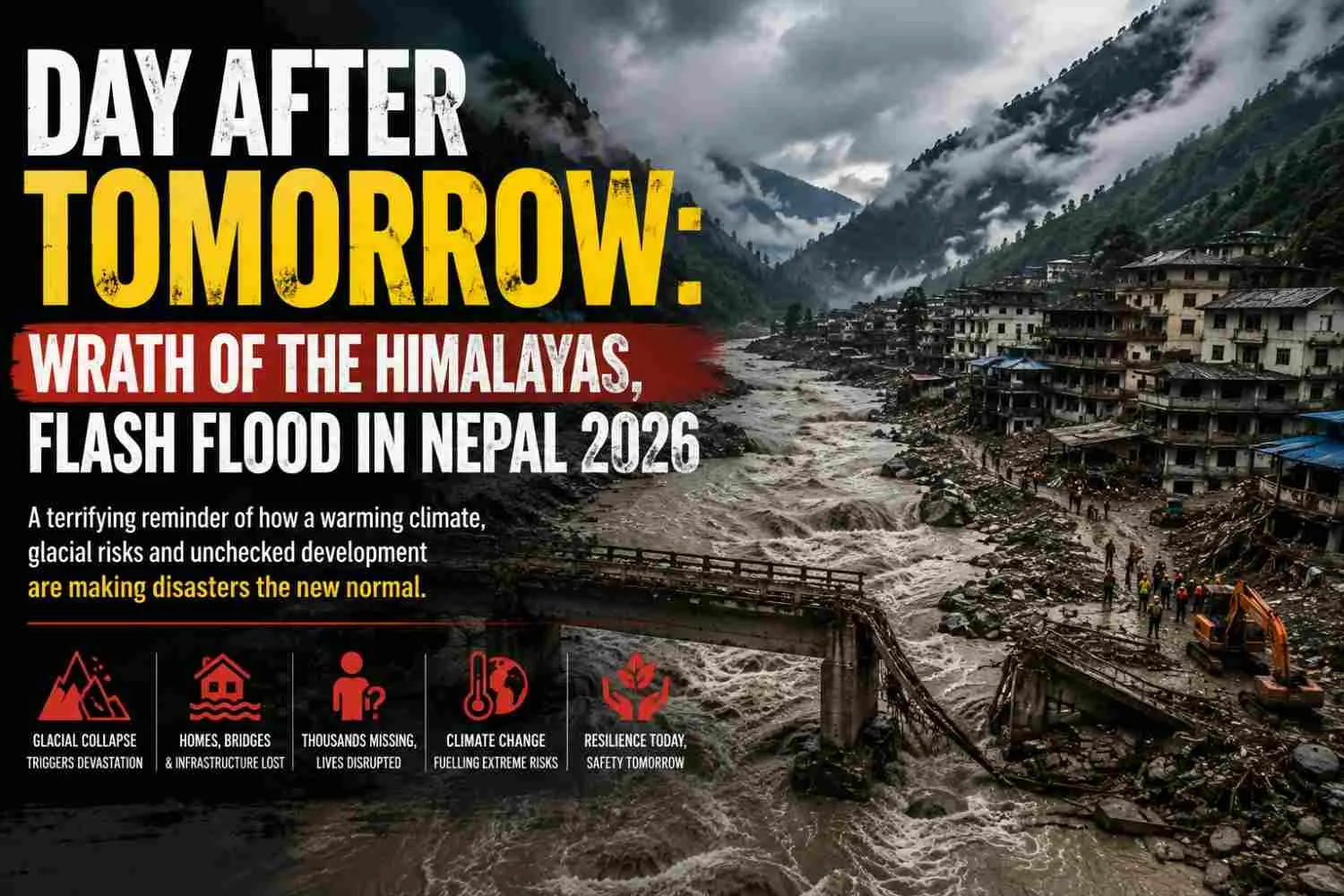
Summary Actively evolving Himalayas have spread their wrath once again, at present the World is gripped with the images of Glacial Lake Outburst Flood (GLOF) of Nepal, this year. Recent episodes of urbanization and developments in the name of mega infrastructure have disturbed Himalayas to such an extent that disasters have become much more frequent than ever. The Kedarnath disaster of 2013 had popularized the term GLOF, acronym of Glacial Lake Outburst Flood. This year has witnessed another such episode in Nepal following the one at South Lhonak Lake of Sikkim in 2023. Glacial lake outburst flood (GLOF) takes place when ice blocks with huge number of rocks fall down in the glacial lakes supplying great amount of water and debris. The water holding capacity of the glacial lakes exceeds and after breaching the morainic embankment, water gushes out flooding the entire surrounding. By Dr Kanailal Das Fig 1: Glacial Lake Outburst Flood, a schematic diagram (Source: Antarcticglaciers.org)  An unimaginable disastrous flash flood flood took place in Nepal Tibet border on 26th August, 2026 at the confluence of Bhote Koshi and Trishuli rivers. Primarily it was established that a huge block of glacier collapsed and fell nearly 1000m downstream. This block of ice with englacial moraines (rocks within the glacier) instantly supplied enormous water and glacial debris. Generally, all glaciers have glacial lakes where glaciers start melting. Snow melt water beneath the glaciers is common in the high mountains. Thousands of glacial lakes beneath the glaciers are commonly found in Indian Himalayas. Fig 2: Locations affected by the flash flood (Source: NDTV Datafy)Nepal -Tibet border disaster has destroyed large number of bridges, roads, buildings and hydro power infrastructure. Rescue operations were very tough due to rugged terrain. The local community of the settlement was under the thick layer of mud and remnants of the collapsed infrastructure.     Course of events in Nepal disaster: High mountains - steep slopes - glacial melting due to warming - detached glacial block - huge amounts of debris and water supplied to glacial lake - breaching of the lake boundary - lake outburst - flow of water, mud and debris - settlement and infrastructure along the river swept away - bridges and road connectivity wiped away - death and missing humans and animals.   Fig 3: Pre and Post scenario of Nepal flood (The Economist, moneycontrolcom, abc news)  The disaster took place of August 26, 2026 occurred at the Gyirong - Rasuwagadhi gorge. It is the point where crossing roads via the Himalayas is possible between Nepal and China. The narrow place between two rivers is associated with hydro power infrastructure, heavily constructed zone of roads, custom facility and trade. The route across the location was being used by thousands of Mount Kailash pilgrims. Before 2011 the crossing was associated with very little infrastructure development with a rough road connectivity. The area experienced earthquake and landslides in the year 2015. A bridge was badly damaged. In 2017, the crossing was upgraded as an international dry port between Nepal and China. China also built a new bridge, 110 m Friendship Bridge beside the earthquake- damaged crossing site. The crossing and the dry port areas became an area of dense infrastructural development. Again, in July, 2025 a flash flood swept away the bridge. After that a temporary Bailey bridge had reopened the crossing. Number of missing people rises to 2,482, including 320 Indians, as Nepal disaster toll hits 584. Nepal accounted for 579 deaths and 1,924 missing and Tibet reported five death and 558 missing.  Rescue teams on both sides of the border were repeatedly forced to reassess and retreat Fryday as an unstable barrier lake overflowed into Bhote Koshi river, sent a fresh surge downstream and halted rescue. After a brief interval, another Avalanche dumped an estimated 50,000 cubic metres of ice debris. Satellite images showed post disaster formation of a great lake in the course of the river. 13 bridges along the river were swept away as the disastrous flood hit Rasuwa district of Nepal. Road connectivity was heavily destroyed. It took an arduous 50 hours after the mighty flash flood for the Chinese rescue teams to reach the core disaster zone around Gyirong dry port on Nepal - Tibet border using boats, ropes and heavily - lift drones. Thirty-seven tourists from West Bengal are missing in Nepal. A total of 39 persons of West Bengal were missing. Two of them have been rescued.    Fig 4: Satellite imagery showing aftermath of Nepal Flash Flood, 2026 (EU Space Program) Nepal is now monitoring the mountain glaciers near the glacier collapse zone. Satellite images show cracks in the glacier raising concern over fresh flash floods. Some information regarding the loss of life: The Times of india,28th August reported : No trace of 50 persons from Maharashtra and 37 from Tamilnadu. Among the Indians untraced in the Nepal Disaster 50 Kailash Manasa Sarovar yatris were from Maharashtra. At least 37 out of 57 pilgrims from Tamil Nadu and Puducherry are missing. Isha Sadhguru X Post :The whereabouts of 77 foreign nationals of Isha Foundation's Kailash Yatra, part of Isha Sacred Walks remained missing after the china immigration check post at Gyirong in Tibet was swallowed by the running water wall.  On August 27, 84 Indian nationals were rescued from Nepal including 63 workers at under - construction Trishuli 1 hydro power project. Around 200 Indian pilgrims on the Tibet side seek help for evacuation. Five groups of Indian pilgrims are missing till date. According to the latest reports the death toll from the Bhote Koshi -Trishuli disaster rose to 675 in Nepal on Saturday night, with 2,426 people still missing. Rescue teams are engaged in searching operations in glacial debris filled valleys, riverbanks and the tunnels of hydro power projects. Chinese authorities reported seven deaths and 554 people missing at Gyirong dry port on Saturday morning. Indian authorities revised down the number of Indian nationals unaccounted for in Nepal to 275 on Saturday evening, saying contact was reestablished with about 50 people. (Vishant Agarwala,The Times of india, August 30, 2026). According to the geologists the speed of Bhote Koshi river flow exceeded 55 km /hour in some stretches of the river. That is 15.3 m per second. A man cannot run so fast, most probably a man can run 3/4 m per second. In some parts of the river valley where there was no highland to take shelter men ran over the pathway along the river valley and got submerged within the swift disastrous flow of water and glacial debris. At the time of disaster there was no such heavy rainfall. The sky was almost fully clear. A shopkeeper of Trishuli market in Nuyakote said, “We were warned by the local authority to leave the market as soon as possible, we got a brief time to save us, but my family is lost." A bus carrying Manas Saravor pilgrims took a shelter in a comparatively high place, but some buses in front of us got no time and washed away in the surge with the pilgrims. Mallinath Kalkundi of Kanatataka told the reporter after the incident. However, danger lurks somewhere: The disaster is not over Satellite images indicate in the upstream there are two glacial lakes, one of the two lakes is full to the brim with huge amount of snow melt water. There is high probability of another glacial lake outburst flood in the same region. Glacial Lake Outburst Flood: Episodes from Indian Himalayas Thirteen glacial lakes in Uttarakhand in India are highly vulnerable for glacial lake outburst flood. In Indian Himalayas around 200 glacial lakes are recorded as unsafe and 25 of these lakes are considered of very high risk. The glacial Lake Outburst Flood, (GLOF) disaster in Nepal Wednesday, 26 August, 2026, has revived discussion on monitoring and management of the glacial lakes in Indian Himalayas. Himalayan ranges are the host of as many as 7,500 of them and 4,700 glacial lakes are situated in Ganga river basin with a catchment area over 2.5 lakh km2. One of the worst GLOF took place on October 3 midnight, 2023 producing 14.7 cubic metres glacial debris in the South Lhonak Lake in Sikkim. Several hydro power assets and settlements downstream were wiped out. This is a classic example of how a GLOF can transform a highaltitude glacial detachment into a major regional disaster.  Glacial block detachment - ice with englacial moraines - supply of water and glacial debris - water holding capacity of South Lhonak Lake exceeded - Lake Outburst took place -- huge amount of water and glacial debris supply to the Teesta water - hydro power infrastructure and part of settlement were wiped away - affected settlements downstream, causing loss of life and resources.   Fig 5: Pre and post South Lhonak Lake outburst (ICIMOD; Sattar et al., 2021) In June 2013 the famous Kedarnath Temple region and the settlements along the river Mandakini experienced rainfall induced glacial lake outburst flood.   Cloud burst, Extreme rainfall - rapid melting of snow and ice - landslides - debris supply to the lake behind Kedarnath Temple - Chora Bari Lake outburst - devastating flood around Kedarnath Temple and Mandakini river valley - Rambara settlement was completely destroyed.  Fig 6: Pre, syn and post flood situation, Kedarnath, 2013 (Bandyopadhyay and Kar, 2014) Other worst affected areas were Gaurikund, Sonprayag - Guptkashi, Agastyamuni and Rudraprayag. According to Government assessment 169 persons were dead and 4,021 people were reported missing. But local information indicated thousands of people were dead. The Kedarnath Disaster affected more than nine million people across Uttarakhand in various ways, including loss of homes, roads, bridges, communication and livelihoods. Rapid climate change causing glacial melting accentuates the genesis of GLOFs. As we tend to speeden up our so-called development in the name of smart cities and macro infrastructure the ensuing flood gups the whole settlement in seconds. Himalayas is still actively evolving, with unstable debris which is geologically very fragile and any unplanned construction without catering to the geology and climate is sure to invite apocalypse.  Response to Glacial Lake Outburst Floods: As a response to the Sikkim disaster National Disaster Management Authority, NDMA had set up a high-level coordination committee on GLOF disaster risk reduction. To take necessary steps to lessen the severity of the GLOF: Identifying the high mountains glacier - monitoring the change in the size of glaciers - Mapping the glacial lakes - monitoring the change in the volume of water in the glacial lakes - identifying the lakes at risk - initiative to stabilize the lakes at risk - controlled outflow of water if possible - establish an early warning system - evacuation of people - vulnerable zones of lake outburst flood, landslides should be avoided for settlement and infrastructure development. References: Bandyopadhyay S and Kar N.S. (2014): The Kedarnath Disaster: in search of scientific reasoning, Current Science, 107(4):557  https://www.icimod.org/press-release/new-scientific-study-confirms-climate-changeplayed-key-role-in-deadly-2023-lake-outburst-in-sikkim/ https://abcnews.com/International/deadly-nepal-flood-caused-enormous-landslideglacier-tumble/story?id=135984405 What caused Nepal flood? Scientist says it was enormous landslide, glacier fall https://eu-space.europa.eu/components/earth-observation-copernicus/image-of-theday/aftermath-nepal-flash-flood https://www.economist.com/science-and-technology/2026/08/27/the-terrifyingmechanics-of-the-nepali-flash-floodSattar A, Goswami A, Kulkarni A.V., Emmer A, Haritasya U.K., Allen S, Frey H and Huggel C (2021): Future Glacial Lake Outburst Flood (GLOF) hazard of the South Lhonak Lake, Sikkim Himalaya, Geomorphology, 388 (2021) 107783 https://doi.org/10.1016/j.geomorph.2021.107783 Vishant Agarwala, Tamaghna Bannerjee Chandrima Bannerjee, The Times of India, Saturday, August 29,2026.ABOUT AUTHOR  Dr Kanailal Das Masters in Geography from University of Calcutta, former senior research fellow, CSIR, PhD on Vulnerability of Gosaba, Basanti, Sundarban from Vidyasagar University.He has participated in many national and international seminars and has papers and book chapters to his credit.  ...Read more

29 Aug 2026

Kolkata| 29 August, 2026 India is looking to its coastline for a new sustainability opportunity, from mangrove restoration and blue carbon to seaweed farming and fisheries. But the real test is whether ocean-based growth can protect ecosystems and improve coastal livelihoods at the same time. Summary India's blue economy is expanding across conservation, fisheries, aquaculture and emerging ocean-based industries. The government is using MISHTI to restore mangroves, while seaweed cultivation and marine fish farming are being promoted as new blue-economy activities. India is also a major global fisheries producer, with the sector supporting millions of livelihoods. But measuring the climate value of coastal ecosystems remains more complicated than simply counting trees or calculating land-based carbon. For communities living along India's coastline, the transition is equally about income, access to resources, markets and benefit sharing. The real challenge is to ensure that blue-carbon projects and ocean-based businesses create measurable environmental gains without turning coastal communities into passive beneficiaries of a transition happening around them. Can India turn its coastline into its next sustainability frontier? India’s relationship with the ocean is economic before it is environmental. The country’s 11,099-km coastline supports fisheries, aquaculture, ports, tourism and millions of coastal livelihoods. The fisheries sector alone supports nearly 30 million livelihoods, according to NITI Aayog, while India accounts for around 8% of global fish production. Fish and fishery products generated about ₹60,523 crore in export earnings in FY2023–24. That makes the blue economy more than an environmental concept. It is equally a question of livelihoods, incomes, jobs and the future of coastal communities. At the same time, India’s coastline contains ecosystems with significant climate value. Mangroves, seagrasses, tidal wetlands and coastal sediments can store carbon while also helping protect coastal communities from erosion, storms and other hazards. This is where the idea of blue carbon enters the conversation. But India’s blue economy is much broader than carbon alone. It includes fisheries, aquaculture, seaweed, marine biotechnology, coastal tourism and ecosystem restoration, alongside emerging opportunities to create economic value from healthy marine ecosystems. The opportunity is substantial. So is the balancing act. A project can produce a strong sustainability headline without creating lasting benefits for the communities living along the coast. The challenge is ensuring that higher incomes do not come at the expense of the ecosystems that make those livelihoods possible. The real question, therefore, is not simply how much economic value India can generate from its coastline. But it is who creates that value, who benefits from it and whether the coastal ecosystem remains healthy enough to support those livelihoods in the long run. INDIA'S BLUE ECONOMY MANGROVES↓BLUE CARBON + COASTAL PROTECTION SEAWEED↓NEW LIVELIHOODS FISHERIES↓FOOD + INCOME MARICULTURE↓AQUACULTURE + ENTERPRISE TOURISM↓LOCAL ECONOMIC VALUE ↓ BLUE ECONOMYEconomic growth + ecosystem protection + coastal livelihoodsIs MISHTI turning mangrove restoration into a climate and livelihood strategy?Mangroves are at the heart of India’s blue-carbon conversation, but their value extends far beyond the carbon they store. They can help protect coastlines, support fisheries and provide livelihoods for communities living along the shore. The government launched MISHTI - Mangrove Initiative for Shoreline Habitats & Tangible Incomes - in June 2023 to promote mangrove restoration across India’s coastline. The programme’s original target covered approximately 540 sq km across nine coastal states and four Union Territories. By 2023–24 and 2024–25, the government reported that 26,396.34 hectares of degraded mangrove area had been brought under restoration through MISHTI, along with convergence with State CAMPA, MGNREGS and other schemes. A national MISHTI workshop held in January 2026 also placed emphasis on scientific restoration, climate resilience, livelihood generation and community participation. Planting mangroves is only the beginning; the real test is whether they survive, restore ecosystems and support the communities that depend on them. The more meaningful test is what happens after planting. How many hectares survive? Are the right species being restored in the right locations? What was the ecological condition before restoration? Has the project affected how local communities access fishing grounds, forests or other coastal resources? Who receives the livelihood benefits? And, critically, how much money was actually spent on restoration and community outcomes? India’s latest official assessment puts the country’s total mangrove cover at 4,991.68 sq km. West Bengal accounts for the largest share at 42.45%, followed by Gujarat at 23.66%. That makes both states particularly important to India’s blue-carbon story, but also places greater importance on ensuring that restoration is ecologically sound, locally relevant and capable of delivering benefits that extend beyond the project period.MISHTI: FROM PLANTING TO PROOFECOLOGICAL BASELINE↓SITE SELECTION↓COMMUNITY PARTICIPATION↓RESTORATION↓SURVIVAL MONITORING↓CARBON MEASUREMENT↓LIVELIHOOD BENEFITS↓ LONG-TERM OUTCOME The measure of restoration is not saplings planted. It is ecosystems that survive. Why is blue carbon harder to measure than carbon on land?This is one of the biggest challenges for India’s emerging blue economy. Carbon stored on land can often be measured within relatively defined boundaries, but coastal ecosystems are constantly changing. In blue-carbon systems, carbon can be stored not only in vegetation but also in coastal sediments. Tides, erosion, sediment movement, changes in land use and ecosystem degradation can all affect how much carbon remains stored and for how long. That makes a credible blue-carbon claim much more demanding than simply counting mangroves or measuring the area restored. A robust assessment needs to establish a clear baseline, identify the relevant carbon pools, define the geographical boundary and monitoring period, use a recognised methodology and assess how permanent the carbon storage is likely to be. India’s blue-economy investment framework identifies mangrove, coral and seagrass restoration and blue-carbon credits as potential investment opportunities, alongside activities such as seaweed farming and aquaculture. But this is where an important distinction needs to be maintained: An ecosystem can have significant environmental value even when its carbon benefit cannot yet be measured precisely enough - or converted into a tradable carbon credit. That means blue-carbon policy should not reduce the value of a mangrove, seagrass bed or coastal wetland to how many carbon credits it can generate. Their role in biodiversity, coastal protection, fisheries and local livelihoods also needs to be counted.THE BLUE-CARBON ACCOUNTING GAP COASTAL ECOSYSTEM Mangrove biomass+Sediment carbon+Ecological services ↓ MEASUREMENT Baseline+Carbon stock+Change over time+Permanence ↓ VERIFICATION Methodology+Monitoring+Audit trail ↓ CREDIBLE BLUE-CARBON CLAIM An ecosystem's carbon value is not automatically a carbon credit.   Can seaweed farming create a new income stream for coastal communities?Seaweed is emerging as one of the most visible livelihood opportunities in India’s blue-economy push. The government identifies the country’s 11,099-km coastline as having significant potential for seaweed cultivation, while research institutions including ICAR-CMFRI and CSIR-CSMCRI have identified 384 potential sites covering 24,707 hectares across coastal states and Union Territories. Government programmes are supporting activities such as rafts, monolines and tubenets, seed banks, hatcheries, training, research and market linkages. The Ministry of Earth Sciences has also identified seaweed farming, seed banks, tissue-culture laboratories, cluster farming, credit and insurance as potential areas for blue-economy investment. But potential is not the same as livelihood success. The stronger evidence would show how many people actually enter seaweed farming, how many continue beyond the first year, what farmers earn, who buys the harvest and how stable those prices are. It should also establish who owns the cultivation infrastructure and what happens when storms, disease or other environmental shocks damage a crop. Training women is only the first step. The real test is whether they stay involved, earn an income and have a say in how that income is used. Could mariculture reduce pressure on wild fisheries - or create new environmental risks? Mariculture and aquaculture can expand seafood production while creating new livelihood opportunities. The government is promoting marine fish farming alongside seaweed cultivation. In February 2026, it said India was developing both activities as part of its blue-economy strategy, including pilot-scale seaweed-farming studies along the Andaman coast. India has also entered into cooperation with Israel on fisheries and aquaculture, with an emphasis on technology-driven and sustainable practices and improving coastal livelihoods. But expanding marine farming brings another set of questions. Where does the feed come from? What happens to the waste? Which species are being farmed? Does the activity affect water quality? How much coastal space does it occupy? And does it restrict access for existing fishing communities? A project cannot be considered sustainable simply because its output comes from the sea. The full production chain and the ecological footprint it leaves behind must be accounted for.What do India’s fisheries numbers tell us about the people behind the blue economy?India is already a global fisheries powerhouse.NITI Aayog’s 2025 blue-economy strategy describes India as the world’s second-largest fish-producing country, accounting for around 8% of global fish production and supporting nearly 30 million livelihoods. The government is also using the Pradhan Mantri Matsya Sampada Yojana (PMMSY) to strengthen fisheries infrastructure and fisher welfare. The scheme has an investment framework of more than ₹20,000 crore and includes measures such as insurance and livelihood support for fishing communities. But national production figures can conceal what is happening at the household level. More fish production does not automatically mean higher fisher incomes. Higher seafood exports do not automatically translate into higher household earnings. And a larger fisheries economy does not necessarily mean better access to credit, insurance or social protection. That is why production data needs to be paired with household-level evidence. The real measure of a blue-economy livelihood programme is not simply how much seafood or seaweed it produces. It is whether coastal households earn more stable incomes, gain greater economic security and remain able to depend on the ecosystems that sustain them. DON'T STOP AT THE NATIONAL RANKINGFISH PRODUCTION ↑ does not automatically mean FISHER INCOME ↑ So, measure: Production+Prices+Household income+Employment+Insurance/social protection+Market access   BLUE-ECONOMY OUTCOME More ocean value + stronger coastal livelihoodsWhy do Gujarat, Tamil Nadu, Odisha and West Bengal matter to India’s blue-economy transition?India’s coastline is not a single ecological or economic zone. Different states face different combinations of fisheries, industry, ports, agriculture, tourism, coastal settlements and climate risks.Gujarat, for instance, combines major fisheries activity with extensive industrial and port infrastructure. Tamil Nadu has a large network of fishing communities alongside fisheries, aquaculture and dense coastal settlements. Odisha brings together vulnerable coastal ecosystems, fisheries, agriculture and industrial development. West Bengal presents a particularly distinctive case through the Sundarbans, where mangroves, fishing, agriculture and climate vulnerability intersect. That makes state-level implementation critical. A restoration or livelihood model that works in one coastal region may not deliver the same results elsewhere. Ecological conditions, community dependence, land-use patterns and economic opportunities can vary significantly from one coastline to another. The government’s blue-economy strategy itself identifies coastal states including Gujarat, Odisha and Tamil Nadu in discussions around fisheries development. The evidence should therefore move beyond national targets and examine what is actually happening in each coastal region - whether ecosystems are recovering, livelihoods are improving and communities are benefiting from the transition.   Can corporate investment protect the coast while delivering measurable returns? The blue economy is also opening a larger role for private capital. Companies connected to steel, infrastructure, mining, ports, agriculture and exports often have direct or indirect links with coastal ecosystems and communities. Their investments could support mangrove restoration, livelihood diversification, research, coastal resilience and more sustainable supply chains. But private investment needs the same level of scrutiny as public spending. A large corporate commitment does not mean the money has actually reached the ground. A CSR allocation does not automatically translate into an outcome. And hectares covered by a restoration programme do not tell us how many hectares actually survived. The evidence test should therefore follow the money from announcement to outcome: What was announced? What was budgeted? What was actually released? How much was spent? What was completed? Who benefited? And what continued after the funding cycle ended? The government’s PMMSY reporting offers a useful benchmark by distinguishing between funds approved and released and reporting both physical and financial progress. Private blue-economy projects should be held to the same standard. If the investment cannot be traced from the announced commitment to actual spending and measurable results, its sustainability value remains difficult to establish. Can India’s blue economy grow without pushing coastal communities aside?This is ultimately the social test of India’s blue-economy transition. Coastal communities are not simply beneficiaries waiting to receive the benefits of conservation or development projects. They already live and work within these ecosystems. Their livelihoods are closely tied to coastal waters, natural resources and the health of the ecosystems around them. That means community participation cannot be added at the end of a project. It has to be built into the design from the beginning. If mangrove restoration restricts access to fishing grounds without meaningful consultation or alternative livelihood support, an environmental intervention can create a real economic cost. If a blue-carbon project generates tradable credits while local communities receive little of the resulting revenue, a new carbon market could reproduce existing inequalities rather than correct them. A credible blue-economy model therefore needs transparent consent, tenure, access and benefit-sharing arrangements. It also needs grievance mechanisms that communities can actually access and use. Most importantly, the people affected by these projects should have a voice in measuring whether they worked. A sustainability claim should not rely entirely on project reports or management data. The strongest proof is on the ground: healthier ecosystems, stronger livelihoods and benefits reaching the communities that depend on them. What should India measure before calling a blue-economy project successful? THE BLUE-ECONOMY SCORECARD  Evidence testWhat to measureEcologyBaseline + habitat condition + survivalBlue carbonCarbon stock + methodology + permanenceLivelihoodsBeneficiary number + income changeWomenParticipation + income control + retentionFisheriesProduction + household income + market accessSeaweedFarmers retained + yield + actual earningsCommunity rightsConsent + tenure + access + benefit sharingCarbon creditsVerified credits + audit trailInvestmentBudget/capex + actual expenditureImplementationAnnounced vs operationalMonitoringMulti-year ecological + livelihood outcomesReportingBaseline + boundary + absolute/intensity results This changes the conversation. Instead of asking how much India is investing in the blue economy, it should ask what that investment is actually achieving. So, can the ocean become India’s next sustainability frontier?India’s coastline presents an enormous opportunity to build an economy around healthy ecosystems, resilient communities and sustainable use of marine resources. Mangroves can protect vulnerable coastlines while storing carbon. Seaweed can open new livelihood opportunities. Responsible aquaculture can expand seafood production. Fisheries can remain a major source of employment and income. And blue-economy investment can create new markets around conservation, restoration and ocean-based resources. But the transition comes with a crucial warning: India’s coastline cannot become the next sustainability frontier simply because it offers new carbon assets, investment opportunities and emerging markets. The people who already live and work along the coast must remain at the centre of the transition. The numbers alone do not tell the full story. Hectares restored, carbon stored and fish produced are only part of the picture.The real test is whether these efforts improved local incomes, protected access to resources, gave communities a meaningful say in decisions, shared benefits fairly and helped ecosystems remain healthy over time. Blue carbon must be measurable before it is monetised. Coastal livelihoods must be protected before they are transformed. And corporate investment must ultimately be judged not by the size of the announcement, but by the money that reaches the ground, the people who benefit and the outcomes that continue after the funding ends. Because India’s blue economy will be truly sustainable only when the value created by the ocean does not come at the cost of the people and ecosystems that depend on it. THE REAL BLUE-ECONOMY TESTProtect the ecosystem.Measure the carbon.Create viable livelihoods.Share the benefits.Track the outcome.Keep it working after the funding ends.Because India's next sustainability frontier cannot simply be blue. It has to be measurable, equitable and capable of surviving beyond the project cycle. Sources: Ministry of Earth Sciences, Government of India — Deep Ocean Mission [Source]Ministry of Earth Sciences, Government of India — Blue Economy Initiative [Source]Ministry of Earth Sciences, Government of India — Blue Economy Policy [Source]Ministry of Environment, Forest & Climate Change — Blue Carbon Ecosystems (Seagrass and Mangroves) of India [Source]Department of Fisheries, Government of India — Strategy for the Seaweed Development [Source]Department of Fisheries, Government of India — Seaweed Culture in India [Source]Department of Fisheries, Government of India — Seaweed Cultivation [Source]Department of Fisheries, Government of India — Pradhan Mantri Matsya Sampada Yojana (PMMSY) [Source]PMMSY — Climate-Resilient Coastal Fishing Villages [Source]PMMSY — Artificial Reefs and Coastal Fisheries Conservation [Source]  ...Read more

25 Aug 2026

Kolkata | 25 August, 2026 India’s fashion industry is experimenting with textile recycling, cleaner production and circular retail models, but the real test is whether discarded clothes actually stay in the material loop - and whether companies can prove where they go. SummaryIndia generates about 70.73 lakh tonnes of textile waste every year, with around 58% coming from post-consumer disposal. At the same time, more than 70% of total textile waste is already being recovered through recycling, reuse, upcycling and downcycling, showing that India has an established recovery ecosystem rather than a complete absence of recycling. The bigger challenge is what happens to clothes after consumers stop wearing them. Garments can be reused, repaired, resold, downcycled or recycled, but blended and damaged textiles can be difficult to recover at their original value. Companies are responding through take-back programmes, recycled fibres, organic cotton sourcing, cleaner dyeing technologies and retail trade-ins. Yet a collection box or sustainability label does not automatically make fashion circular. The stronger test is whether companies can account for the material collected, show an audit trail for its destination, protect the workers handling discarded textiles and demonstrate measurable environmental gains against a clear baseline.   What really happens to a T-shirt after we stop wearing it?For most of the consumers, a garment’s journey seems to end when it is placed in a donation bag, dropped into a collection box or thrown away. For the textile itself, however, that may be only the beginning.A discarded T-shirt can take several different paths. It may be worn again, repaired and resold, converted into wiping cloths or other products, or mechanically recycled into new fibres. But textiles that are heavily damaged, contaminated or made from difficult-to-separate blends can be much harder to recover and may ultimately end up as waste.This is where the idea of a circular fashion economy becomes more complex than simply collecting old clothes. India’s latest government mapping of the textile-waste value chain estimates that the country generates around 70.73 lakh tonnes of textile waste every year. About 42% is pre-consumer waste, generated during manufacturing, while the remaining 58% comes from post-consumer disposal. The study also estimates that more than 70% of total textile waste is already recovered through recycling, upcycling, downcycling or reuse. That changes the way the problem needs to be viewed. India is not starting from zero. A large share of textile waste is already finding its way back into the economy. The bigger challenge is what happens to the remaining material and whether textiles can be collected, sorted and recovered efficiently once they leave the formal manufacturing system. Collecting an old T-shirt does not, by itself, make fashion circular. True circularity begins when the garment has a clear path to its next use. FOLLOW THE FABRICConsumer discards garment↓Collection↓Sorting↓Reuse / Repair → Resale↓Recycling → New Fibre / Product↓Residual Waste → Documented Final Destination  The question: Does every kilogram collected have a documented destination? Can textile collection really make fashion circular?Post-consumer collection is becoming an increasingly visible part of sustainable-fashion efforts. Brands and retailers are encouraging consumers to return unwanted clothes through store collection points, take-back programmes and trade-in schemes. But collection numbers alone can give a misleading picture of circularity. Collecting 10 tonnes of used clothing may sound impressive, but the more important question is what happened to that material after collection.How much was reused? How much was recycled? How much was downcycled? How much was rejected? And where did the rejected material go? This is the difference between collection and actual material recovery.A credible circular-fashion programme therefore needs to maintain a clear mass balance - showing what entered the system, what was recovered, what was converted into another product and what ultimately remained as waste.India’s 2026 government assessment provides an important counterpoint. The country already has a substantial textile-recovery ecosystem, particularly for pre-consumer waste generated during manufacturing. High recovery rates in this segment show that parts of the domestic textile industry already have established systems for collecting and recovering material. The bigger challenge is what happens after a garment leaves the formal manufacturing system and enters the hands of consumers. That is where collection, sorting, logistics and end-market demand become critical to making post-consumer textiles genuinely circular. Is recycling always better than making new clothes?  Not necessarily. The environmental benefit of textile recycling depends on what material is being recycled, which technology is used and what the recovered fibre can replace. Cotton, polyester, nylon and blended fabrics behave differently during recycling. Mechanical recycling, for example, can shorten textile fibres and reduce the quality of the resulting material. More advanced recycling technologies may recover higher-quality fibres from difficult textiles, but they can also require greater investment, energy and specialised infrastructure. This creates an important competing view: Recycling is necessary, but recycling alone cannot solve the problem of overproduction and overconsumption. If brands continue producing large volumes of inexpensive clothing designed for short use, recycling systems may simply end up managing the waste created by a high-consumption model. That is why repair, reuse, resale and longer garment life need to be treated as equally important parts of the circular-fashion system. A garment that is worn for longer, repaired instead of replaced or resold to another consumer can delay the point at which recycling becomes necessary. The goal of circular fashion is therefore not simply to recycle more clothes. It is to keep garments and their materials in productive use for as long as possible. THE CIRCULARITY HIERARCHYLONGER USE↓REPAIR↓REUSE / RESALE↓RECYCLING↓DOWNCYCLING↓DISPOSALKeep the garment in use before breaking it back into material. Can fashion cut its water footprint before a garment even becomes waste?The environmental impact of clothing begins long before a garment reaches the end of its life. Processes such as dyeing and finishing during manufacturing can require significant amounts of water.This has led brands and technology companies to explore waterless and low-water dyeing technologies. Some emerging systems use alternatives such as supercritical carbon dioxide, while others use digital, foam-based or other processes designed to reduce conventional water consumption.The potential benefit is straightforward: using less water for the same production output can reduce pressure on freshwater resources while also lowering the volume of wastewater generated. But the technology still needs to pass an evidence test. A company should not simply state how many litres of water it saves per garment. It should explain what the saving is measured against and what the calculation includes.What exactly does the reported reduction cover? Is it limited to dyeing, or does it include finishing as well? Does the alternative process save water but consume more energy? Has it been proven at commercial scale? And how much has the company actually invested compared with what it originally announced? These questions matter because a technology can look highly efficient in a pilot project but deliver very different results when used across a large manufacturing operation. A water-saving technology becomes meaningful only when its environmental benefits can be demonstrated at commercial scale.Does organic cotton automatically make a garment sustainable?Organic cotton can be part of a lower-impact sourcing strategy, but the label alone cannot tell the complete sustainability story. What matters is how the cotton was produced, verified and traced through the supply chain. Companies need credible certification and traceability systems to establish whether suppliers are meeting the required environmental and production standards. There is also a crucial social question: Who is able to participate in this transition? Who are the farmers producing the cotton? What prices are they receiving? Can small producers afford certification? Who pays for compliance and verification? If sustainable sourcing requirements become too expensive or complicated, smaller farmers may find it harder to participate.Responsible sourcing therefore needs to look at both environmental performance and farmer inclusion. Certification can provide an important layer of verification, but it should be treated as a starting point for scrutiny rather than the final proof that a supply chain is sustainable.Can retail trade-ins actually make fashion more circular?Trade-in programmes are becoming another visible part of the circular-fashion model. Consumers return unwanted clothing to a retailer and receive a discount, store credit or another incentive towards a future purchase. The model can help solve one problem by giving retailers a way to bring used garments back into the system instead of allowing them to disappear into the waste stream. But there is also a potential contradiction. If a trade-in reward simply encourages consumers to buy another garment immediately, the programme could increase consumption rather than reduce it. A truly circular model would prioritise repair, resale and reuse for returned clothing, with recycling serving as the last option.The priority should be to keep the garment in use for as long as possible before breaking it down into fibre or treating it as waste.Who handles India’s discarded textiles?  India’s textile-recovery system cannot be understood without looking at the workers who already operate within it. Waste pickers, sorters, aggregators and small recycling units play an important role in collecting and recovering materials that formal systems may not reach. Yet much of this work remains invisible in corporate sustainability reporting. That raises an important CSR question: If companies want to build a circular fashion economy, what happens to the workers who are already recovering its materials? A responsible transition should consider fair wages, workplace safety, protective equipment, social-security access and stable incomes. Formalisation should not simply push informal workers out of the value chain. It should improve their working conditions, recognise their contribution and give them a more secure role in the circular economy. Organisations working with waste pickers and vulnerable communities, including Chintan and Goonj, can offer an important perspective on this issue. The worker’s voice matters because circularity cannot be considered fully sustainable if material recovery improves while the conditions of the people doing that work deteriorate.How can companies prove that their circularity claims are real?This is where the evidence test becomes the centre of the story. Saying that a company collected textiles, saved water, used organic cotton or launched a trade-in programme tells us what it did. The more important question is what difference those actions actually made.The more important question is what happened because of that activity.Companies should therefore disclose how much material was collected, how much was actually reused or recycled, what happened to rejected material, how much water was saved against a clear baseline, how much was invested and spent, who benefited and whether the programme continued after the initial funding or pilot period.The reporting boundary should also be clear. A garment collected is not necessarily a garment recycled. A garment recycled is not necessarily a garment returned to an equivalent use. And a sustainability claim is not meaningful unless the company can explain how the claimed benefit was calculated and what happened to the material afterwards. Circular fashion is ultimately not about making better claims about old clothes. It is about building a system in which materials, resources and livelihoods can be tracked from the beginning of the supply chain to what happens after the garment is no longer wanted. THE CIRCULAR FASHION EVIDENCE TEST  ClaimWhat should be proved?“We collected textiles”Total material collected and consumer/beneficiary denominator“We recycled them”Mass balance and material destination“We use recycled fibre”Fibre content and chain-of-custody evidence“We reduced water”Baseline, methodology and actual reduction“We use organic cotton”Certification and sourcing audit trail“We support waste workers”Wages, safety, income and benefit access“We invested in circularity”Budget versus actual expenditure“We reduced our footprint”Absolute and intensity results“Our programme is sustainable”Performance that continues over time This is the difference between a sustainability claim and a sustainability result. A percentage on its own does not tell the full story. Companies should clearly disclose what they measured, where they measured it, the period covered and how the improvement was calculated. A reported 30% reduction may sound significant, but the real questions are: 30% compared with what baseline? Across which facilities? Over what period? Did production increase or decrease? Was the saving measured in absolute terms or per garment? Without this context, sustainability figures can be difficult to verify or compare. Clear reporting boundaries and methodologies are therefore essential to show whether an environmental improvement represents a genuine change in performance. Can India turn textile waste into a resource without leaving its workers behind? India’s policy direction is also moving towards greater textile circularity. The Tex-Eco Initiative, announced in the Union Budget 2026–27, aims to promote globally competitive and environmentally sustainable textile and apparel manufacturing while helping the sector align with international sustainability standards and emerging green markets. Government efforts are also gradually focusing on textile-waste management, recycling technologies and value addition from discarded textiles.This creates an opportunity to move beyond isolated brand-led campaigns and build a wider circular textile system. But recycling cannot carry the entire burden. A genuinely circular apparel model would begin much earlier with durable products designed to last longer, followed by repair, reuse and resale before recycling becomes the final recovery option. That requires action across the entire value chain. Brands need to design garments that are easier to repair and recycle. Retailers need transparent take-back systems. Recyclers need reliable and traceable material flows. Governments need effective standards and enforcement. Consumers need clear information about garment durability, care and disposal. And there is one group that cannot be left out of this transition: the informal workers already collecting, sorting and recovering textile waste. They are not outside the circular economy. In many cases, they are already helping make it work. A truly sustainable textile system must therefore account not only for where the waste goes, but also who handles it, who earns from it and whether those livelihoods become safer and more secure as the system evolves.   THE REAL CIRCULAR-FASHION TESTDESIGN FOR LONGER USE↓REPAIR↓REUSE / RESALE↓COLLECT↓SORT↓RECYCLE↓TRACE THE MATERIAL↓MEASURE THE IMPACT   What should companies actually report?For CSR and corporate sustainability programmes, the most important question is not how many clothes were collected. It is what happened to those clothes afterwards, who handled them, who benefited and what environmental impact was actually avoided. A credible programme should report the total quantity of material collected, where it went and how much genuinely re-entered a productive material or product cycle. It should clearly distinguish between pre-consumer and post-consumer waste, disclose relevant certifications and audit trails, and explain how claims based on those certifications were verified. The people behind the system also need to be visible. When informal workers are involved in collecting, sorting or recycling textiles, companies should report their wages, working conditions, safety measures, access to social protection and how they are being brought into the formal circular economy. Financial reporting should be equally transparent: How much was budgeted? How much was actually spent? How much went towards collection, sorting, recycling, technology, worker protection and infrastructure? The reporting boundary must remain clear throughout. A kilogram collected is not automatically a kilogram recycled.A donated garment is not automatically a garment reused.A certified fibre is not automatically proof that the entire garment has a low environmental footprint.And a percentage reduction means little without a credible baseline and clearly defined methodology. Can fashion become circular without simply moving the waste problem somewhere else? That is the real test of India’s sustainable-fashion transition. India already has a significant textile-recovery ecosystem, with the latest government assessment indicating that more than 70% of textile waste is recovered through different pathways. But recovery alone does not equal circularity. The material still needs to be traced. Workers still need to be protected. Recycling processes still have their own environmental costs. Consumers still need to be encouraged to wear, repair, reuse and resell clothes for longer. And companies still need to demonstrate that their sustainability claims reflect what is actually happening on the ground. This is where the next phase of sustainable fashion will be decided. It will not be defined by how many collection bins a brand installs, how many take-back campaigns it runs or how many recycled garments appear in a catalogue. It will be defined by whether companies can follow a garment from the consumer’s wardrobe to its next useful life - and provide evidence for every major step along the way. Because a fashion system is not circular simply because it collects its waste. It becomes circular when materials stay in productive use, value reaches the people who make the system work, and environmental benefits can be measured and proven. That is the real standard India’s circular-fashion economy now needs to meet. Primary sources:  Ministry of Textiles — Mapping of Textile Waste Value Chain in India (2026)Covers the 70.73 lakh tonnes annual textile-waste estimate, 58% post-consumer / 42% pre-consumer split, recovery pathways, recycling technologies and post-consumer infrastructure gaps.Ministry of Textiles — Mapping of Textile Waste Value Chain in IndiaPress Information Bureau — Ministry of Textiles: Mapping of Textile Waste Value Chain in IndiaOfficial government release covering the report's headline findings, including 70.73 lakh tonnes of annual textile waste and more than 95% recovery of pre-consumer textile waste.PIB — Mapping of Textile Waste Value Chain in IndiaPress Information Bureau — Ministry of Textiles: Textile Recycling and Circular EconomyCovers the government's current textile-recycling and circular-economy initiatives, including the Tex-Eco Initiative.PIB — Textile Recycling and Circular EconomyPress Information Bureau — Ministry of Textiles: Innovative Textile Recycling TechnologiesCovers government support for textile-waste management, recycling, recycled fibres, new materials and value addition from discarded textiles under Tex-Eco.PIB — Innovative Textile Recycling TechnologiesPress Information Bureau — Environmentally Sustainable Production PracticesUseful for the article's cleaner-production, water/energy efficiency, hazardous-chemical reduction, organic textiles, natural dyeing and textile-waste management sections.PIB — Environmentally Sustainable Production PracticesCentral Pollution Control Board — Charter for Water Recycling and Pollution Prevention in Textile IndustriesPrimary regulatory material for the water-consumption, wastewater, chemical use and pollution-prevention angle.CPCB — Charter for Water Recycling and Pollution Prevention in Textile IndustriesPress Information Bureau — Textile Waste Innovation ChallengeDocuments the government's “What Is It Made Of?” Textile Waste Innovation Challenge and its focus on circularity, sustainable production and practical textile-waste solutions.PIB — Textile Waste Innovation ChallengePress Information Bureau — Union Budget 2026–27: Strengthening India's Textile Value ChainUseful for the wider policy context around Tex-Eco, sustainable manufacturing, textile modernisation and circularity.PIB — Union Budget 2026–27: Strengthening India's Textile Value ChainPress Information Bureau — Integrated Programme for the Textile SectorCovers the Budget's broader textile programme, including the Tex-Eco Initiative and sustainable textile manufacturing.PIB — Integrated Programme for the Textile SectorMinistry of Textiles — Textile Recovery Facility, Navi MumbaiParticularly useful for the newer collection, traceability and impact-measurement angle. In August 2026, the Ministry documented a proposed digital circular-textile infrastructure platform for collection, traceability and impact measurement.PIB — Textile Recovery Facility, Navi Mumbai ...Read more

21 Aug 2026

Kolkata | 21 August, 2026  As extreme heat reshapes Indian cities, delivery riders, construction workers and street vendors are being asked to keep working through conditions that can threaten both health and income. The real test is whether Heat Action Plans and corporate commitments can protect workers without making them pay the cost of adaptation. SummaryExtreme heat is becoming a workplace issue as much as a weather emergency. India now has Heat Action Plans across 23 states, 195 districts and 64 cities, while the National Disaster Management Authority has specifically advised cities to include street vendors and other informal workers through shaded vending areas, hydration facilities, cooling centres and flexible working hours. Yet the people most exposed to heat are often those who cannot simply stop working. Delivery riders lose income when they take breaks, construction workers spend hours outdoors, and street vendors depend on remaining at their locations through the hottest parts of the day. A 2026 nationwide advisory from the Ministry of Labour and Employment has urged employers and construction companies to provide drinking water, rest areas and cooling measures. Meanwhile, a proposed parametric-insurance pilot for delivery workers in Delhi-NCR is testing whether heat-triggered payouts can protect income when workers reduce labour during extreme temperatures. The larger question is whether India's heat-response system can move from warnings and advisories to enforceable protection for the workforce that keeps cities moving.   Who Bears the Cost of Extreme Heat? For many city residents, extreme heat may mean discomfort or changes in their daily routine. For outdoor workers, however, cutting back on work because of the heat can directly affect their earnings. A delivery rider who delays an order may lose part of the day’s income. A street vendor who closes their stall may lose an entire day’s earnings. A construction worker may take longer breaks to cope with the heat, yet still be expected to meet daily targets.The choice is rarely simple. For many outdoor workers, protecting themselves from extreme heat can also mean risking their livelihood. India’s Heat Action Plans gradually recognise this vulnerability. The National Disaster Management Authority (NDMA) framework calls for early warnings, health preparedness and targeted protection for vulnerable groups. Recent government guidance has also identified informal workers and recommended measures such as shaded vending areas, drinking-water facilities, cooling centres and flexible working hours. The framework is in place. But the real question is whether these protections reach workers on the ground, where they face the greatest heat exposure.  Is a Heat Action Plan Enough to Protect Workers?  India’s heat-response system has expanded significantly. As of 2026, Heat Action Plans have been prepared across 23 states, 195 districts and 64 cities. These plans are intended to establish when authorities should act, identify vulnerable populations and assign responsibilities across government departments.But a plan on paper does not necessarily translate into action on the ground. CEEW’s 2026 analysis has highlighted that many urban local bodies still lack Heat Action Plans tailored to local conditions. It recommends city-specific heat thresholds, ward-level risk assessments, clearly assigned responsibilities and stronger monitoring. Heat warnings may cover an entire city, but the risks are not the same everywhere. A construction site, delivery depot and street market can expose workers to different levels of heat. The real test, therefore, is not simply whether a city has a Heat Action Plan. But it is whether that plan changes working conditions when temperatures cross dangerous levels.  What Does Extreme Heat Mean for the People Who Keep Cities Running? Heat exposure is not distributed equally across a city. An office worker may be able to respond to a heat warning by staying indoors. A delivery rider still has to travel through traffic. A construction worker cannot move a building site into the shade. A street vendor cannot simply walk away from the heat when leaving the market or roadside stall could mean losing the day’s income. The danger is not determined by temperature alone. Long hours of exposure, combined with humidity, direct sunlight, physical exertion and inadequate rest, can increase the risk of heat-related illness. Warmer nights add another layer of problem. When temperatures remain high after sunset, workers get less time to recover before another physically demanding day begins. CEEW’s recent analysis has also highlighted the growing role of humidity and warmer nights in India’s heat risk. Protecting workers from extreme heat requires more than monitoring the temperature at midday. It also means considering how long they work, how physically demanding the work is, whether they get enough breaks and water, and whether they have enough time to recover between shifts. Can Employers Be Held Accountable for Heat Safety?  Government measures are placing greater responsibility on employers to protect workers from extreme heat. In April 2026, the Ministry of Labour and Employment issued a nationwide advisory asking states to direct employers, industries and construction companies to take measures to protect workers during heatwaves. These included drinking water, rest areas and workplace cooling, with particular attention to construction workers, brick-kiln workers, daily-wage earners and casual labourers.The advisory also called on ESIC facilities and labour-welfare authorities to establish support mechanisms for heatstroke cases and maintain supplies such as ORS and ice packs. But an advisory alone does not answer a crucial workplace question:What happens when heat protection comes into conflict with productivity targets? A delivery platform may expect riders to complete a certain number of orders. A construction contractor may have a fixed daily target. In such situations, simply recommending more breaks may not protect workers if taking those breaks means losing wages, incentives or facing penalties. That makes employer responsibility closely linked to income protection. A heat-safety measure works only when workers can actually use it without being financially punished for doing so. Could Changing Work Hours Make Outdoor Work Safer? One of the simplest ways to reduce heat exposure is also one of the hardest to implement: changing when people work. NDMA guidance has recommended flexible working hours and other measures for outdoor workers during heatwaves. Earlier heatwave guidelines have also supported rescheduling working hours and providing drinking-water points and shaded areas. For construction workers, this could mean moving physically demanding tasks away from the hottest part of the day. For delivery workers, it could mean reducing pressure during peak-heat hours. For street vendors, it could involve shaded vending spaces and easy access to water and cooling facilities rather than simply advising workers to stay indoors.But changing working hours can also reduce earnings. If a worker is paid according to hours worked or deliveries completed, reducing heat exposure without compensating for lost income can simply shift the financial cost of climate adaptation from the employer to the worker.That is why heat adaptation is not only a public-health issue. It is also a labour and income-protection issue. Can Cooling Centres Reach the Workers Who Need Them? Cooling centres are becoming part of heat-response planning, but their usefulness depends on whether workers can actually access them during the working day. A delivery rider may not be able to leave a delivery route for 30 minutes. A street vendor may not be able to leave a stall unattended. A construction worker may be working far from any public cooling facility.This means cooling infrastructure should be planned around where workers live, work and move, rather than simply measured by the number of centres established. In some locations, shaded bus stops, drinking-water points, rest areas, shaded markets, construction-site cooling zones and accessible public facilities may provide more practical protection than a small number of centralised cooling centres. The more useful measure, therefore, is not simply how many cooling facilities exist, but how many vulnerable workers can actually access them when they need them. Can Heat Insurance Protect Workers’ Income? Another emerging approach is parametric insurance, which can provide a predetermined payout when specific temperature thresholds are reached.J-PAL South Asia is studying a proposed pilot for outdoor delivery workers in Delhi-NCR. Under the model, payouts would be triggered when temperatures cross defined thresholds, helping workers reduce their exposure to extreme heat without losing as much income. The research also proposes examining the effects on worker health, labour supply and platform businesses. The idea is important because it addresses a basic problem: workers should not have to choose between protecting their health and earning their income during extreme heat.But any such model needs to be tested carefully. How many workers are covered? How often are payouts triggered? How much does each worker receive? Does the payment actually compensate for lost income? And does it help reduce heat exposure?The timing of the support matters too. A payout that arrives only after a worker has already suffered serious health consequences cannot be considered an adequate heat-protection system. What should companies actually measure? THE HEAT-PROTECTION EVIDENCE TEST  Workers Exposed↓Heat Threshold Crossed↓Protection Activated↓Break / Shift Adjustment↓Income Protected↓Health & Grievance Outcome↓Protection Continues Beyond the Heatwave  Companies need to look beyond the number of worksites covered and report how many workers are actually protected.They should track whether heat-related measures affect workers’ wages, job retention, access to benefits and ability to raise complaints. Worker feedback should also be collected independently, without management present, so employees can speak honestly about whether they were allowed to take breaks, whether supervisors followed heat-safety measures and whether taking precautions affected their earnings. Transparency also matters in reporting. If a company protects its permanent employees but leaves contract workers outside its heat-safety measures, that gap should be clearly reported. The same scrutiny should apply to CSR spending. How much was promised? How much was actually spent? Where did the money go? And did it fund cooling infrastructure, worker support, insurance, training or other forms of protection?Most importantly, did these interventions actually reduce workers’ exposure to extreme heat, or did they simply add more activities and numbers to a CSR report?The responsibility for protecting workers cannot rest with one department alone. Municipal corporations manage much of the response in public spaces. Disaster-management authorities coordinate heat preparedness. Health departments respond to heat-related illness. Labour authorities oversee workplace protections. Employers determine working conditions, while delivery platforms can influence schedules, workloads and incentives. Workers experience the combined impact of all these decisions.That is why Heat Action Plans need clear responsibilities that extend beyond issuing warnings. A city can issue a heat alert, but that warning must lead to action at construction sites, markets, delivery depots and on the streets.An employer can provide drinking water, but workers must also be able to take necessary breaks without putting their income at risk. A city can build cooling centres, but the workers most exposed to heat must be able to reach and use them. And a company can fund a heat-adaptation programme, but the money should result in measurable protection - not just a list of activities completed.  Who Protects the People Who Keep Our Cities Running?  India’s urban economy relies heavily on people who work outside offices, malls and air-conditioned buildings. They deliver food and medicines, build homes and roads, sell goods, transport materials and keep neighbourhoods running.As extreme heat becomes a more persistent threat, protecting this workforce cannot remain limited to seasonal warnings and awareness campaigns. The response needs to connect heat alerts with workplace protections, income security, accessible cooling spaces and clear employer accountability.For CSR programmes, success should not be measured by how many water bottles were distributed or how many awareness sessions were conducted. The more important question is whether workers were safer, able to protect their income, able to access essential benefits and able to raise concerns when protections failed. The workers most exposed to India’s rising heat are also among those keeping its cities running.The real test is whether India can turn heat warnings into meaningful protection for the workers who keep its cities moving.WHAT TO CHECK BEFORE CALLING A HEAT CSR PROGRAMME A SUCCESS  MeasureWhat to askDenominatorHow many workers were actually covered?ExposureHow many workers face outdoor/heat-intensive work?IncomeDid workers lose wages when taking heat breaks?ProtectionWere water, shade, cooling and adjusted shifts actually available?BenefitsCould workers access medical/social-security support?GrievancesHow many complaints were raised and resolved?BaselineWhat was the situation before the intervention?OutcomeDid heat exposure or illness actually decline?SpendingWhat was budgeted versus actually spent?ContinuityDoes protection continue after CSR funding ends? Primary sources: NDMA — Guidelines for Preparation of Action Plan: Prevention and Management of Heat Wave (2019)Official national framework for Heat Action Plans, heat preparedness and response. NDMA Heat Wave GuidelinesNDMA — Heat Wave portalOfficial government guidance and heat-wave information. NDMA Heat WaveMinistry of Labour & Employment / PIB — Nationwide Heatwave Advisory (28 April 2026)This is the key primary source for your claims about employers, rescheduling working hours, drinking water, rest areas, workplace cooling, construction workers, daily-wage workers, ORS/ice packs and compliance monitoring. Ministry of Labour & Employment Heatwave Advisory, 2026CEEW — How We Build Scientific Heat Action Plans with Indian Cities (23 June 2026)Supports your points about locally calibrated HAPs, ward-level risk assessments, heat thresholds, outdoor workers, revised work schedules, rest-water-shade measures and monitoring/evaluation. CEEW: Scientific Heat Action PlansCEEW — How Extreme Heat is Impacting India: Assessing District-level Heat Risk (2025)Useful for the claims about humidity, warmer nights, heat risk and the limitations of existing HAPs. CEEW: Extreme Heat Risk in IndiaNDMA — National Guidelines for Cooling Centers (November 2025)This is the strongest primary source for the cooling-centre/infrastructure section. NDMA lists the guideline officially. NDMA: National Guidelines for Cooling CentersJ-PAL South Asia — Take-up and Impacts of Parametric Insurance for Labor Supply under Climate ChangeThis is the primary research source for your section on parametric heat insurance for outdoor delivery workers in Delhi-NCR, including predetermined temperature triggers and income protection. J-PAL: Parametric Insurance for Outdoor Delivery Workers ...Read more

12 Aug 2026

Kolkata| August 12, 2026 An unusually thick ozone layer was detected 21–23 km above the North Bay of Bengal, giving scientists new clues about how ozone-rich air moves through the atmosphere. SummaryScientists have detected an unusually high concentration of ozone over the North Bay of Bengal at an altitude of about 21–23 kilometres. The layer was thicker and more ozone-rich than normally observed over eastern India and remained for more than 24 hours.Researchers say the event was not mainly caused by sunlight-driven chemical reactions. Instead, evidence points to ozone-rich air being transported horizontally, moving downward and becoming compressed in the lower stratosphere. The finding offers new insight into atmospheric circulation over the Indian region.  What Made Ozone Build Up Unusually Over the Bay of Bengal? The discovery came during Phase-I of the NetRAD-ASMA campaign, a nationwide atmospheric research initiative involving scientists and institutions from across India. Researchers combined weather balloons, ozone-measuring instruments, atmospheric radars, satellite observations and atmospheric models to track the movement of gases through different layers of the atmosphere. Scientists detected the unusual ozone layer at around 21–23 km above the North Bay of Bengal, significantly lower than the altitude where ozone is typically most concentrated. Under normal atmospheric conditions, peak ozone levels are generally found higher in the stratosphere, at around 25–30 km. Researchers found that ozone levels in the unusual layer were much higher than the normal levels recorded over eastern India.  The study reported an increase of around 50 nanobars above the long-term average, with the enhanced layer extending roughly 2.1–2.4 km vertically. The increase was also not a brief event. Measurements showed that the unusually high ozone levels continued for at least 24 hours and were detected during both day and night. This suggested that sunlight-driven chemical reactions were unlikely to be the main cause of the sudden ozone build-up. So, Where Did the Ozone Come From?Scientists combined data from several sources to understand how the unusual ozone layer formed.  During the campaign, researchers used ozonesondes and radiosondes, along with a network of Stratosphere-Troposphere and Mesosphere-Stratosphere-Troposphere radars. They also analysed satellite observations from Aura MLS and INSAT-3DR, supported by atmospheric models and reanalysis data to track air movement. Together, the evidence suggested that the ozone was transported into the region from elsewhere in the atmosphere rather than being produced locally. Researchers detected a persistent downward movement of air in the lower stratosphere. Their analysis suggested that ozone-rich air had been transported into the region and then gradually moved downward. As the air mass descended and became compressed, the ozone concentration increased, creating the unusual layer observed over the Bay of Bengal. Scientists also considered the possible role of mid-latitude air moving into the region and other atmospheric processes. The location of the event was significant because the North Bay of Bengal lies in a region where different air masses and large-scale atmospheric movements can interact. The North Bay of Bengal is a key region for deep atmospheric convection and is influenced by several major circulation systems. These conditions make it an important area for understanding how ozone and other atmospheric gases move between different layers and regions of the atmosphere. The study also shows why observations from multiple locations are important. During the campaign, data were collected from Balasore, Gadanki, Nainital, Silkheda and Thiruvananthapuram, along with regular observations from other meteorological stations. Comparing measurements across these sites helped provide a broader picture of atmospheric movements rather than relying on a single location. The finding does not indicate the formation of a permanent ozone layer or an ozone hole over the Bay of Bengal. Instead, it points to a temporary and unusual increase in ozone concentration in the lower stratosphere. The significance of the event lies in what it reveals about atmospheric circulation. It offers direct evidence of how large-scale air movements can transport and redistribute ozone between different parts of the atmosphere. The study, published in Earth and Space Science, offers a deeper understanding of the Indian subtropical atmosphere and the complex ways in which large-scale air movements can redistribute ozone far from the levels where it is normally concentrated. The significance of the finding, therefore, goes beyond an unusual rise in ozone over the Bay of Bengal. It is a reminder that the atmosphere is constantly moving and reshaping the distribution of gases within it. By combining detailed observations with atmospheric modelling, scientists can better understand these unexpected changes - and what they reveal about the behaviour of our atmosphere.   Primary Sources  Das, S. S., et al. (2026). “Unusual Enhancement of Stratospheric Ozone Observed Over the North Bay of Bengal: Results Inferred from NetRAD-ASMA Campaigns-2024.” Earth and Space Science.DOI: 10.1029/2025EA004791Original research paper — Wiley Online Library Press Information Bureau, Government of India — Ministry of Earth Sciences. “Scientists Discover Unusual Ozone Layer Above North Bay of Bengal.”Source: Official Government of India release on the NetRAD-ASMA findings.Press Information Bureau — Ministry of Earth Sciences NASA/JPL — Microwave Limb Sounder (Aura MLS).Source: Satellite-observation data referenced in the ozone study.NASA Microwave Limb Sounder ...Read more

01 Aug 2026

India's growing vehicle scrappage ecosystem is transforming end-of-life vehicles into valuable resources, but the success of a circular material economy will depend on formal recycling, stronger infrastructure and public participation  Kolkata | August 1, 2026:Every vehicle eventually reaches the end of its useful life. The real question is what happens next. For years, old and damaged vehicles in India were largely dismantled in informal scrapyards, where valuable materials were recovered with little environmental oversight or scientific waste management.  Today, that approach is gradually giving way to a more organised system. As India expands its vehicle scrappage programme and establishes authorised recycling facilities, end-of-life vehicles (ELVs) are beginning to play a much larger role in the country's transition towards a circular economy. The shift comes at an important moment. India is one of the world's largest automobile markets, and millions of vehicles are expected to retire from the roads over the next decade. Managing this growing volume is no longer just about disposing of ageing vehicles. It is becoming an opportunity to recover valuable resources, reduce industrial waste and strengthen sustainable manufacturing. Under the government's Vehicle Scrappage Policy, ageing and unfit vehicles are encouraged and in certain cases required- to undergo fitness assessments before being transferred to Registered Vehicle Scrapping Facilities (RVSFs). These authorised centres are designed to dismantle vehicles scientifically, safely handle hazardous components and recover reusable materials such as steel, aluminium, copper, plastics, and rubber. Experts believe this approach could significantly improve India's resource efficiency. Recovering metals from scrapped vehicles requires far less energy than extracting and processing newly mined raw materials, helping reduce both production costs and carbon emissions.Recycled steel and aluminium are also expected to become increasingly valuable as demand continues to grow across the automotive, construction and infrastructure sectors.Yet building an efficient circular material chain remains a complex task. A substantial portion of vehicle dismantling is still carried out by the informal sector, which has supported recycling activities for decades through well-established local networks. While these businesses recover a significant amount of recyclable material, environmental safeguards, worker safety standards and material traceability often remain inadequate. Integrating informal operators into a regulated recycling ecosystem is therefore seen as one of the biggest challenges facing the sector. Infrastructure presents another hurdle. Expanding the number of authorised scrapping facilities is only part of the solution. Experts say the wider ecosystem-including testing centres, dismantling capacity and supporting infrastructure- still falls short in many parts of the country.The transition also faces another obstacle: participation. Public awareness of the scrappage policy remains limited, while logistical constraints and uneven implementation across states continue to slow the growth of formal recycling systems. Experts believe that without meaningful economic incentives, encouraging wider participation from vehicle owners will remain a significant challenge. Vehicle owners are more likely to participate when scrapping offers tangible financial benefits through tax concessions, incentives or discounts on new vehicle purchases. At the same time, manufacturers stand to benefit from a more dependable supply of recycled materials, strengthening supply-chain resilience while reducing dependence on newly extracted resources. The advantages extend well beyond the automobile industry. A well-developed vehicle recycling ecosystem can reduce landfill waste, improve air quality by replacing highly polluting vehicles and create new employment opportunities across dismantling, material recovery, recycling, and secondary manufacturing. It also supports India's wider objectives of improving resource efficiency, lowering industrial emissions and promoting circular economy practices within domestic manufacturing. Environmental experts believe that transition cannot end with vehicle recycling alone.A truly circular automotive sector will require vehicles to be designed for easier recycling, valuable materials to be recovered more efficiently, battery recycling systems to expand and manufacturers to take greater responsibility for the entire life cycle of their products. As India's vehicle population continues to grow, the country's next sustainability milestone may not be measured by how many new vehicles are manufactured, but by how responsibly older ones are managed at the end of their life. The programme's success will not be measured by the number of vehicles it dismantles, but by the value it creates from them. It will be measured by how effectively yesterday's vehicles are transformed into tomorrow's resources, reducing waste, conserving raw materials and strengthening India's circular economy. The journey of a vehicle should not end at the scrapyard. In a truly sustainable economy, it should continue through the materials it leaves behind - fueling new industries, conserving natural resources and reinforcing the idea that the most valuable resources are often those already in our hands. Sources: Ministry of Road Transport and Highways (MoRTH) – Vehicle Scrapping Policy: Notifications and Ruleshttps://www.morth.gov.in/en/Circulars-Notifications-related-to-Vehicle-Scrapping-PolicyPress Information Bureau (PIB) – Vehicle Scrapping Policy: Progress of Registered Vehicle Scrapping Facilities (RVSFs)https://www.pib.gov.in/PressReleasePage.aspx?PRID=2099130&lang=2&reg=48National Government Services Portal – Registered Vehicle Scrapping Facility (RVSF) Portalhttps://services.india.gov.in/service/detail/apply-for-registered-vehicle-scrapping-facilityMinistry of Road Transport and Highways – State-wise Registered Vehicle Scrapping Facility (RVSF) Notificationshttps://www.morth.gov.in/en/rvsf-notificationsCentral Pollution Control Board (CPCB) – Environmentally Sound Management of End-of-Life Vehicleshttps://cpcb.nic.in/NITI Aayog – Reports on Circular Economy and Resource Efficiencyhttps://www.niti.gov.in/Down To Earth – Coverage on vehicle scrappage, recycling and the circular economy in Indiahttps://www.downtoearth.org.in/The Energy and Resources Institute (TERI) – Research on resource efficiency, recycling and circular economyhttps://www.teriin.org/Ministry of Steel, Government of India – Steel recycling and secondary raw materials initiativeshttps://steel.gov.in/Press Information Bureau (PIB) – Voluntary Vehicle Fleet Modernization Programme (Vehicle Scrapping Policy)https://www.pib.gov.in/newsite/erelcontent.aspx?lang=2&reg=48&relid=265928 ...Read more

01 Aug 2026

As India pushes sustainable aviation fuel to cut aviation emissions, questions over feedstocks, costs and competition for land and food are beginning to shape the debateKolkata| August 1, 2026: The future of aviation may depend not only on how aircraft are designed, but also on what powers them.Today, aviation contributes around 2–3% of global carbon dioxide emissions, and unlike road transport, long-distance flights still have limited alternatives to conventional liquid fuels. As governments and airlines look for ways to reduce emissions without disrupting air travel, Sustainable Aviation Fuel (SAF) has emerged as one of the sector's most promising solutions. For India, adopting Sustainable Aviation Fuel is not simply a question of replacing one fuel with another. It requires balancing climate ambitions with economic viability, feedstock availability and long-term sustainability. SAF is produced from renewable or waste-based feedstocks instead of conventional crude oil. Depending on the production pathway, it can substantially reduce lifecycle greenhouse gas emissions while remaining compatible with existing aircraft engines and airport infrastructure. Its compatibility with existing aircraft engines and airport infrastructure makes SAF one of the most practical and scalable solutions for reducing aviation emissions. India is gradually bringing Sustainable Aviation Fuel into the centre of its clean energy and climate strategy.Government agencies, airlines, oil marketing companies and research institutions are working to expand domestic production, support pilot projects and prepare for future blending mandates.Beyond reducing aviation emissions, these efforts are intended to strengthen energy security and help India secure a place in the emerging global SAF market. The real challenge, however, extends beyond policy ambition. It lies in ensuring a sustainable and reliable supply of feedstock that can support production on a commercial scale. Experts point to agricultural residues, used cooking oil, municipal solid waste, forestry waste and certain non-food energy crops as the most promising sources for Sustainable Aviation Fuel. Unlike food-based feedstocks, these resources can help reduce emissions without affecting food security. The challenge, however, lies in building efficient supply chains, as collecting, transporting and processing these materials remains expensive and operationally complex. The conversation becomes far more complex when cleaner fuel begins to compete with food and land resources. Using edible oils, sugar crops or fertile agricultural land as feedstocks could place additional strain on food prices, water availability and rural livelihoods. Environmental experts also warn that clearing forests or natural ecosystems to cultivate energy crops may erode many of the climate gains that Sustainable Aviation Fuel seeks to achieve. As a result, the real challenge is not simply producing cleaner aviation fuel- it is ensuring that the path to cleaner aviation does not create new environmental or social pressures along the way.  Cost remains one of the biggest hurdles for Sustainable Aviation Fuel. Production volumes are still limited, supply chains are yet to mature and, as a result, SAF continues to cost significantly more than conventional jet fuel. For airlines already operating in a highly competitive market with narrow profit margins, absorbing these additional costs will not be easy without targeted policy support and market incentives. That is why the design of future blending mandates could determine how quickly SAF moves from ambition to widespread adoption. Rather than imposing immediate large-scale adoption, many countries are introducing phased blending mandates that gradually expand the use of Sustainable Aviation Fuel while supporting domestic production and maintaining industry competitiveness. Experts argue that India will need a similar approach—one that balances climate commitments with commercial realities and gives producers, refiners and airlines the certainty and time needed to expand investments, production capacity and supporting infrastructure.Despite these challenges, experts emphasise that Sustainable Aviation Fuel is only one part of the solution. Reducing aviation emissions will also depend on more fuel-efficient aircraft, improved air traffic management, operational efficiencies and the development of future technologies such as hydrogen-powered aircraft. The future of aviation decarbonisation won’t rest on SAF alone. It will sit alongside efficiency, new aircraft, and operational changes. For India, Sustainable Aviation Fuel represents more than an alternative fuel- it offers an opportunity to reshape the future of cleaner aviation. A successful SAF ecosystem could create economic value from agricultural waste, strengthen energy security, encourage innovation and help the country move closer to its climate commitments. But lasting success will depend on ensuring that the transition protects food security, safeguards ecosystems and supports the communities that depend on them. The future of aviation will not be judged only by how much it reduces emissions, but by how responsibly it achieves that transition. Because sustainable flight truly begins long before it’s take-off - with fuel that is as sustainable in its production as it is in its purpose. Sources: International Civil Aviation Organization (ICAO) – SAF Feedstocks (CORSIA Framework)https://www.icao.int/CORSIA/feedstocksInternational Civil Aviation Organization (ICAO) – Guidance on Policy Measures for SAF Development and Deploymenthttps://www.icao.int/SAF/saf-guidance-policy-measuresInternational Civil Aviation Organization (ICAO) – SAF Rules of Thumb (Feedstocks, Costs & Production Pathways)https://www.icao.int/SAF/saf-rules-of-thumbICAO ACT-SAF Programme – India Sustainable Aviation Fuel Feasibility Studyhttps://www.icao.int/sites/default/files/environmental-protection/Documents/ACT-SAF/Feasibility_Study_India.pdfInternational Air Transport Association (IATA) – Global Feedstock Assessment for SAF Production Outlook to 2050https://www.iata.org/globalassets/iata/publications/sustainability/global-feedstock-assessment-for-saf-production-outlook-to-2050.pdfMinistry of Petroleum and Natural Gas (Government of India) – Biofuels and Sustainable Aviation Fuel policy updateshttps://mopng.gov.in/Ministry of Civil Aviation (Government of India) – Aviation sustainability initiatives and SAF developmentshttps://www.civilaviation.gov.in/NITI Aayog – Reports on biofuels, energy transition and low-carbon transporthttps://www.niti.gov.in/International Energy Agency (IEA) – Aviation and Sustainable Fuelshttps://www.iea.org/Down To Earth – Coverage on SAF, biofuels, feedstock availability and food-versus-fuel concerns in Indiahttps://www.downtoearth.org.in/ ...Read more

01 Aug 2026

As pumped storage gains momentum across India, debates over land, ecology, financing and cleaner alternatives are growing alongside it KOLKATA | August 1, 2026: India's renewable energy capacity is expanding rapidly, but the next phase of the transition will depend on solving a critical challenge: storing clean electricity when renewable sources are not generating power. Pumped storage hydropower (PSH) has emerged as one of the country's most promising solutions and is now playing a central role in India's energy planning. However, as projects begin moving from policy announcements to on-ground development, they are also raising important questions about land, ecology, financial viability and whether alternative storage technologies can deliver the same benefits with fewer trade-offs. Pumped storage hydropower functions like a giant rechargeable battery. Surplus electricity is used to pump water from a lower reservoir to an upper one, where it is stored until demand rises. When additional power is required, the water is released back through turbines to generate electricity. Its ability to provide long-duration energy storage and stabilise the electricity grid has made pumped storage an important part of India's strategy for integrating larger amounts of solar and wind power. Pumped storage hydropower is emerging as a cornerstone of the Union government's long-term clean energy strategy. Across states such as Maharashtra, Andhra Pradesh, Madhya Pradesh, Odisha and Karnataka, a growing pipeline of projects is expected to play a vital role in integrating larger volumes of solar and wind power into the grid. Yet as development gathers pace, the conversation is expanding beyond energy storage to include questions of land, ecology, financial viability and sustainability. While pumped storage offers important benefits for the power sector, many proposed projects are located in ecologically sensitive hilly and forested areas. Developing two reservoirs often requires significant land acquisition and extensive civil works. Experts caution that large-scale construction, forest diversion and changes to natural drainage systems could have lasting impacts on biodiversity, wildlife movement and local ecosystems. In many regions, residents have also expressed concerns about displacement, water availability and the long-term effects on their livelihoods. Financial sustainability is another issue shaping the debate. The financial challenge begins long before a pumped storage project starts generating electricity. While these facilities can operate for decades with relatively low operating costs, they demand substantial upfront investment and long construction timelines. Delays in environmental clearances, land acquisition or financing can sharply increase costs and affect overall project viability. Developers also need reliable revenue mechanisms that recognise the value of energy storage and grid-balancing services, rather than compensating only for electricity generation. These constraints have led to a broader discussion on whether alternative storage technologies could offer faster or more flexible solutions.Battery Energy Storage Systems (BESS) are emerging as a promising alternative, with declining costs and faster deployment making them well suited for a wide range of energy storage applications.Yet experts believe each technology serves a different purpose. While batteries perform well for short-duration storage, pumped storage hydropower remains better suited for storing large amounts of electricity over longer periods. Other solutions, including green hydrogen and advanced battery technologies, are also making steady progress, but they are still some ways from delivering the scale and reliability needed to support India's national electricity grid. Experts argue that pumped storage and batteries should be viewed as complementary rather than competing technologies. As renewable energy expands, India's electricity system is expected to require a combination of storage solutions capable of meeting different grid requirements. At the same time, policymakers face a broader challenge. Future projects will need rigorous environmental assessments, transparent engagement with local communities, fair compensation frameworks and stronger ecological safeguards to support both sustainable development and investor confidence. As India's renewable energy capacity continues to grow, pumped storage hydropower is expected to play a defining role in keeping the power system reliable. But its legacy will not be determined by storage capacity alone. It will be defined by whether development can balance environmental responsibility, financial sustainability and public trust alongside the country's growing energy needs.In the years ahead, the clean energy transition will be judged not only by how much renewable electricity India generates, but by how responsibly it chooses to store it. Sources: Ministry of Power, Government of India – Pumped Storage Projects Guidelines & Policy Initiativeshttps://powermin.gov.in/ Central Electricity Authority (CEA) – National Electricity Plan (Volume II: Transmission & Energy Storage)https://cea.nic.in/ NITI Aayog – Energy Storage Roadmap for Indiahttps://www.niti.gov.in/ International Energy Agency (IEA) – Electricity Storage & Hydropower Analysishttps://www.iea.org/ International Hydropower Association (IHA) – Pumped Storage Hydropowerhttps://www.hydropower.org/ Central Electricity Authority (CEA) – Status of Pumped Storage Projects in Indiahttps://cea.nic.in/hydro/ Down To Earth – Reports on pumped storage projects, environmental clearances and ecological concerns in India.https://www.downtoearth.org.in/ Mongabay India – Coverage of pumped storage projects, biodiversity impacts and community concerns.https://india.mongabay.com/ The Hindu BusinessLine – Coverage on pumped storage investments, project financing and renewable integration.https://www.thehindubusinessline.com/ Ministry of Environment, Forest and Climate Change (MoEFCC) – Environmental clearance notifications and project approvals.https://moefcc.gov.in/ ...Read more

31 Jul 2026

From overseas investments to recycling and responsible mining, India's critical minerals strategy is entering a decisive phase Kolkata | July 30, 2026:Every electric vehicle, solar panel, wind turbine and battery storage system relies on a set of resources that often remain out of public view- critical minerals.    Lithium, cobalt, nickel, graphite and rare earth elements, have become indispensable to the global clean energy transition, making them strategically important today as fossil fuels were in the past. As countries accelerate efforts to decarbonise their economies, India is also strengthening its approach in securing these resources. Through overseas partnerships, investments in mineral-rich regions, domestic refining, recycling initiatives and policy reforms, the country is working to build a more resilient critical mineral supply chain. The objectives extend beyond supporting renewable energy projects. It is also about strengthening energy security, expanding domestic manufacturing and reducing dependence on imports. The urgency has grown as global competition for critical minerals continues to intensify. Much of the world's refining and processing capacity remains concentrated in a few countries, leaving supply chains vulnerable to geopolitical tensions, trade restrictions and market disruptions.In response, India is focusing on a two-pronged approach-strengthening international cooperation to secure mineral supplies while building domestic refining capacity to convert raw minerals into battery-grade materials at home.Experts say this reflects an important shift in the global conversation. Securing access to mineral deposits is no longer enough. Gradually, countries are seeking greater control over the entire value chain - from extraction and refining to manufacturing, recycling and reusing. Recycling is emerging as another key part of this transition. As electric vehicle adoption grows, used batteries and electronic waste are expected to become valuable secondary sources of lithium, cobalt and nickel. Recovering these materials can reduce pressure on fresh mining, lower environmental impacts and strengthen resource security while creating new opportunities in advanced recycling and material recovery. Although recycling alone cannot meet future demand, experts believe it will play an important role in building a more circular economy.Securing critical minerals is necessary, but far from sufficient. Mining often takes place in ecologically sensitive regions that support forests, rivers and Indigenous communities. Around the world, concerns over biodiversity loss, land acquisition, water stress and community displacement have intensified alongside expanding mineral exploration. Conservationists argue that the transition to clean energy should not come at the expense of environmental protection or local livelihoods. This has elevated responsible mining to a core priority.Experts believe every critical mineral project should include transparent environmental assessments, meaningful community consultation, fair compensation and continuous ecological monitoring. They stress on a fundamental shift: local communities must be partners in building the future, not just recipients of its consequences. The discussion reflects a broader evolution in the sustainability agenda. Climate action is no longer measured only by the number of renewable energy projects or electric vehicles on the road. It also depends on whether the resources powering these technologies are extracted responsibly, processed efficiently and managed sustainably throughout their life cycle.For India, the years ahead will determine whether industrial growth, resource security and environmental responsibility can advance together. Progress will depend not only on overseas agreements or new processing facilities, but on building a supply chain that is transparent, resilient and socially inclusive. Ultimately, the clean energy transition will be defined not just by what we build, but by how we build it. It will also be judged by the choices made long before those technologies reach consumers.   The countries that lead the future will not simply be those with the largest mineral reserves, but those that develop supply chains that are ethical, resilient and circular. For India, the real challenge is not only securing the minerals that power a greener economy, but proving that sustainable development begins with responsible decisions at every stage of the journey! The true success of the clean energy transition lies not only in its destination, but in ensuring that every step along the way is sustainable. Sources: Ministry of Mines, Government of India – National Critical Mineral Mission, policy updates and official announcements.Ministry of Mines – Critical MineralsCouncil on Energy, Environment and Water (CEEW) – Analysis on the India–US Critical Minerals Agreement, domestic processing and supply-chain resilience.India–US Critical Minerals: The Midstream Test (CEEW) Ministry of External Affairs (MEA) – Quad Critical Minerals Initiative Framework and international cooperation.Quad Critical Minerals Initiative FrameworkInternational Energy Agency (IEA) – Critical Minerals Policy Tracker covering global supply chains, recycling and responsible mineral policies.IEA Critical Minerals Policy TrackerReuters – Reporting on India's expanding critical mineral partnerships and efforts to strengthen exploration, processing and recycling.India in talks over critical minerals partnerships ...Read more

30 Jul 2026

CAQM's latest inspections in Noida and Greater Noida reveal why road dust remains one of the region's biggest air pollution challenges  In Noida and Greater Noida, dust is no longer just a sign of construction- it has become part of the city's daily rhythm. It settles on vehicles, homes and streets, only to rise again as traffic moves and construction continues. For millions of residents, breathing through this haze has become an ordinary part of everyday life. For many residents, dust has become part of the daily routine. But should it also become the price of development? Fresh inspections by the Commission for Air Quality Management (CAQM) across Noida and Greater Noida suggest the answer is far from settled. Although improvements are visible in some areas, the review found that persistent gaps continue to limit the effectiveness of road dust control measures. Why Is Road Dust Under the Spotlight?Road dust is one of the most persistent sources of air pollution in Delhi-NCR. Damaged roads, construction activity, uncovered debris and constant traffic repeatedly lift fine particles into the air, adding to harmful PM10 and PM2.5 pollution.Unlike smoke from factories or exhaust from vehicles, road dust often goes unnoticed. Yet it continues to circulate with every passing vehicle.CAQM's latest inspections were intended to examine whether road-owning agencies are following dust-control norms and whether ongoing infrastructure projects are helping improve air quality instead of making it worse. A Step Forward, But the Problem Persists The inspections suggest that while progress is visible, the work is far from complete. Fully paved roads have reduced dust in some locations, but exposed shoulders, unfinished infrastructure and poorly maintained road surfaces continue to allow fine particles to spread.CAQM has asked the responsible agencies to finish pending work and treat road maintenance as a continuous responsibility rather than a one-time intervention.The message is clear: despite ongoing clean-air initiatives, road dust remains one of Delhi-NCR's most stubborn sources of pollution. The Cost of Dust Goes Beyond Dirty Roads Road dust is easy to overlook, but its impact reaches far beyond what settles on vehicles or buildings.The fine particles it releases can enter the lungs and bloodstream, increasing the risk of respiratory and cardiovascular illnesses. For children, older adults and people who work outdoors- including delivery workers, traffic police personnel, sanitation workers and street vendors- this exposure is a daily reality.When dust is left unmanaged, its effects extend beyond the roadside, reducing air quality in nearby homes, schools, parks and neighbourhoods. In that sense, controlling road dust is not only about cleaner cities- it is about protecting public health. The Real Test Comes After the Inspection Dust-control measures are not new. Mechanised sweeping, water sprinkling, paved shoulders and stricter construction norms have all been promoted as part of Delhi-NCR's clean-air efforts. Yet residents continue to encounter the same dusty roads. The question is no longer what needs to be done, but whether it is being done consistently or not. Lasting improvements will depend not just on inspections or announcements, but on effective implementation, regular monitoring and accountability long after the inspections are over. What Comes Next? Experts believe lasting improvements will come only when road dust control becomes an everyday responsibility rather than an occasional clean-air campaign. Completing road paving, expanding mechanised sweeping, regularly treating dust-prone stretches and managing construction waste more effectively can all help reduce pollution. Just as importantly, damaged roads should be repaired before they turn into permanent sources of airborne dust. Transparency is equally important Making inspection reports, action-taken reports and follow-up assessments publicly accessible would help residents understand what progress is being made while strengthening accountability among local authorities.Experts also recommend expanding green buffers along major roads, improving roadside landscaping and ensuring that construction sites consistently comply with dust-control regulations.Residents have a role to play as well. Reporting damaged roads, excessive construction dust and uncovered debris can help authorities identify pollution hotspots early and take corrective action before conditions worsen. Cleaner Roads, Healthier Cities CAQM's latest inspections serve as a reminder that cleaner air is not shaped only by what comes out of exhaust pipes or factory chimneys- it is also influenced by the condition of the roads beneath our feet.Road dust remains one of the most preventable sources of urban air pollution. With consistent maintenance, effective enforcement and long-term planning, cleaner roads can become an important step towards healthier cities. The Real Measure of Progress The challenge is no longer identifying the sources of road dust. It is ensuring that every recommendation is followed by action, every agency is held accountable and every improvement is sustained.Because the true measure of a city's progress is not just how fast it grows- but how clean and healthy it remains for the people who call it home. Here are 5 credible open-source references that align with your blog and support the information on CAQM inspections, road dust, enforcement, and air quality management. Sources:Commission for Air Quality Management (CAQM) – Official Orders, Directions & Inspection Updateshttps://caqm.nic.inMinistry of Environment, Forest and Climate Change (MoEFCC) – Air Pollution Control Policies & Environmental Regulationshttps://moef.gov.inNational Clean Air Programme (NCAP) – Government of Indiahttps://ncap.niua.orgPress Information Bureau (PIB), Government of India – Official releases on CAQM, air quality and dust mitigation initiativeshttps://pib.gov.in Central Pollution Control Board (CPCB) – Air Quality Data, PM2.5/PM10 Information & Dust Pollution Guidelineshttps://cpcb.nic.in ...Read more

29 Jul 2026

Billions Are Meant to Restore Forests. But Are They Really Bringing Nature Back?   Every time forest land is diverted for highways, railways, mines or industrial projects, developers are expected to compensate by creating forests elsewhere. On paper, the principle appears simple: replace what is lost. But the debate is no longer about whether compensation is provided- it is about whether it truly replaces what has been lost. The real test of compensatory afforestation is not the number of saplings planted, but whether lost forests are truly being restored.That question has gained renewed attention after the 10th July meeting of the National Compensatory Afforestation Fund Management and Planning Authority (CAMPA), where officials reviewed the implementation of one of India's largest ecological restoration programmes. The meeting may have focused on fund utilisation and afforestation progress, but it revived a much larger question: are CAMPA funds creating resilient forest ecosystems, or are they only measuring success through plantation numbers?  Understanding CAMPA CAMPA was created around a simple principle: when forests are lost to development, the ecological cost should be invested back into restoration. Under the mechanism, developers who divert forest land for non-forest purposes contribute funds towards rebuilding forest ecosystems elsewhere.These funds support afforestation, natural regeneration, wildlife conservation, forest protection, soil and water conservation, fire prevention and improvements in forest management infrastructure. CAMPA now represents one of India's largest environmental funding pools, with tens of thousands of crores dedicated to compensating for forest loss.The challenge, however, is not only how much money is available- it is whether that money is rebuilding forests or merely adding to plantation statistics. The Bigger Question Isn't Spending- It's Ecological Recovery Much of the attention on CAMPA revolves around fund utilisation. Rather than asking how much money has been spent, experts say the more important question is what difference those investments have made on the ground.Plantation numbers may look impressive on paper, yet forests cannot be measured by saplings alone. A healthy forest supports wildlife, stores carbon, protects water and soil, and provides livelihoods for communities that depend on it. Restoration cannot be measured by plantation numbers alone. If saplings fail to survive or diverse natural forests give way to monoculture plantations, the ecological gains may remain limited despite substantial investments. Ecologists say the conversation must move beyond how much was spent to what ecological outcomes were achieved. Planting Is Easy- Growing a Forest Is Hard One of the biggest questions surrounding compensatory afforestation is what happens after the plantation drive ends. Saplings need years of monitoring, protection and maintenance before they can grow into self-sustaining forests. Without sustained care, survival rates can fall significantly, limiting the ecological value of restoration efforts. Many environmental experts argue that public reporting should go beyond the number of saplings planted and include their survival after three, five and even ten years. Such long-term monitoring would provide a more reliable measure of whether restoration efforts are creating lasting ecological benefits. Can New Plantations Replace Natural Forests? The debate extends beyond the number of trees planted. An equally important question is whether newly created plantations can truly compensate for the loss of mature natural forests. Many researchers argue that plantation figures tell only part of the story.A natural forest is far more than a collection of trees. It develops over decades or centuries, supporting biodiversity and ecological processes that cannot be recreated overnight. Compensatory plantations, often made up of fewer species, may not fully replace these functions.That is why many conservationists argue that success should be measured by ecological restoration rather than plantation targets. Restoring degraded ecosystems, conserving existing forests and planting native species are widely considered more effective ways to rebuild resilient landscapes. Restoring Forests Requires Restoring PartnershipsForest restoration is not just an ecological exercise- it is also a community effort. Many experts argue that Indigenous communities, forest-dependent households and local residents should be treated as partners rather than participants. Their understanding of local ecosystems can improve the choice of native species, strengthen long-term management and increase plantation survival. Equally important, community involvement helps maintain accountability long after the plantation drive is over. Transparency Strengthens Accountability Many experts believe that transparency is essential to improving forest restoration. They argue that district-level information on CAMPA projects- including where funds are spent, how plantations are performing and what ecological outcomes are being achieved- should be easily accessible to the public. Greater openness would allow citizens to track progress, strengthen accountability and help governments identify restoration approaches that deliver the best results. More Than Planting TreesIndia's environmental commitments have made CAMPA a critical instrument for forest restoration. But its legacy will not be determined by financial allocations or plantation statistics alone. It will be determined by whether today's investments restore ecosystems that can withstand climate change, protect biodiversity and support future generations. In the years ahead, the true measure of success will not be how many trees are planted- it will be how many forests are genuinely brought back to life.         Sources: National Compensatory Afforestation Fund Management and Planning Authority (CAMPA) – Ministry of Environment, Forest and Climate Change (MoEFCC)https://moef.gov.in/en/division/forest-and-wildlife-division/national-campa/ Compensatory Afforestation Fund Act, 2016 (CAF Act) – Government of Indiahttps://legislative.gov.inForest Survey of India (FSI) – India State of Forest Report (ISFR)https://fsi.nic.in Down To Earth – Environment and forest restoration coverage, including CAMPA implementation and afforestation debateshttps://www.downtoearth.org ...Read more

29 Jul 2026

China's climate emergencies highlight a bigger question: Are Asian cities prepared for multiple disasters at once?  When a typhoon approaches, cities usually prepare for strong winds and heavy rain. But what happens when rivers are already overflowing before the storm even arrives? Experts say this is becoming the new reality. Instead of facing isolated disasters, countries are increasingly confronting compound events- multiple climate hazards unfolding together or in rapid succession, making their impacts far more severe and recovery more complex. China's recent climate emergencies offer a clear example of this growing challenge. Over a short span of time, several regions have experienced heavy rainfall, widespread flooding and the looming threat of typhoons. Together, these overlapping events have tested emergency response systems, disrupted transport networks, increased pressure on dams and forced thousands of people to evacuate. China's response may dominate the immediate headlines, but the larger concern reaches beyond its borders. If one of Asia's largest economies can face multiple climate disasters simultaneously, how resilient are other countries when confronted with the same threat? Across Asia, rapid urbanisation is unfolding alongside frequent climate hazards. Rising temperatures are intensifying heavy rainfall, while sea-level rise and changing weather patterns are making floods more destructive in densely populated cities.Experts say this new reality demands a shift in disaster planning- from preparing for single events to managing multiple climate risks at the same time.The challenge is no longer preparing for a single disaster in isolation. Cities are now being forced to plan for multiple hazards that can occur at the same time or trigger one another. This shift is making compound-event planning a key priority for disaster preparedness. The focus is shifting from isolated disasters to understanding how multiple hazards interact. Heavy rainfall can overwhelm drainage systems, flood roads, trigger landslides, and strain dams and reservoirs- leaving communities more vulnerable if another hazard, such as a cyclone, follows soon after. Disasters can no longer be viewed as separate emergencies, as one event often magnifies the impact of another. China's recent climate emergencies demonstrate why preparing for interconnected risks is becoming an essential part of disaster planning. Another issue moving to the forefront is dam safety.Reservoirs across Asia are vital for water storage, irrigation, hydropower and flood management.  But during extreme rainfall, operators face a difficult choice: retain more water and increase pressure on the dam, or release it quickly and risk worsening floods downstream.Experts say climate change is making these decisions more difficult, turning dam management into more than just a technical challenge.Modern dam management depends on accurate weather forecasts, river monitoring, real-time data and close coordination between multiple agencies. Strengthening these systems can help authorities act before risks escalate.The same principle applies to cities.Urban flooding is no longer caused by heavy rainfall alone. Rapid urbanisation, shrinking wetlands, expanding paved surfaces and inadequate drainage often prevent water from draining naturally, allowing intense rainfall to quickly develop into a major urban emergency. Many cities across Asia are now confronting the same challenge. Whether in China, India, Bangladesh or Southeast Asia, growing populations and expanding infrastructure are increasing exposure to climate-related risks. Experts argue that adaptation must therefore become part of everyday urban planning rather than an emergency response after disasters occur. This requires stronger drainage systems, the protection of natural flood buffers like wetlands and floodplains, more effective early-warning systems, and resilient infrastructure that can continue operating during extreme weather. Technology is becoming a powerful ally in climate adaptation. From satellite monitoring and artificial intelligence to advanced forecasting and digital flood mapping, new tools are helping authorities detect risks earlier and give communities more time to prepare. But technology cannot prevent disasters on its own. Experts say real preparedness depends on how effectively governments, engineers, emergency responders and local communities work together long before a crisis begins. For India, the lessons are particularly relevant. Recurring urban floods, powerful cyclones and rapid infrastructure expansion are increasing the country's exposure to multiple climate hazards. Experts argue that future disaster preparedness will depend not only on responding effectively to individual events but also on planning for the ways different hazards can interact. China's recent floods and typhoon threats are therefore more than a national emergency. They highlight a broader reality: climate disasters are becoming more interconnected, more complex and increasingly difficult to anticipate. China's floods and typhoon threats are more than a reminder of a changing climate- they are a reminder that the nature of disasters is changing as well. The real test of resilience will not be how well countries respond to the next disaster, but how effectively they prepare for a future where climate risks no longer arrive alone. Sources: World Meteorological Organization (WMO) – Multi-Hazard Early Warning Systems & Climate Reportshttps://wmo.intUnited Nations Office for Disaster Risk Reduction (UNDRR) – Compound Disaster Risk & Disaster Resiliencehttps://www.undrr.orgChina Meteorological Administration (CMA) – Typhoon Monitoring, Rainfall & Weather Warningshttps://www.cma.gov.cn/enReuters – Coverage of China's floods, typhoons and emergency responsehttps://www.reuters.com/world/china/ReliefWeb (OCHA) – Floods, Humanitarian Updates & Disaster Situation Reportshttps://reliefweb.int ...Read more